
Pertamina Patra Niaga Restores Former Mining Land and Strengthens Community Economy in Palembang
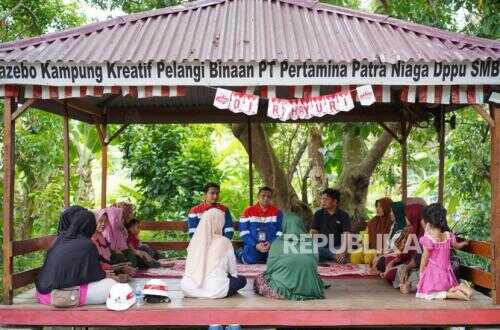
Pertamina Patra Niaga, through its Aviation Fuel Terminal (AFT) Sultan Mahmud Badaruddin II unit, has launched a corporate social and environmental responsibility (TJSL) programme aimed at socio-environmental recovery in Talang Jambe and Talang Betutu neighbourhoods in Palembang.
Since the 1970s, the area has been the site of clay excavation operations, leaving approximately 105 hectares of former mining land. This situation has resulted in waste accumulation, flooding and landslide risks that threaten community safety. Through an integrated TJSL approach, Pertamina Patra Niaga’s Regional Sumbagsel division is driving the transformation of the area into a more productive and sustainable space.
The programme is designed around four main pillars implemented through the Permata, Pesona, Perkasa and Pelangi subprogrammes. This initiative is also a key programme for achieving a gold rating under the Ministry of Environment’s PROPER environmental assessment framework, demonstrating the company’s commitment to superior and sustainable environmental and social performance.
Through the Permata programme, 0.42 hectares of former mining land has been converted for community economic activities, including the development of solar-powered floating fish cage systems. The results have been significant: brick makers’ income increased by 25 per cent and women farmers’ group income rose by 133 per cent.
The Pesona programme focuses on organic and inorganic waste management, achieving 85 per cent coverage of household waste treatment—approximately 3,600 kilograms per month. One innovation developed is the processing of used cooking oil and waste into fish feed, managed by local micro and small enterprises (UMKM).
Rusli, a member of the UMKM Pasta Group, stated that the initiative provides tangible benefits for both the environment and the community economy. “The processing of used cooking oil and waste into fish feed is one solution to reduce environmental damage from waste whilst creating added economic value for the community,” Rusli said.
To strengthen the circular economy ecosystem, the used cooking oil collection initiative extends beyond Palembang. Aviation Fuel Terminal (AFT) Boyolali is also implementing a used cooking oil collection programme as a preventive measure to reduce environmental pollution from poorly managed household waste disposal.
In terms of disaster risk mitigation, the Perkasa programme promotes community disaster preparedness capacity, including the planting of 250 coconut trees in former mining areas to strengthen soil structure.
In line with disaster resilience efforts, Aviation Fuel Terminal (AFT) Juanda is partnering with Sidoarjo’s disaster management agency (BPBD) to facilitate the establishment of a Sister Village Forum. This forum serves as a mechanism to build community capacity in disaster risk management through various training programmes and emergency response simulations to improve preparedness and coordination during emergencies.
The Pelangi programme focuses on developing public play areas and children’s recreational spaces that contribute to improving child nutrition levels in the area.
Roberth M. V. Dumatubun, Corporate Secretary of Pertamina Patra Niaga, stated that the TJSL programme represents the company’s commitment to creating shared value for communities and the environment.
“Through structured and sustainable TJSL programmes, Pertamina Patra Niaga aims to provide tangible solutions to social and environmental challenges in and around our operational areas. This approach not only restores environmental function but also creates new economic opportunities and strengthens community resilience,” Roberth said.
Through an integrated approach and replication across units, Pertamina Patra Niaga hopes that former mining areas and other operational regions can be transformed into productive, safe and sustainable spaces for present and future generations.