
Pertamina Patra Niaga Delivers Community-Based Waste Management Through SI CADIAK Innovation
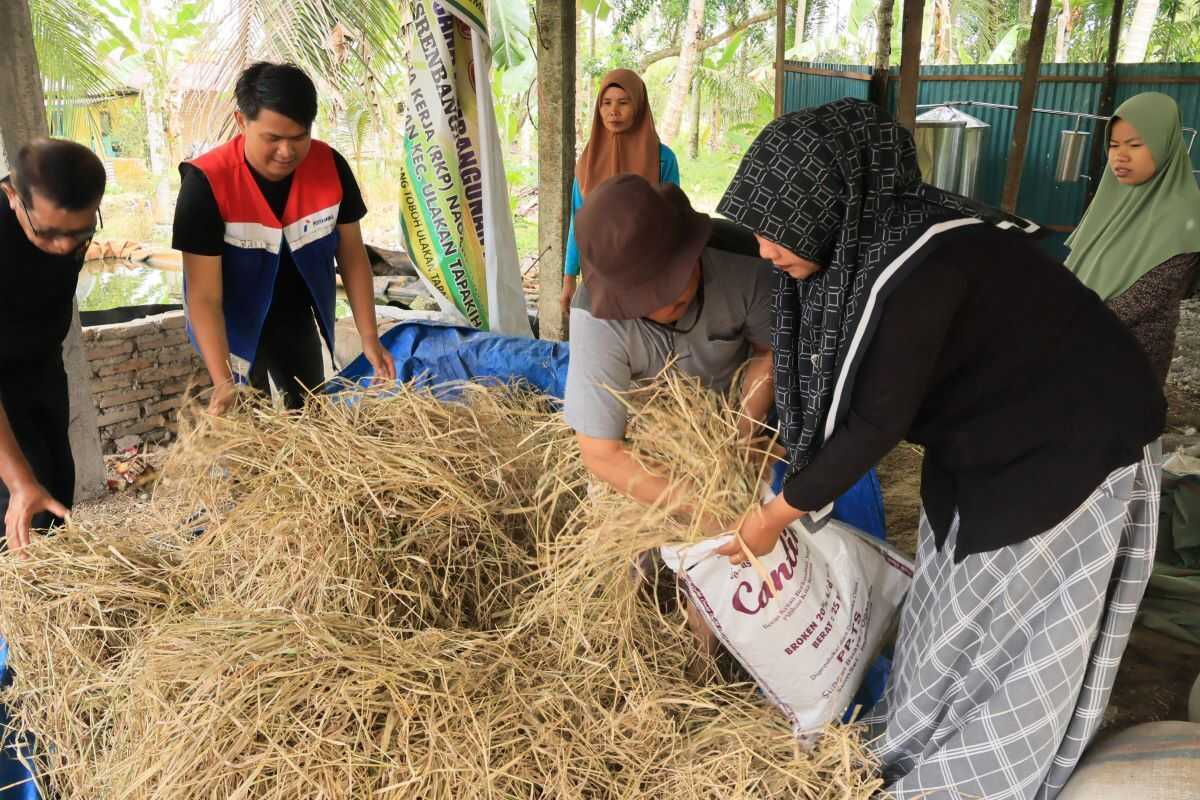
Jakarta (ANTARA) - Pertamina Patra Niaga has implemented productive community-based waste management through an innovation called SI CADIAK (Sistem Inovasi Cerdas Kelola Limbah, or Smart Waste Management Innovation System), as part of the company’s commitment to driving community empowerment based on local potential.
“This is a tangible example of how collaboration between Pertamina Patra Niaga and local residents can deliver sustainable solutions. It not only resolves waste problems but also creates economic value, strengthens biogas-based energy resilience, and improves the welfare of Nagari communities inclusively,” said Pertamina Patra Niaga Corporate Secretary Roberth M. V. Dumatubun in an official statement in Jakarta on Tuesday.
He affirmed that the programme is one of the company’s flagship initiatives in supporting compliance with the criteria of PROPER (the Company Environmental Performance Rating Programme).
The innovation-based approach with measurable impact not only delivers real benefits at the implementation site but also serves as a benchmark for productive community-based waste management practices that can be replicated across other regions.
He noted that to strengthen environmental and social performance sustainably, an integrated approach is needed — one that focuses not only on environmental protection but also on community empowerment and structured, measurable impact assessment.
In Nagari Padang Toboh, the management of agricultural and livestock waste has been one of the primary challenges. Against this backdrop, Pertamina Patra Niaga, through its Aviation Fuel Terminal (AFT) Minangkabau unit, introduced the programme as a Corporate Social and Environmental Responsibility (TJSL) initiative based on circular economy principles.
Agricultural waste that was previously not optimally managed is now positioned not merely as post-harvest residue but as a valuable resource that can be utilised productively.
Through an eco-innovation approach, rice straw is processed sustainably to curb open burning practices, minimise environmental impact, and enhance the effective utilisation of local potential.
“Concretely, this programme transforms rice straw waste and livestock dung into products that carry economic value whilst being environmentally friendly,” he said.
As a result, 894 tonnes of rice straw per year and 864 tonnes of livestock dung are processed into compost, bioethanol, and an environmentally friendly straw-based perfume called ARUWA, supporting the Affordable Rice Paddy Programme, as well as generating new and renewable energy through solar power installations used to support the UKASEMA Learning Centre.
The impact has been significant, including a reduction in emissions of up to 1,305 tonnes of CO₂e per year, a decrease in acute respiratory infection (ISPA) cases of up to 80 per cent over the 2022–2025 period, and an increase in community income of up to 63 per cent through product diversification and agricultural cost efficiency.
The initiative aligns with commitments to the Sustainable Development Goals (SDGs), particularly Goal 1 (No Poverty) through increased community income and Goal 8 (Decent Work and Economic Growth) through the creation of local economic added value.
Furthermore, it supports Goal 12 (Responsible Consumption and Production) through sustainable waste management, and Goal 13 (Climate Action) through reduced emissions from rice straw burning practices.
As such, he added, the programme not only delivers local impact but also contributes to the national sustainable development agenda.