
Pertamina Papua Educates Community on Nutrition to Prevent Stunting Through Local Foods
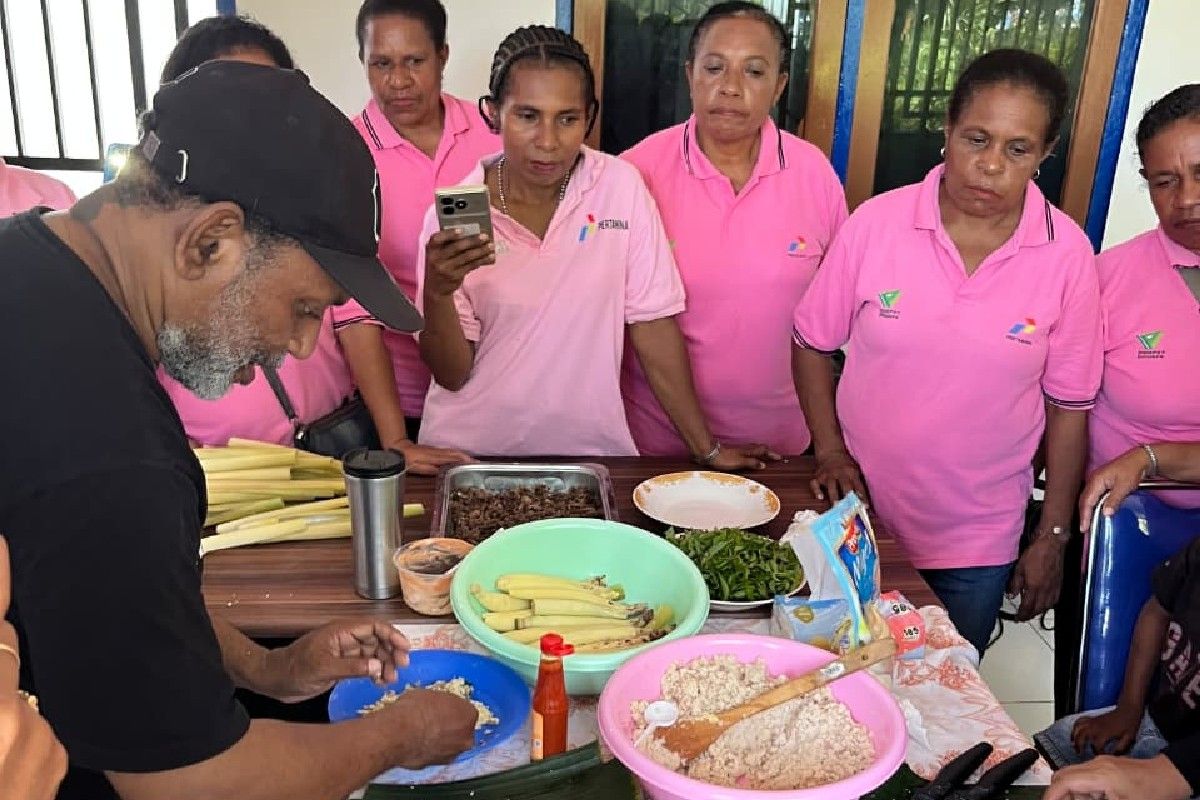
Jayapura (ANTARA) - Pertamina Patra Niaga Regional Papua Maluku, through its Jayapura Integrated Terminal (IT), has provided local food-based nutrition education to posyandu (community health post) volunteers and residents in Jayapura City as part of stunting prevention efforts.
Jayapura IT Manager James W. Muabuay said on Sunday that the initiative forms part of the Posyandu Berdaya (Empowered Posyandu) CSR programme, which focuses on strengthening volunteers’ capacity in processing local food ingredients.
“For this education programme, we are targeting Posyandu Imbi in Jayapura, which is located within Pertamina’s first ring area, though in the future we do not rule out expanding to other locations,” he said following the event at Base-G Beach, Jayapura, on Sunday.
He explained that the programme has enlisted Jungle Chef Papua, Charles Toto, to provide training and cooking demonstrations using local food ingredients such as taro, gedhi leaves, lilin vegetables, avocado, and various fish.
“We continue to work towards ensuring that stunting prevention is carried out sustainably with a multidimensional approach, one of which is through improving family nutrition awareness,” he said.
“Quality nutrition fulfilment is the foundation for building a healthy, intelligent, and excellent generation in Jayapura,” he added.
He further expressed hopes that the Posyandu Berdaya Imbi programme would make a tangible contribution to reducing stunting rates and improving public health standards in the area.
Meanwhile, Jungle Chef Papua Charles Toto said he introduced local ingredients that can be processed into modern menu items during the event.
“I gave an example, one of which was Taro Sushi, where mashed taro replaces rice, gedhi leaves replace nori, and fillings of fish and vegetables serve as sources of protein, healthy fats, and fibre,” he said.
“Through this training, posyandu volunteers are expected to pass on this knowledge to the community, particularly in supporting the Supplementary Feeding Programme (PMT) for school-age children aged 5–9, adolescents, and the elderly,” he said.