
Pertamina Introduces Dual Growth Strategy at IdeaFest 2026
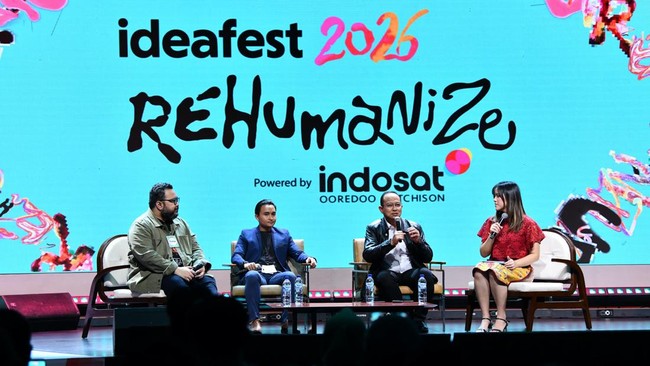
Energy security and the energy transition were among the strategic issues presented by PT Pertamina (Persero) during the IdeaFest 2026 event. Addressing the younger generation, who play a vital role in shaping Indonesia’s future, Pertamina introduced its Dual Growth Strategy—a corporate plan to strengthen existing energy businesses while developing low-carbon businesses as new sources of growth.
This was conveyed by Pertamina’s Corporate Secretary, Arya Dwi Paramita, during an IdeaFest 2026 session at the Jakarta Convention Center (JCC) Senayan, Jakarta, on Friday (4/9/2026).
According to Arya, forums such as IdeaFest serve as important spaces to broaden the insights of the younger generation regarding energy challenges, while encouraging the emergence of ideas and innovations to meet future energy needs.
Arya explained that as the national energy company, Pertamina holds a strategic role in maintaining Indonesia’s energy security. The current challenge lies in the fact that national energy consumption remains higher than domestic production capacity, meaning a portion of the requirements must still be met through imports.
“We have been importing for a long time. This means our consumption is higher than our national production. This is why we need to bring in oil and gas supplies from other countries to meet domestic needs,” said Arya, as quoted on Saturday (5/9/2026).
According to Arya, this condition is a challenge that must be addressed by strengthening domestic production alongside the development of new energy sources. Consequently, Pertamina is implementing the Dual Growth Strategy with two parallel focuses: optimising existing businesses to meet the public’s energy needs and developing low-carbon businesses for the future.
“To meet current needs, we must maintain production security so that the public continues to receive fuel. On the other hand, we are also building low-carbon businesses and new renewable energy,” he explained.