
Persistent Trade Surplus Strengthens Indonesia's Economic Resilience
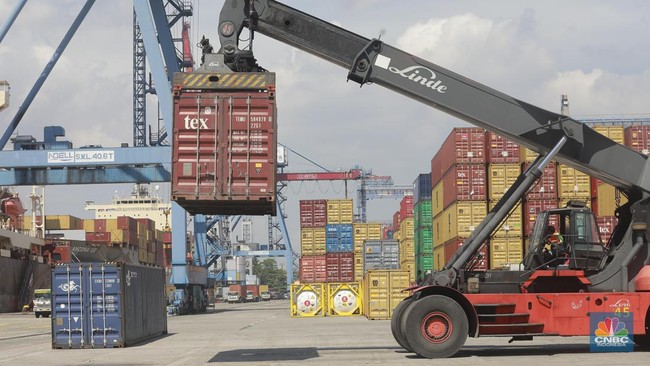
The economic storm Indonesia faces is no minor issue. Globally, geopolitical crises in the Middle East and the US-China trade war – two powers accounting for over a third of global trade – show no signs of abating. The IMF projects global economic growth at just 3.1% in 2026. Domestically, fiscal pressures, a weakening rupiah, and downbeat revisions from credit rating agencies compound the challenges.
Amid these pressures, Indonesia quietly achieved a noteworthy performance. Statistics Indonesia reported a trade surplus in March 2026, marking 71 consecutive months of surplus since May 2020. For the first quarter of 2026, the surplus reached $5.55 billion, with a peak of $3.32 billion in March. This achievement offers grounds for optimism and signals resilient external economic fundamentals. However, sustained surpluses do not guarantee all is well; pressing challenges remain.
What Sustains This Surplus?
Indonesia’s surplus relies heavily on non-oil and gas exports from the manufacturing sector, accounting for 82.25% of total national exports in Q1 2026. Palm oil and its derivatives lead with an $8.75 billion surplus contribution, followed by iron and steel at $6.53 billion, supported by a growing nickel ecosystem.
Amid rising global demand for electric vehicle battery raw materials, nickel and its derivatives have become increasingly strategic future commodities. Footwear, a labour-intensive product contributing $1.83 billion in exports during Q1 2026, also demonstrates Indonesia’s maintained manufacturing competitiveness against stiff competition from Vietnam and Bangladesh.
This success is partly due to prioritised downstreaming policies, proving that serious, consistent downstreaming without falling into overprotection traps can deliver tangible value addition.
Beneath the Green Figures, Vulnerabilities Lurk
Of course, optimism must be tempered with honest vigilance. Our surplus structure remains heavily reliant on natural resource commodities, whose prices follow global market whims rather than our control.
When palm oil or coal prices fall, the surplus can shrink sharply even if export volumes remain steady. It’s not just about how much we sell, but terms of trade: whether the relative price of our exports versus imports continues to improve or quietly erodes.
Persistent oil and gas deficits represent a structural leak that cannot be ignored. In Q1 2026, the oil and gas deficit reached $5.08 billion, eroding much of the hard-won non-oil surplus. Despite oil reserves, Indonesia must import large volumes of fuel due to stagnant upstream production and inadequate refinery capacity.
Another overlooked vulnerability is export market concentration. China, the US, and India account for over 44% of Indonesia’s non-oil exports, three nations currently embroiled in geopolitical tensions. Reliance on a handful of markets leaves us exposed to uncontrollable external shocks.
The illusion of rupiah depreciation also warrants scrutiny. Conceptually, a 6.3% depreciation in 2026 should boost export competitiveness. Yet reality is more complex.
Most Indonesian exports, particularly in manufacturing, contain significant imported components, from raw materials to machinery and spare parts. When the rupiah weakens, production costs rise, eroding price advantages from within.
Moreover, production and logistics capacities remain limited and uneven. Even if export demand surges due to global supply chain relocations, domestic industries may not respond swiftly.
Ports not yet fully efficient, limited cold chain networks, and factories unable to rapidly scale up are tangible hurdles often overlooked in policy calculations.
Opportunities Amid Global Tensions
A striking paradox in today’s global landscape is that threatening chaos can simultaneously open opportunities for Indonesia, if managed with the right strategy. As the US tightens tariffs on China, global supply chain relocations intensify.
Indonesia competes in this contest with abundant natural resources, human capital, and geographic advantages, though it remains less agile than Vietnam, Malaysia, and Thailand (Riefky, Sabrina, & Revindo, 2025).
This momentum must be harnessed through more aggressive and measured economic diplomacy. Untapped non-traditional markets such as West Africa, Latin America, and Central Asia, where purchasing power is growing, should be prioritised. Slow-moving free trade agreements, especially with partners outside the US-China-India axis, need more urgent attention.
What Needs to Be Done?
A 71-month surplus cannot be maintained automatically. Concrete policies targeting root causes are essential. The most urgent step is strengthening export-oriented industries—not through excessive protectionism that scares off businesses, but through tangible support: selective and targeted fiscal incentives.