
Persian Gulf Countries Consider Alternative Routes Besides the Strait of Hormuz, Including Pipeline Routes
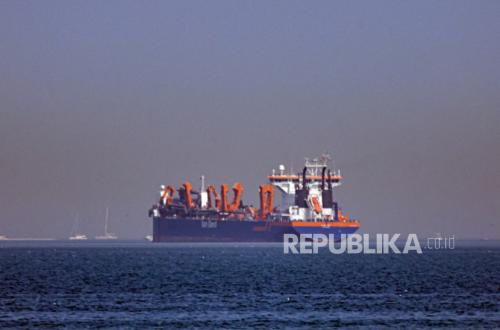
REPUBLIKA.CO.ID, PERSIAN GULF – Persian Gulf countries are likely considering alternative supply routes, including the construction of pipelines, due to the situation in the Strait of Hormuz, as reported by the Financial Times on Friday (27/3/2026), citing a diplomat from one of the regional countries whose name was kept confidential. Meanwhile, Iran’s Deputy Foreign Minister Vahid Jalalzadeh previously stated that Tehran is developing a new legal framework for the Strait of Hormuz that will apply after the conflict ends, in which Iran plans to cooperate with Oman.
“Persian Gulf countries will seek alternatives, such as building pipelines,” the diplomat said in response to the possibility of strict transit rules in the Strait of Hormuz by Iran, as quoted by the Financial Times.
In a separate statement, the foreign ministers of the G7 group of countries stated on Friday that freedom of navigation in the Strait of Hormuz, which is currently practically blocked by Iran, must be restored as soon as possible.
“We reaffirm the need for the permanent restoration of safe and unimpeded freedom of navigation in the Strait of Hormuz in accordance with UN Security Council Resolution 2817 and the Law of the Sea,” read the joint statement issued after a meeting in Vaux-de-Cernay, France.
The G7 group diplomats also urged an end to attacks on civilians and civilian infrastructure.
“There is no justification for the deliberate targeting of civilians in armed conflict situations as well as attacks on diplomatic facilities,” it said.
The foreign ministers also emphasised the importance of minimising the impact of the conflict in Iran on regional partners, civilians, and critical infrastructure, as well as the need to coordinate humanitarian aid efforts.
“We focus on the value of diverse partnerships, coordination, and supporting initiatives, including to mitigate global economic shocks such as disruptions to economic supply chains, energy, fertiliser, and commercial ones that directly impact our citizens,” the statement read.
On 28 February, the United States (US) and Israel launched attacks on targets in Iran, including in Tehran, causing damage and civilian casualties. Iran then retaliated by attacking Israeli territory and US military facilities in the Middle East as a form of self-defence.
The increased tensions around Iran have led to a de facto blockade of the Strait of Hormuz, the main route for shipping oil and liquefied natural gas from Persian Gulf countries to global markets. The situation has also affected oil export and production levels in the region, thus driving a surge in prices.