
Permit for Cakung Timur SPPG Revoked Before Operations Due to Rubbish
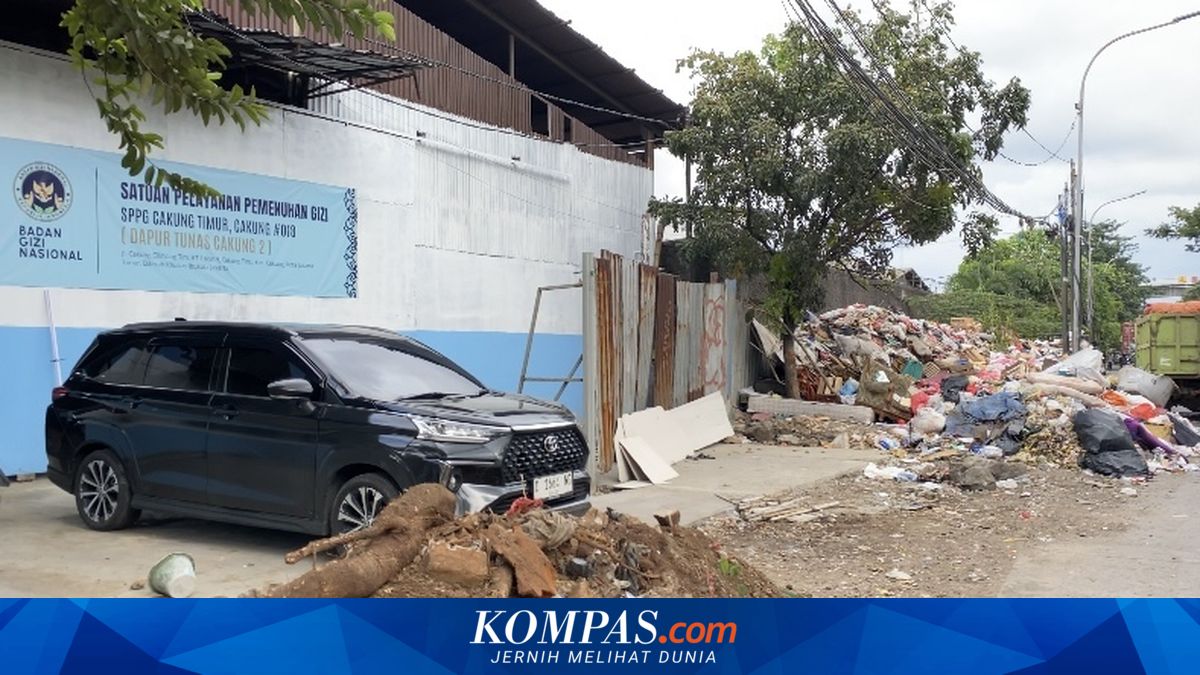
The Satuan Pelayanan Pemenuhan Gizi (SPPG) building in Cakung Timur, or Dapur Tunas Cakung 2, in East Jakarta, has come under scrutiny due to its location next to a towering pile of rubbish.
A pungent smell permeates the area around the SPPG site. Green flies buzz over the mound of household waste.
Meanwhile, the interior of the building appears to be in the renovation stage. Piles of cement and logistics cardboard are stacked on the brown-tiled floor.
Access to the location is also obstructed.
Large vehicles like container trucks and motorbikes must share a narrow road partially blocked by construction debris and scattered rubbish.
RT 01 RW 03 Chairman Anton Hermawan (42) said the SPPG building construction has only been underway for the past two weeks and is still in the renovation phase.
“It hasn’t started operating yet; it’s new. This is the second phase, building according to the design,” Anton told Kompas.com at his home near the SPPG site on Saturday (4/4/2026).
Anton said most of the rubbish piled up on the roadside in front of the SPPG building comes from outsiders.
According to him, the waste is dumped using vehicles and rubbish carts, then discarded haphazardly at that spot because it is considered an empty area that can be used as a dumping ground.
However, outsiders have joined in dumping rubbish there, causing it to pile up.
“Actually, that area belongs to the RW, guarded by RW patrols. But because it’s dumped carelessly, people think it’s an illegal TPS,” explained Anton.
He also mentioned that the rubbish is accumulating more due to transportation constraints to the TPST Bantargebang.
The National Nutrition Agency (BGN) has cancelled the permit for the Satuan Pelayanan Pemenuhan Gizi (SPPG) in Cakung Timur, East Jakarta.
“We have rejected (cancelled) the permit,” said Deputy Head of BGN, Nanik Sudaryati Deyang, when confirmed by Kompas.com on Sunday (5/4/2026).
“A public kitchen near rubbish violates the guidelines. It must not be near rubbish, animal pens, and other dirty locations,” explained Nanik.