
Perludem Urges DPR to Fast-Track Discussion of the Election Bill as Time Runs Short Ahead of the Phases
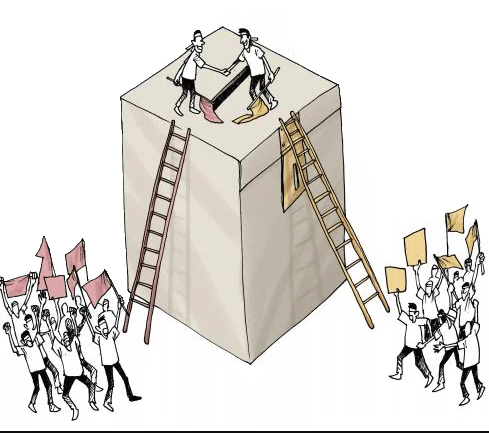
Executive Director of the Indonesian election and democracy group Perludem (Perkumpulan untuk Pemilu dan Demokrasi), Heroik Mutaqin Pratama, said that to date formal discussion of the Election Bill has shown little progress, even though the revision has been included in the prioritized National Legislation Program (Program Legislasi Nasional, Prolegnas).
“The Election Bill must be discussed formally without delay. Do not stop at public discourse or elite political debate, while the formal legislative process remains unclear,” he said during a discussion in Jakarta on Thursday, 5 March.
According to Heroik, since the end of last year civil society has prepared a draft codification of the Election Law as a reference for the DPR and government. However, there is still no certainty whether the discussion will be conducted via Working Committee (Panja), Special Committee (Pansus), the Legislative Body (Baleg), or Commission II of the DPR.
“We have been invited several times to public hearings, but up to now there has been no official draft, academic manuscript, or clause formulations to be discussed. This is what makes us worried,” he said.
Heroik regards the experience of previous revisions to the Election Law as usually being carried out close to the election stages, thereby affecting the technical readiness of the organisers. He cited that in several elections, the gap between the enactment of the law and the start of the stages was measured in months, sometimes less than one month.
“If revisions are always made near the stages, the organisers will have to operate in a rushed environment. Moreover, public participation space will become very narrow,” he emphasised.
Heroik also highlighted the impact of delays in revision on many judicial reviews to the Constitutional Court (MK). Ahead of the 2024 Elections, the number of judicial reviews rose significantly, and some were decided while the stages were already underway.
“When the MK’s decision comes in the middle of the stages, the rule configurations can change. This clearly affects legal certainty and the stability of the electoral process,” he explained.
Perludem stressed three main aspects that need to be discussed promptly. First, the design of the electoral system, including the debate on the parliamentary threshold. Second, the restructuring of the electoral administration institutions, both regarding recruitment and the scope of authority. Third, management of the stages and enforcement of election law.
Regarding the institutions, he recalled that Law Number 7 of 2017 regulates the formation of the selection teams for KPU and Bawaslu members no later than six months before the end of their terms. Meanwhile the current terms of the KPU and Bawaslu will end in April.
“In other words, counting backwards, we have only about six months left. The question is, is that sufficient to discuss a comprehensive revision in such a short time?” said Heroik.
He also criticised the debate about the parliamentary threshold that is widely discussed in public but has not been paired with formal discussion in the DPR.
“The debate about raising or lowering the parliamentary threshold should be discussed in the official lawmaking forum, not merely a war of ideas in the media,” he said.
On that basis, Perludem urged the DPR and the government to determine immediately an open and participatory mechanism for discussing the Election Bill. “The longer it is delayed, the tighter the time we have. Revising the Election Law is not only about the technical aspects of elections, but about the quality of democracy and future legal certainty,” he concluded. (Dev/P-3)