
Periklindo: EV Ecosystem Drives Industry, Research Needs Strengthening
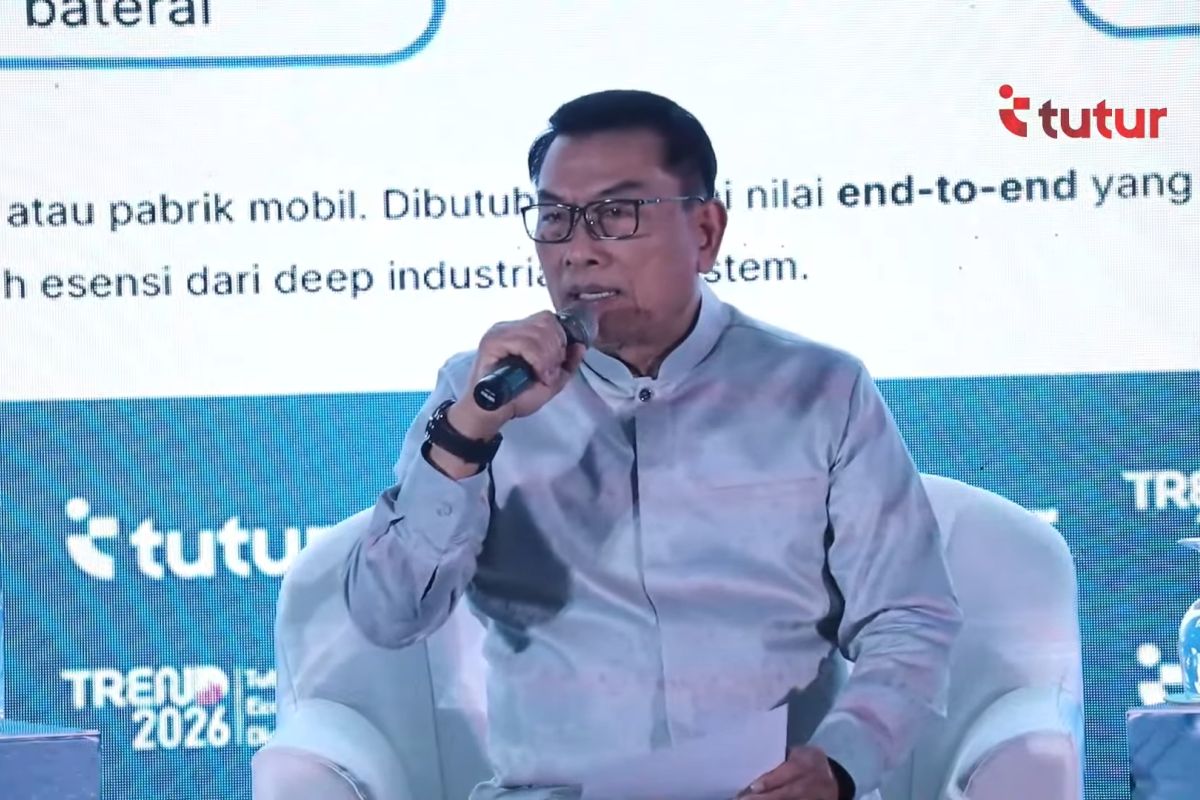
Jakarta (ANTARA) - The Indonesian Electric Vehicle Industry Association (Periklindo) assesses that the electric vehicle (EV) ecosystem can serve as a driver for national industrial growth, but Indonesia must strengthen research and supply chains to avoid halting at raw material advantages.
Periklindo General Chairman Retired General TNI Moeldoko stated that EV development must be directed towards enhancing national industrial competitiveness, rather than merely exploiting natural resource wealth.
“We are too proud of that. In the end, we get trapped in comparative advantages, not moving towards competitive advantages,” said Moeldoko during the Tutur Economic Dialogue Trend 2026 in Jakarta on Tuesday.
He explained that Indonesia possesses substantial capital in the form of minerals to support the battery industry, such as nickel, manganese, cobalt, and copper.
However, according to him, these raw material advantages are insufficient if not accompanied by strengthened research and technological mastery.
He considers research strengthening as the key to ensuring Indonesia does not lag in EV industry development.
“If our research is weak, how can we catch up?” said Moeldoko.
In addition to research, he also assesses that the domestic supply chain still needs development.
According to him, the domestic industry currently largely operates in cathode and anode production, while advanced processing into battery cells is still conducted abroad before being re-imported to Indonesia for assembly stages.
“Let us think hard if we want to move towards competitive advantages, not comparative ones. If we have raw materials, we must also have experts in the research sector,” he stated.
He added that Indonesia also faces challenges in developing supporting infrastructure such as public electric vehicle charging stations (SPKLU), whose technology continues to evolve.
Nevertheless, Moeldoko assesses that Indonesia still has significant production capacity because the domestic automotive industry has reached around 2 million to 2.5 million units per year.
Chief Operating Officer of PT Hyundai Motors Indonesia, Fransiscus Soerjopranoto, also views the electric vehicle transition in Indonesia as showing significant development in recent years.
According to him, electric car penetration has now reached around 13–14 percent, while hybrid vehicles are about 8 percent, so the total share of both has exceeded 20 percent.
“Electric cars are the future, and we must enter it,” said Fransiscus.