
People's Schools Absorb 63,000 Workers, Boosting Regional Economies
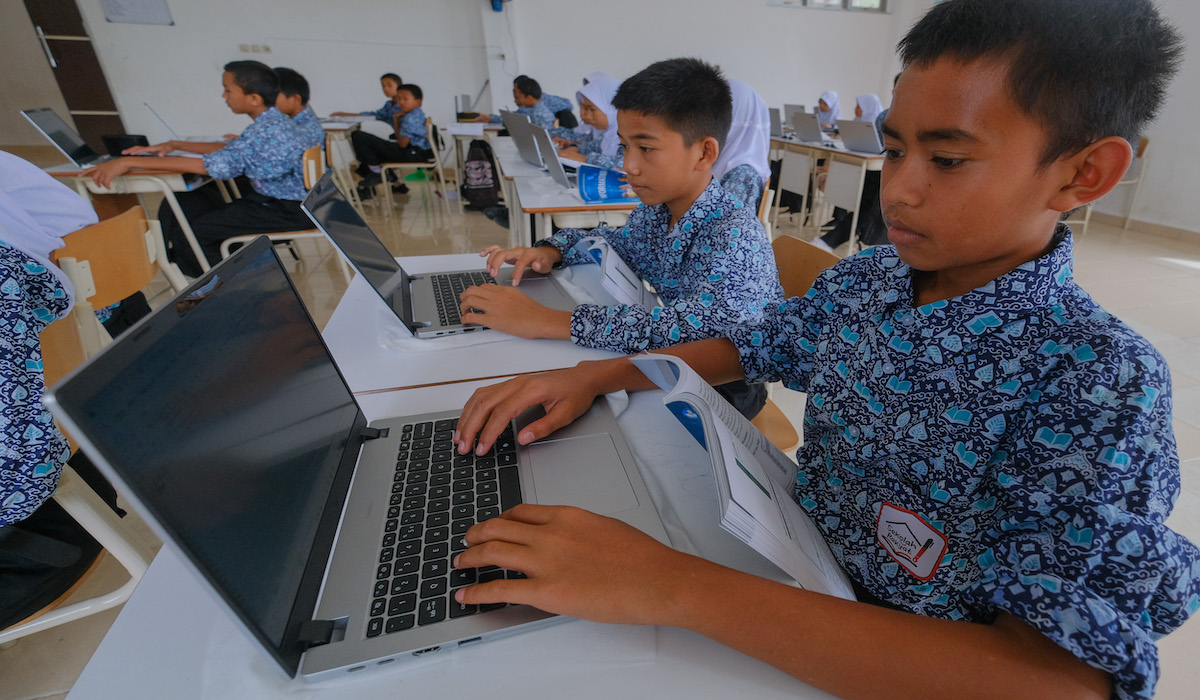
The Sekolah Rakyat (SR) programme initiated by the government not only targets the expansion of educational access for underprivileged communities but also serves as a driver for job creation in various regions.
Presidential Chief of Staff, Muhammad Qodari, stated that the second phase of SR construction is targeted to absorb tens of thousands of workers. “Thus, it not only expands educational access but also opens up employment opportunities and stimulates the local economy,” Qodari said in Jakarta on Wednesday (25/3).
In this phase, SR construction is projected to involve around 58,000 construction workers and 5,200 educators. According to Qodari, this scheme is designed so that the education programme simultaneously boosts the local economy.
Each SR unit has a capacity of 1,080 students. The government targets the construction of 500 schools by 2029, estimated to reach 540,000 underprivileged students each year.
Currently, the second phase construction is being carried out by the Ministry of Public Works in collaboration with several state-owned construction enterprises. Previously, in the pilot phase, the programme has operated in 166 schools as of 12 March 2026, with a total of 14,972 students divided into 628 learning groups.
The distribution of educational levels includes 125 basic-level learning groups, 236 junior secondary-level groups, and 267 senior secondary-level groups. Support for educational and administrative staff is also substantial, with 2,304 teachers and 4,760 support personnel, including 1,600 guardians, 632 dormitory supervisors, and 87 health workers.
The second phase construction now covers 104 locations spread across Indonesia. Java has the most projects, with 40 locations, followed by Sumatra with 26 locations, Sulawesi with 16, Kalimantan with 12, and Bali-Nusa Tenggara and Papua each with three locations. This distribution is described as an effort to equalise educational access to remote areas.
Of the total, 101 locations have entered the construction stage and are targeted for completion by 20 June 2026 to be used in the new academic year starting July 2026.
However, implementation in the field still faces several challenges. Data as of 23 March 2026 shows physical progress at only 17.04 percent, while financial progress is at 19.75 percent. Qodari highlighted the ongoing monitoring of the gap by the government.
“This is something monitored by the KSP; we do not want the gap to be too large,” he said.
Additionally, 66 locations, or about 63% of the projects, have not yet met readiness criteria. Three locations are constrained by land issues, one location faces problems with road and bridge access, and one location encounters administrative hurdles. Nevertheless, all obstacles are being addressed in parallel by the relevant ministries together with local governments.
The programme has about 90 days remaining for completion, making cross-ministerial and inter-agency coordination crucial to ensure targets are met on time.
Beyond the construction aspect, the government also assesses that the social impact of this programme is beginning to show. In addition to opening educational access, SR is seen as able to encourage achievements and confidence in students from underprivileged families, both in academic and non-academic fields.