
Pentagon Requests Rp3,400 Trillion for Iran War, Trump's Response
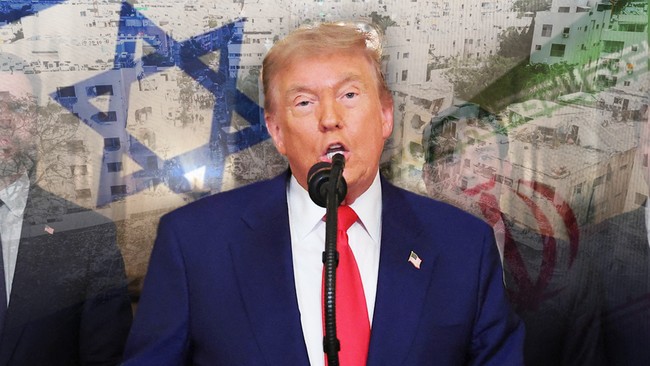
US President Donald Trump affirmed on Thursday that he does not plan to deploy ground troops to the US-Israel war in Iran, although he acknowledged considering steps that could draw the military into ground combat operations. Trump’s remarks still leave room for him to change course. “I will not deploy troops anywhere,” Trump told a reporter asking about the use of ground forces, citing a New York Times report. “If I do it, I certainly won’t tell you.” The president has spent several days alternating between threats to escalate attacks on Iran, which he sometimes describes as an “operation” or “excursion” rather than war, and promises that hostilities are on the verge of resolution. His latest comments come just two days after Trump said he was “not afraid” to deploy US ground troops. Those remarks also come amid revelations that the Pentagon has requested US$200 billion (Rp3,400 trillion) to fund its war operations against Iran, an amount expected to face rejection on Capitol Hill. The fighting has continued to escalate since the United States and Israel first attacked Iran three weeks ago. Overnight, Israel and Iran exchanged a series of strikes on major energy infrastructure sites. Israel struck Iran’s South Pars natural gas field processing complex, and Qatar blamed Iran for missiles that damaged Ras Laffan International City, the country’s main energy hub. Those attacks stunned global markets, causing oil prices to surge before later falling. The turmoil may have prompted Trump to speak in a more subdued tone when asked about the war’s negative economic impacts. On Thursday, he said that although he hates attacking Iran, he feels it is necessary, even if oil prices rise and the economy might “dip a bit.” “I think there’s a possibility the situation could be much worse,” he said. “This isn’t bad, and it will be over soon.” He provided no further explanation. Despite Trump’s efforts to offer reassurance, the administration is sending signals that they are preparing for a longer fight. It is unclear what operations the US$200 billion requested by the Pentagon would fund, but the first six days of operations alone cost more than US$11.3 billion, officials recently told lawmakers. That amount could likely support operations for months. The United States is currently considering whether to attempt to seize Kharg Island, where Iran loads most of its oil production onto tankers. The United States struck several military sites on Kharg Island over the weekend, although Trump has repeatedly indicated that they are not disrupting oil infrastructure. However, on Wednesday, he also threatened that the United States could destroy Iran’s oil infrastructure or its power grid. The United States is also deciding whether to attempt to seize the underground nuclear site in Isfahan, where Iran stores most of its 970 pounds of near-bomb-grade nuclear fuel. Both operations would likely require ground troops. Last Sunday, the United States began moving 2,500 Marines from the 31st Marine Expeditionary Unit from the Indo-Pacific region to the Middle East, increasing the number of US troops already in the area to around 50,000. The selection of that unit, which has expertise in conducting ground operations supported by sea and air support, indicates that the United States may be planning strikes into Iran, potentially against islands from which Iran launches fast boats capable of mining the Strait of Hormuz.