
Pendem Fort in Cilacap: From Defence Fortification to Eid Holiday Attraction
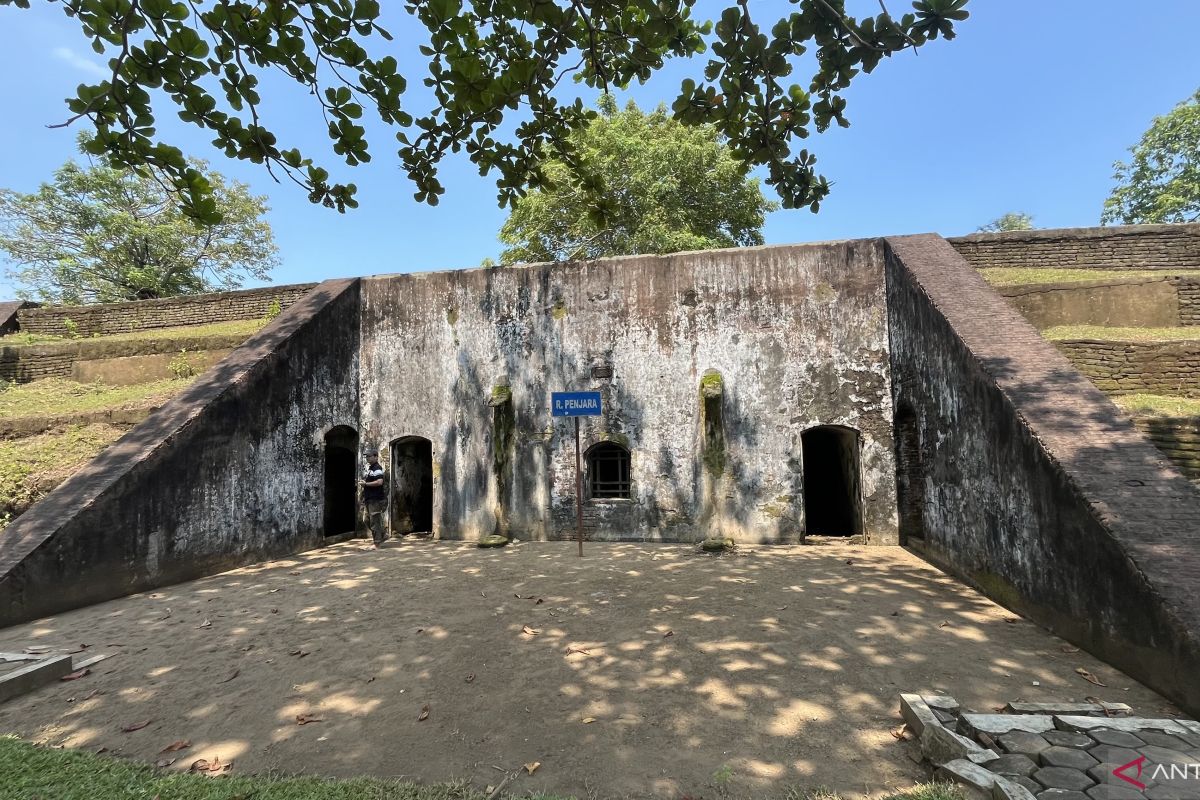
Cilacap — Pendem Fort in Cilacap, Central Java, remains one of the surviving traces of colonial history. Behind the buildings, most of which lie underground, lies a long account of Dutch defensive strategy along the southern coast of Java Island.
Aris, Sub-Coordinator of Pendem Fort Cilacap, told ANTARA on Tuesday (17 March) that the fort was constructed by the Dutch East Indies government between 1861 and 1879.
He explained that the name “Pendem” emerged from its unusual construction method. After the building was completed, the entire structure was buried under earth until it appeared entombed. In Javanese, the word “Pendem” means to bury. In Dutch, it is called Kussbatterijj op de Lantong te Tjilatjap.
“Because the building was buried under earth, the community called it Pendem fort,” he said.
The fort was built as part of the Dutch defensive system to block enemy ships attempting to enter Cilacap’s natural port. At that time, sea routes served as the primary transportation access, making coastal regions strategically significant.
Pendem Fort was also the second line of defence after a fort built earlier in the Nusakambangan area. This fort was located on elevated terrain that jutted into the sea, resembling a tongue, which was utilised as a defensive position to monitor ship movements.
Traces of Two Colonial Powers
The main uniqueness of Pendem Fort lies in its construction, with most of the structure situated underground. The building was only rediscovered and excavated between 1986 and 1987 after being buried for decades previously.
Within the fort’s area there are approximately 102 buildings that are remnants of the Dutch and Japanese armies. Aris explained that both countries employed different construction methods.
“The Dutch built first and then buried, whereas the Japanese dug holes first and then built,” he said.