
Pemuteran Bay Coral Reefs Recover, Profits Arrive
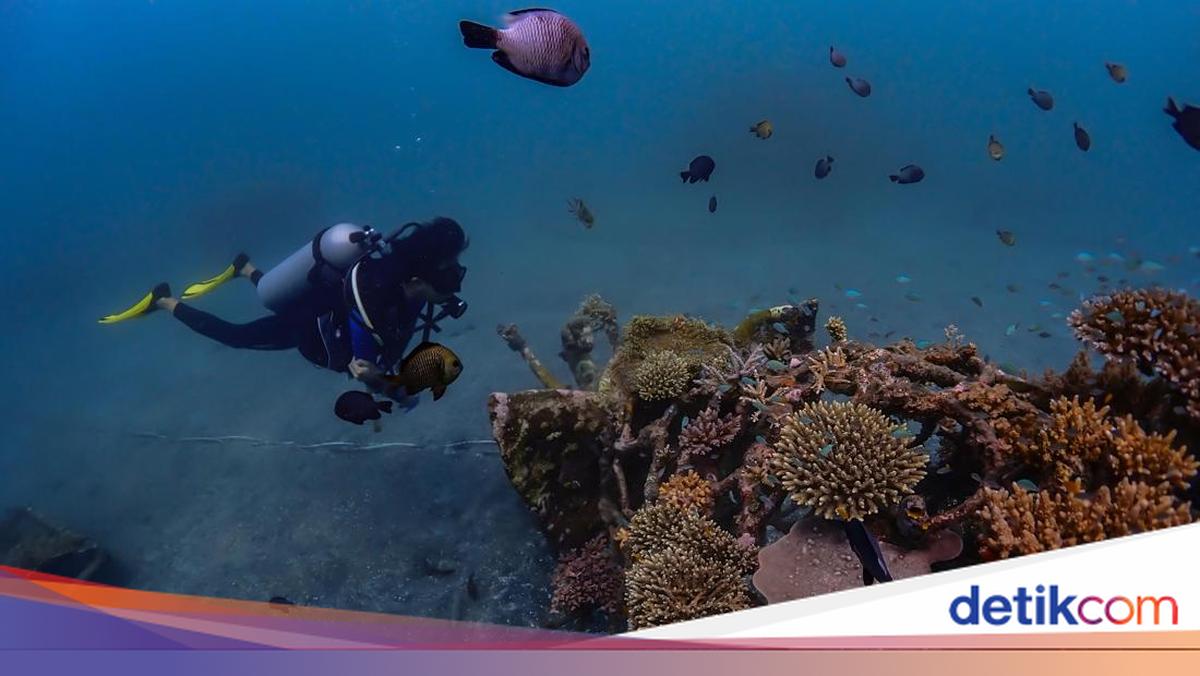
I Ketut Sutrawan Selamet, head of the Segara Giri Tourism Awareness Group, still remembers the destruction of the coral reefs in Pemuteran village, Buleleng Regency, Bali, during the 1990s. At that time, the reefs were damaged because fishermen used explosives and potassium cyanide to catch fish.
However, fishermen became angry when prohibited from using these destructive methods. Those who imposed the ban were seen as obstructing fishermen’s livelihoods in Pemuteran Bay.
Pemuteran customary village residents then created awig-awig, traditional village regulations prohibiting fishermen from using explosives to catch fish. “Fishermen are not allowed to use equipment that damages nature,” Sutrawan told detikBali on Friday (27 February 2026).
Pemuteran customary village also deployed pecalang segara, traditional maritime police, to patrol and prevent fishermen from using explosives and potassium cyanide. The pecalang segara did not hesitate to arrest fishermen who violated the regulations and hand them over to water police. “Many have already been arrested,” the 44-year-old said.
Wawan Ode, as Ketut Sutarwan is known, stated that the coral reefs in Pemuteran Bay that were damaged by explosives and potassium cyanide have gradually begun to recover thanks to the Karang Lestari Foundation. The foundation was established by I Gusti Agung Prana in 1990.
Karang Lestari Assistant Manager I Ketut Sudarmawan explained that the foundation is working to restore coral reefs in Pemuteran Bay using biorock technology. This technology was introduced by marine scientists Wolf Hilberts and Tom Goreau in 2000. “They saw that Pemuteran had potential for coral reef restoration,” he said.
The biorock principle works by channelling low-voltage electricity, 2-4 volts, to iron structures submerged at the seabed. The electrical current splits seawater into hydrogen and oxygen, causing the iron surface to form solid coral composed of calcium carbonate and magnesium hydroxide. These two substances accelerate coral growth on the structures.
Sudarmawan explained that the electricity supplied to the structures comes from solar panels through special cables. The voltage size depends on the structure’s dimensions. “The larger the structure, the greater the voltage,” he said.
Karang Lestari submerges these structures approximately 40-50 metres from the shoreline. The foundation has no set schedule for creating structures as it depends on donations.
According to Sudarmawan, without intervention, coral typically takes about 10 years to grow. With biorock technology, it takes approximately 6-7 years. “Coral grows slowly. Destroying it is fast, restoring it takes time,” the 25-year-old said.
Currently, Sudarmawan stated, there are approximately 70 structures for coral growth submerged in Pemuteran Bay. These structures are made in various forms and named after garuda, dragons, barong, and elephants. The growing coral follows the shape of these structures.
According to Sudarmawan, one of the challenges in preserving coral reefs in Pemuteran Bay is educating fishermen to stop using explosives and potassium cyanide. Fishermen have recently understood the importance of protecting Pemuteran Bay’s ecosystem as tourists have arrived for snorkelling and diving.
There are several positive impacts from the recovery of Pemuteran Bay’s coral reefs. The structures where coral grows can function as wave barriers. Coral also serves as spawning grounds for fish. “Little by little, the once-damaged ecosystem has been reborn,” Sudarmawan said.
Additionally, the recovery of Pemuteran Bay’s coral reefs has attracted tourists to the village. These visitors come to dive and snorkel there to enjoy the coral reefs.
Residents of Pemuteran village have benefited financially from the increased tourism. Fishermen now not only fish; they often take tourists on fishing and diving trips. “Fishermen can also rent their boats to take tourists to see dolphins,” Sudarmawan said.
One person benefiting from the recovery of Pemuteran Bay’s ecosystem is Gede Tunas. The Pemuteran village resident established a guest house consisting of three rooms named Pande Guest House since 2016.
Tunas also provides tourist services including snorkelling, diving, dolphin watching, fishing, and trekking in the Bali Barat National Park. The tariffs for these services vary. For example, the cost of diving at Menjangan Island reaches Rp 1.1 million per person. This rate includes boat rental, guide, lunch, towel, and insurance.
According to Tunas, in the past Pemuteran village was only a transit point. Tourists wanting to snorkel and dive at Menjangan Island, located in Bali Barat National Park, stayed at Lovina Beach, Buleleng. The distance between Lovina Beach and Pemuteran village is approximately 46 kilometres. “Now tourists can stay in Pemuteran and it has become a tourist destination,” the 51-year-old said.
detikBali visited Pemuteran village on Monday (16 February 2026). At that time, several foreign tourists were playing or sitting on the beach. Some of these foreign visitors were also seen around ATMs and walking throughout Pemuteran village.
Pemuteran village has several tourist attractions, including Bukit Batu Kursi, the beach, and a turtle sanctuary. The journey from Denpasar to Pemuteran village takes approximately three hours.
According to Wawan Ode, the preservation of coral reefs in Pemuteran Bay with community involvement is what earned the village several awards. The tourism village received the Best Tourism Village 2025 award from the United Nations World Tourism Organization (UN Tourism). The award was given during the Best Tourism Villages by UN Tourism-2025 Ceremony and Third Annual Network Meeting held in Huzhou, China, on Friday (17 October 2025).
“We were able to achieve this award because we were considered capable of creating sustainable tourism,” Wawan Ode added.