
Pelindo: Container traffic up 7% signals strong economy
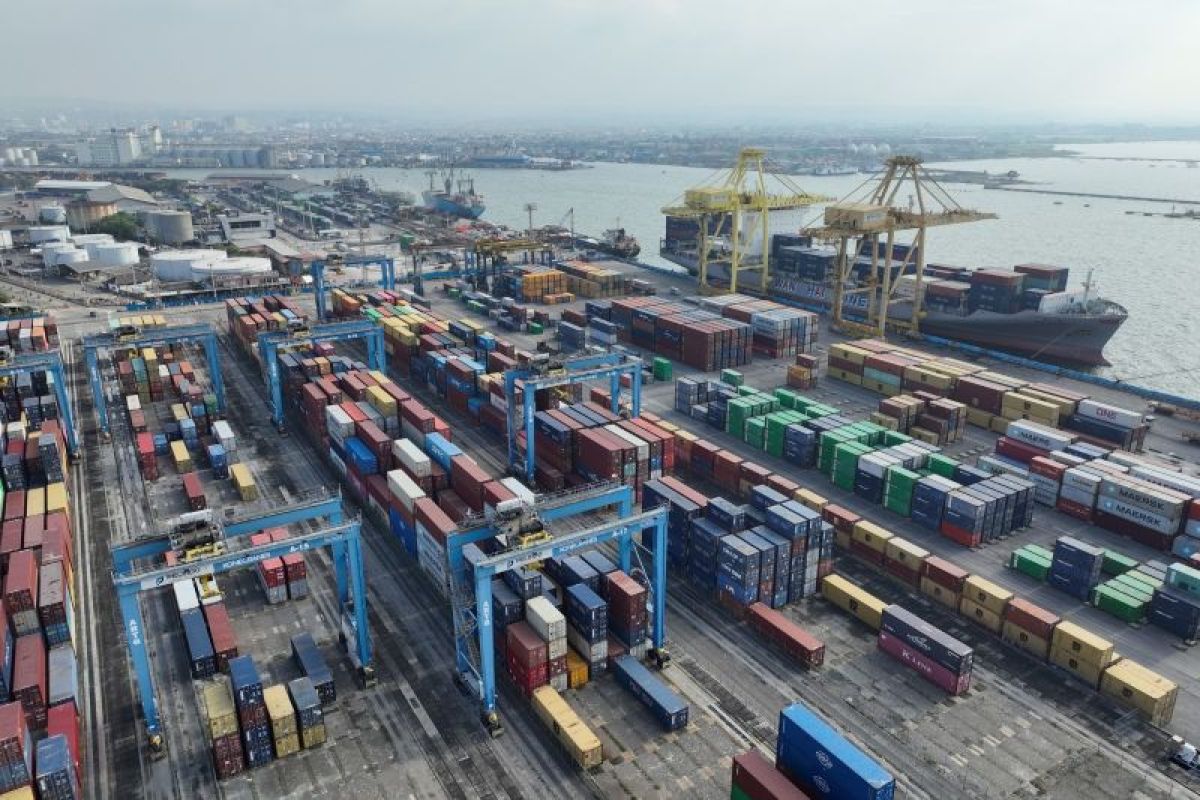
Surabaya, East Java - Pelindo, the state-owned port operator, reported container traffic reached 6.42 million Twenty-foot Equivalent Units (TEUs) in April 2026, up 7% year-on-year from 5.99 million TEUs.
CEO Achmad Muchtasyar said the growth reflects positive national logistics activity amid global economic dynamics.
“Ports play a strategic role as the main hub of the national supply chain, serving as routes for raw materials, consumer goods, export commodities, and industrial capital goods,” he said in Surabaya on Friday.
Muchtasyar noted the container traffic increase was supported by an 11% rise in the international segment, with exports growing 10% and imports up 12%.
Domestic cargo distribution also contributed to container traffic growth of 4%, with unloading activities rising 5% and loading up 4%.
He added that Indonesia’s foreign trade remains strong, with inter-island cargo distribution sustaining consumer demand and regional economic activity.
The rise in export and import volumes reflects Indonesia’s trade resilience amid global uncertainties, including geopolitical dynamics in the Middle East and economic slowdowns in some countries.
One contributing factor is Indonesia’s trade structure, which remains heavily intra-Asian, particularly with China and ASEAN.
In national trade distribution, China and ASEAN account for 46.2% of Indonesia’s exports and 56.5% of imports.
This trade structure provides a buffer as most cargo moves within regions featuring strong, stable, and integrated trade relationships.
According to Statistics Indonesia (BPS), key container-based export commodities grew, including animal and vegetable fats and oils (7.95%), mechanical machinery (9.26%), electrical machinery (4.9%), and chemical products (12.27%).
This export growth indicates ongoing processing industry and value-added trade activity, signalling positive prospects for sustained manufacturing and national trade.
On the import side, increases were seen in mechanical machinery (22.1%), electrical machinery (17.91%), optical instruments (20.8%), and various chemical products (36.31%).
This import structure reflects strong demand for capital goods, production machinery, industrial components, and manufacturing inputs, linked to investment activity, production capacity expansion, and national downstreaming initiatives.