
Peak Return Traffic Predicted for 28-29 March, Government Prepares Strategy to Ease Congestion on Toll Roads
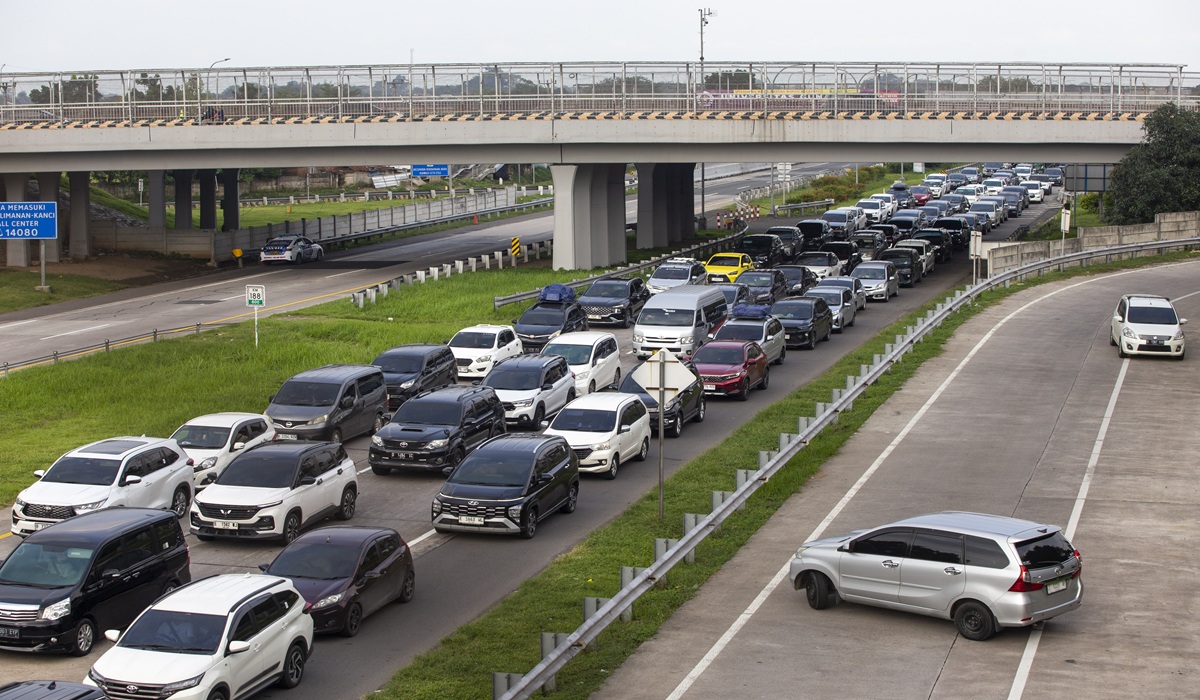
The government, together with the National Police and Jasa Marga, is strengthening traffic security strategies to face the peak of the Lebaran 2026 return flow, predicted to occur on 28-29 March. The main focus of personnel at present is to ensure the smooth flow of vehicles heading towards Jakarta, after previously recording the highest peak during the outbound migration. Coordinating Minister for Human Development and Culture Pratikno, National Police Chief General Listyo Sigit Prabowo, and Transport Minister Dudy Purwagandhi directly inspected personnel readiness through the Jasamarga Tollroad Command Center (JMTC) on Wednesday (25/3/2026). “The outbound migration ran smoothly despite a significant increase reaching 270,000 vehicles at its peak. This success is inseparable from anticipatory measures and real-time data monitoring systems,” said Pratikno. Jasa Marga’s President Director, Rivan A Purwantono, revealed that the traffic volume during the outbound migration on 18 March 2026 was the highest in history. To prevent vehicle build-up during the peak return flow this weekend, the government is offering several incentives for returnees. “We remind the public to take advantage of the toll fee discount on 26-27 March. The first stage of return flow control on 24 March went well, but our main focus is Saturday and Sunday ahead,” explained Rivan. In line with this, Transport Minister Dudy Purwagandhi hopes that the public with work flexibility can utilise the Work From Anywhere (WFA) policy. “We hope the public can utilise WFA as well as toll fee discounts to reduce density during the peak return flow,” said Dudy. He also reminded trucks with three or more axles to comply with operational restrictions until 29 March in accordance with the applicable Joint Ministerial Decree. National Police Chief General Listyo Sigit Prabowo explained that the implementation of traffic engineering such as one-way and contraflow is not done haphazardly. The police use the volume per capacity ratio (VCR) indicator monitored at the JMTC as the basis for decision-making. The National Police Chief also issued a stern warning regarding driving safety amid fatigue during the return flow. “Safety remains the priority. Drivers are asked not to force themselves if tired. Immediately rest at rest areas to reduce accident rates and fatalities,” emphasised the National Police Chief. To date, data shows that accident figures have decreased compared to the previous year. The government hopes this positive trend will continue until all returnees return to their hometowns safely. When roads along corridors connecting urban and rural areas become increasingly crowded, even congested, while big cities are left by their residents, that is the moment of Lebaran migration. Based on data from the Lebaran Transport Command Post for the period 22 March to 25 March 2026 at 14:00 WIB (H to H+3), the number of passengers returning to Java has only reached 36.4% of the total migrants. Astra Tol Cipali has officially stopped the one-way traffic engineering towards Jakarta starting Wednesday (25/3) night. PT Jasa Marga is implementing a 30% toll fee discount for continuous routes from Cikampek Utama Toll Gate to Kalikangkung Toll Gate. As an additional emergency service, Pertamina is also preparing motorist services tasked with assisting drivers who run out of fuel amid congestion. In addition, 15 functional rest and service points (TIP) are provided at various strategic locations. Astra Infra, as a provider of public infrastructure services, particularly toll roads, is ready to serve migrants who will celebrate Lebaran in their hometowns.