
Peak Return Flow: 285,000 Vehicles Expected to Crowd Tolls Today
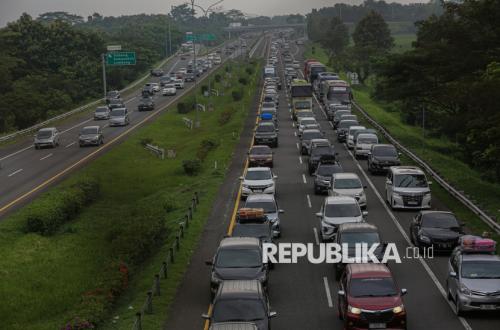
Transport Minister Dudy Purwagandhi stated that approximately 285,000 vehicles are expected to crowd the toll roads during the peak return flow occurring today, Tuesday (24/3/2026). The government has prepared various measures to ensure the smooth movement of vehicles from the east towards Jakarta.
The government is implementing a national one-way scheme to alleviate congestion. This policy forms part of an integrated strategy with the police and other stakeholders in managing the Lebaran return flow.
“With that number, we hope the public can plan their return trips well and make use of the provided rest areas,” said Dudy at the Kalikangkung Toll Gate, Central Java, on Tuesday (24/3/2026).
Police Chief General Listyo Sigit Prabowo reported that as of 24 March, around 2,380,401 vehicles had exited Jakarta via toll roads. This data reflects the high mobility of the public during this year’s mudik and return period.
He explained that the national one-way scheme is applied from KM 414 Kalikangkung to KM 70 Cikatama. Traffic engineering is reinforced through flow distribution and the use of functional tolls to prevent vehicle build-up as they approach Jakarta.
“Therefore, make use of all facilities provided by the government, whether at rest areas, service posts, or integrated posts. For those who are fatigued, it is hoped they will rest and not force themselves,” said Listyo Sigit.
The Police Chief advised the public to manage their travel times by utilising the Work From Anywhere (WFA) policy. The return flow journey can be distributed from 25 to 27 March to avoid concentration on a single day.
Coordinating Minister for Human Development and Culture Pratikno described the implementation of the national one-way scheme as part of efforts to enhance services to the public. This policy is designed to maintain smooth flow while ensuring the safety and comfort of road users.
“This is part of the return flow management efforts, providing maximum service to the public, alleviating traffic density, and still maintaining the safety and comfort of drivers during the journey,” stated Pratikno.
Health Minister Budi Gunadi Sadikin reminded of the importance of maintaining physical condition during long journeys. The government has prepared free health check services for drivers to reduce accident risks.
He also emphasised the importance of rest times to prevent fatigue while driving. The use of train transportation to carry motorcycles is also encouraged to reduce density on arterial routes.
“Every three hours, if possible, stop. We appreciate Jasa Marga for preparing rest areas, so that drivers do not feel sleepy and are not fatigued,” said Budi.
The government hopes the peak return flow can be alleviated through a combination of traffic engineering and public travel time arrangements. Cross-sector coordination continues to be strengthened so that the return flow runs smoothly and accident risks remain controlled.