
Peaceful Ramadan Without Sweeps
Headline
The overdue fee issue needs to be resolved first while considering the economic conditions.
The overdue fee issue needs to be resolved first while considering the economic conditions.
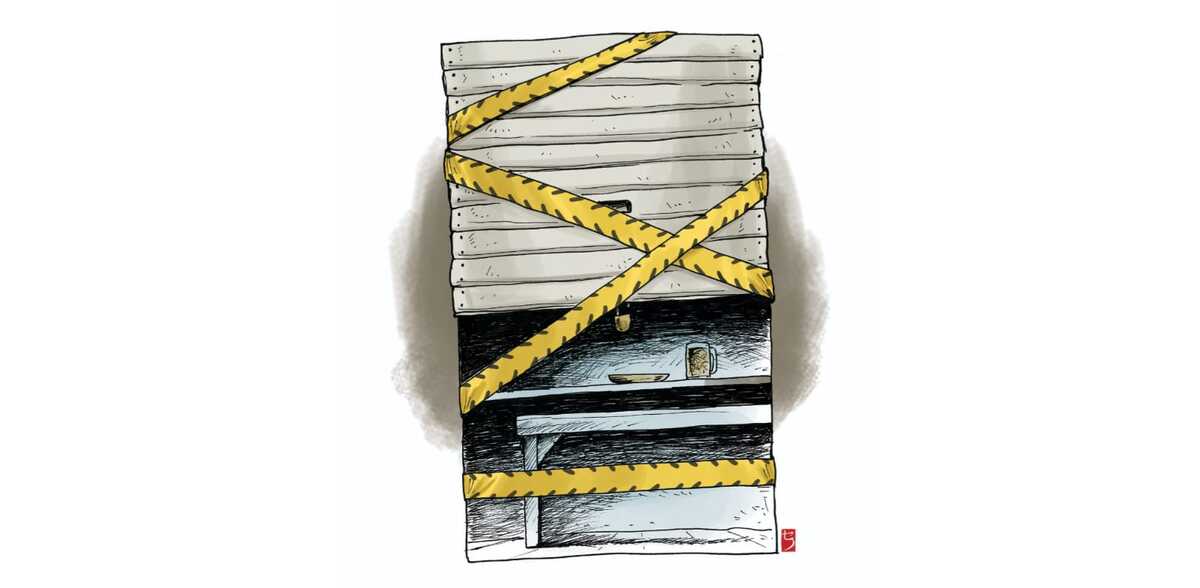
WHEN inaugurating the building of the Protestant Church Congregation in Senen, Central Jakarta, on Saturday (14/2), the Governor of DKI Jakarta, Pramono Anung, forbade community organizations (ormas) from conducting sweeps of restaurants during Ramadan. The Governor also forbade ‘sahur on the road’ activities because they have the potential to trigger conflict between residents.
The Governor asked all parties to maintain a peaceful atmosphere during Ramadan. Ramadan should not be tarnished by actions that provoke unrest and anger. The DKI Jakarta government’s policy was supported by the Indonesian Ulema Council (MUI). According to MUI, the policy is appropriate because maintaining security and comfort for residents is the government’s task.
The initiative of the DKI Jakarta Governor deserves support so that the congregation can remain peaceful and harmonious while carrying out the Ramadan 1447 Hijriyah worship. With great enthusiasm, Muslims around the world welcome the month full of blessings, saying “Marhaban ya Ramadan.” The term marhaban comes from the word rahiba which means ‘wide, spacious, or broad’. This means that the congregation must welcome Ramadan with an open heart and full of joy.
RAMADAN IS LIKE FERTILE LAND
According to Quraish Shihab (2000), Ramadan is like fertile land that is ready to be sown with seeds of goodness. Everyone is invited to sow until the time comes to reap the results according to the seeds they have planted. That is why we must prepare ourselves to welcome Ramadan by arranging our hearts. This is important so that we can use Ramadan as a momentum to hone and nurture the soul through various main practices.
In addition to increasing worship, Ramadan can be used as a momentum to evaluate habits that pollute the heart because in essence there are many valuable lessons that we get while fasting during Ramadan. Among them, lessons about honesty, patience, simplicity, social solidarity, compassion for others, and hope for the rewards and pleasures as promised by Allah SWT.
Unfortunately, not everyone is able to reap the benefits of the training during Ramadan. In fact, some members of the congregation behave in a way that contradicts the values of Ramadan. Their behavior can be categorized as a paradox of Ramadan. Among the behaviors that can be categorized as a paradox of Ramadan is an excessive attitude in interpreting the teachings of da’wah amar ma’ruf nahi mungkar.
AMAR MA’RUF NAHI MUNKAR
Under the guise of da’wah to command good and forbid evil (al-amru bi al-ma’ruf wa al-nahyu ’an al-munkar), certain religious ormas groups do not hesitate to carry out sweeps and anarchist actions. These religious ormas groups usually use Ramadan as a momentum to carry out sweeps in places that are considered to be sources of immorality. Sweeps are also carried out on restaurants or warungs that open during the day during Ramadan.
These ormas groups argue that sweeps are part of the task of amar ma’ruf nahi mungkar. This view can invite debate because the task of amar ma’ruf nahi mungkar cannot be done by everyone. In this context, it is interesting to examine the view of the Egyptian scholar, Jalaluddin al-Suyuthi (1445-1505), who stated that not everyone can command good (what is considered good and commanded by sharia) and forbid evil (what is considered bad and disliked by sharia).
Al-Suyuthi emphasized that only scholars and the government have the right to carry out the task of amar ma’ruf nahi mungkar. Scholars have the right to carry out this task because they have the capacity, especially religious knowledge. The government is considered capable of carrying out this task because it has power. Remember, one of the government’s tasks is to lead the nation towards glory and save it from destruction. The government’s task will be more effective if accompanied by the integrity of its law enforcement apparatus. With their power and integrity, government officials will certainly have the authority to command good and forbid evil.
If we refer to Al-Suyuthi’s opinion, the task of inviting to goodness and forbidding and punishing perpetrators of evil should only be carried out by scholars and the government. Even in carrying out the task of amar ma’ruf nahi mungkar, the principle of compassion and respect for human values must be upheld. This means that in carrying out the principle of inviting to goodness and preventing evil, it should not be accompanied by doing similar evil. Isn’t the principle in da’wah supposed to be more about inviting and embracing, not hitting? Moreover, the Prophet Muhammad SAW advised that in da’wah we always adhere to the principle of making it easy and not making it difficult, making it happy and not frightening. This spirit needs to be upheld by religious ormas groups when interpreting Islamic teachings about amar ma’ruf nahi mungkar.
The bearers of the Islamic da’wah mission must also realize that becoming a good religious person takes time. In fact, often in the struggle to become a good religious person, one sometimes has to go through a winding road. Whether they realize it or not, everyone must have experienced a long and winding religious experience. That is why it is not an exaggeration to say that a person’s religiosity is always a process (becoming). This process will continue until death comes. Every religious person must realize that they are in the process of becoming a better person. Because religious behavior is a process, what needs to be done is to provide continuous guidance so that a person wants to change for the better.