
Peace Negotiations Fail, Arab Residents Stressed as US-Iran War Volume II Breaks Out
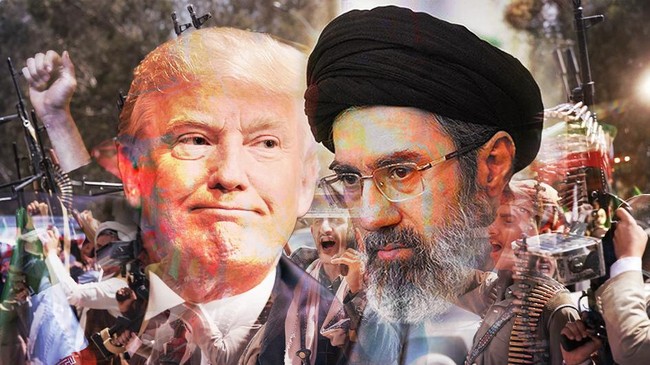
Negotiations for a ceasefire to end the war between the United States and Iran have failed. Both Iran and the US appear to have reached a deadlock.
After more than 20 hours of discussions in Pakistan’s capital, Islamabad, US Vice President JD Vance acknowledged that there are “very significant differences between the US and Iran that cannot be bridged at this time”. Iran’s Foreign Minister Abbas Araghchi stated on Sunday that Tehran had “almost” reached an agreement with Washington during the final talks with the US in Islamabad, but Washington suddenly applied “maximum pressure, changed targets, and threatened a blockade”.
So what will happen next? Will both sides continue to respect the two-week ceasefire as the Iranian and US delegations leave Pakistan without an agreement?
Citing AFP on Monday (13/4/2026), everyone in the Middle East is currently worried about the outbreak of US-Iran War Volume II. Indeed, preparations are underway for the worst-case scenario following President Donald Trump’s escalation of the fragile situation by ordering the US military to blockade the Strait of Hormuz.
“The situation could change at any moment,” said Aishah, a 32-year-old economist based in Doha, Qatar.
“It’s more about living each day as it comes.”
However, the failure of the talks was not surprising. At least that is what Laura Kaufman, a 38-year-old schoolteacher in Tel Aviv, revealed.
“I didn’t have high hopes for them from the start, because both sides want completely opposite things,” she said.
“It seems like no one wants to negotiate.”
Previously, a recent poll found that only 10% of the Israeli public believe the war against Iran has been a “significant success”. As many as 32% consider it a government failure.
Meanwhile in Iran, a glimmer of hope that the negotiations would quickly end the enmity between the two arch-enemies has faded. This situation has even caused stress among many residents.
“I really want them to make peace,” said Mahsa, a 30-year-old employee at an export company in Iran’s capital.
“It’s been almost 45 days since I’ve seen everyone stressed. This is a bad situation.”
A sense of the inevitable is beginning to seep in for many people.
“I prefer peace, but I think there’s no other way but war and confrontation,” said Hamed, 37.
“Based on what I’ve seen and heard, unfortunately we will go to war again and it seems we will face a long war.”
This uncertainty is also believed to increasingly impact Arab energy infrastructure. Previously, on Sunday, Saudi Arabia’s Ministry of Energy stated that the main east-west oil pipeline and other major energy facilities have been restored following Iranian attacks on targets across the Gulf.
“Of course I’m worried the war will start again,” said Amin, a pharmacist living in Saudi Arabia’s Eastern Province, who asked to use a pseudonym for security reasons.
Meanwhile, in Lebanon, the ceasefire never even started from the outset, as the warring parties debated whether the ceasefire was included in the agreement when Israel intensified its attacks there.
Dentist Kamal Qutaish described Lebanon as an “arena where the whole world fights”, adding that much depends on how peace efforts progress.
“If (the negotiations) fail, it will affect not only us, but the whole world,” he said.
“Only a madman wouldn’t be afraid.”