
PDIP's Andreas on Minister-Parliament Salary Cut Proposal: Start with President-Vice President
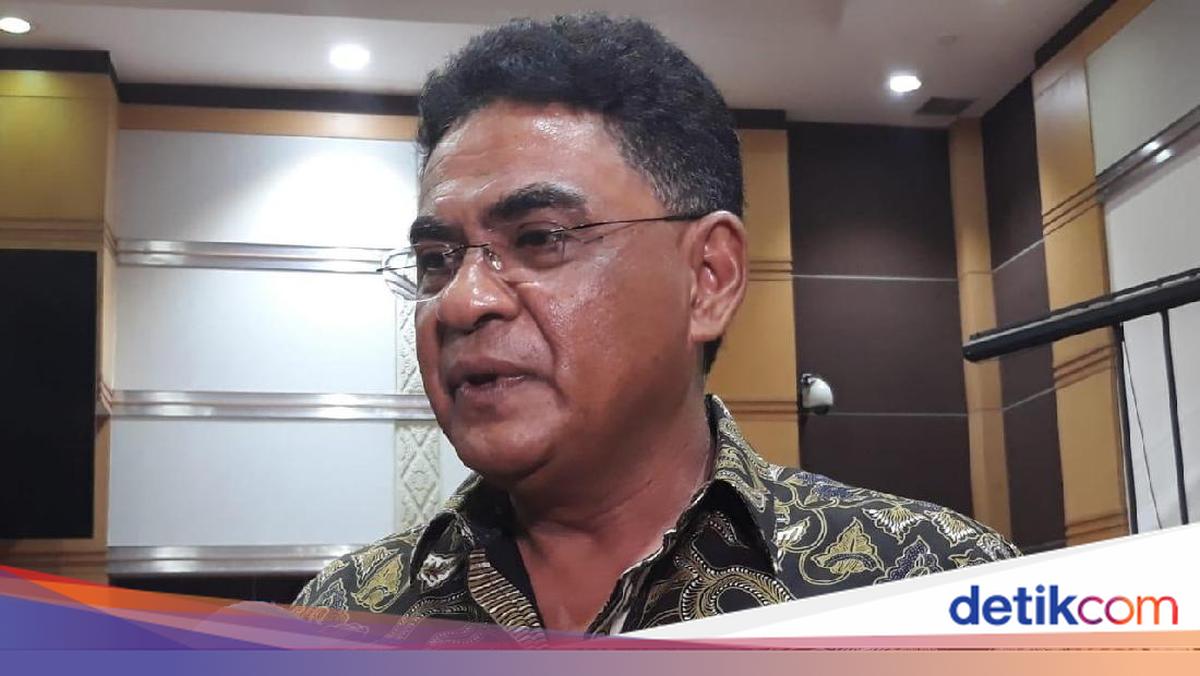
A PDIP faction member of parliament and chairman of PDIP’s executive board, Andreas Hugo Pareira, has no objection to President Prabowo Subianto’s proposal to examine salary cuts for ministers and members of parliament to address the economic impacts of Middle East conflicts. However, he has called for such measures to begin with the President and Vice President, to set an example.
“If you want to cut spending and economise, you must start with yourselves first, beginning with the president, vice president, ministers, and state officials in this republic,” said Andreas Hugo Pareira when contacted on Monday (16 March 2026).
He urged Prabowo to lead by example. Through this, he believes, the public would understand Indonesia’s need for greater fiscal efficiency.
“Set an example from the top that our country must indeed be more efficient and economical,” he said.
He also criticised the government for continuing to compile inefficient or wasteful budgets. According to him, budget audits need to be conducted again in every ministry and agency.
“Don’t order others to make cuts whilst the government itself continues to prepare budgets that are inefficient, with wasteful spending occurring everywhere,” he stated.
“Technically, budgets need to be reviewed again in each ministry and agency. There are budget items that are not urgent or pressing and could be delayed,” he added.
Prabowo’s Statement
Prabowo had previously stated that several countries have taken adaptive measures in response to the conflict situation in West Asia or the Middle East. Prabowo gave the example of Pakistan, which has also cut the salaries of cabinet members and parliament members.
This was stated by Prabowo whilst leading a Full Cabinet Session at the State Palace in Jakarta on Friday (13 March). Prabowo emphasised that the government cannot ensure security without taking proactive measures.
“We cannot assume that whatever happens we are safe; we are grateful we are safe, but we have made no effort to reduce our fuel consumption. Many countries have already taken such measures,” he said.
“Many countries have already taken such measures. Perhaps the Cabinet Secretary has slides to inform us of the number of measures. Here is Pakistan’s approach. This is merely for comparison,” said Prabowo whilst displaying a graphic presentation on Pakistan’s government measures during the crisis.
Prabowo noted that Pakistan has implemented work-from-home policies for both public and private sector employees. The working week has also been reduced to four days.
“So they consider this critical, hence calling them critical measures. As if, for them, this is like what we experienced during COVID. They implemented work-from-home for all offices, government and private, with 50 per cent working from home. Then they reduced their working week to just four days,” he said.
Prabowo continued, noting that Pakistan has also cut the salaries of ministers and parliament members. The budget adjustments are being used to assist vulnerable populations.
“They even reduced salaries for cabinet members and parliament members, and all these salary savings are collected to help the most vulnerable or poorest groups,” he said.
Prabowo added that Pakistan has also cut all fuel allocations for all ministries and required 60 per cent of government vehicles to remain unused at all times. Additionally, according to Prabowo, Pakistan has halted all foreign spending, vehicle purchases, furniture purchases, and all government institution expenditures for an indefinite period.
“They halted all foreign visits. They reduced spending and banned the use of government funds for celebratory events. Then all higher education institutions moved online. All schools were closed for two weeks, which was possibly to prepare for Eid al-Fitr,” he said.
Prabowo stated that Pakistan’s government measures serve as an example in addressing crisis situations. He therefore requested that such measures be examined in an effort to achieve savings.
“This is merely an example. What I mean is, over these several days, I believe we can examine this issue. I believe we must also work towards economising. I believe in 2-3 years we will be very strong, but we must still economise consumption. Thus we hope to ensure that our deficit does not increase further,” he said.