
PDIP Puzzled by WFH on Fridays, PKB Warns Civil Servants Against Sightseeing
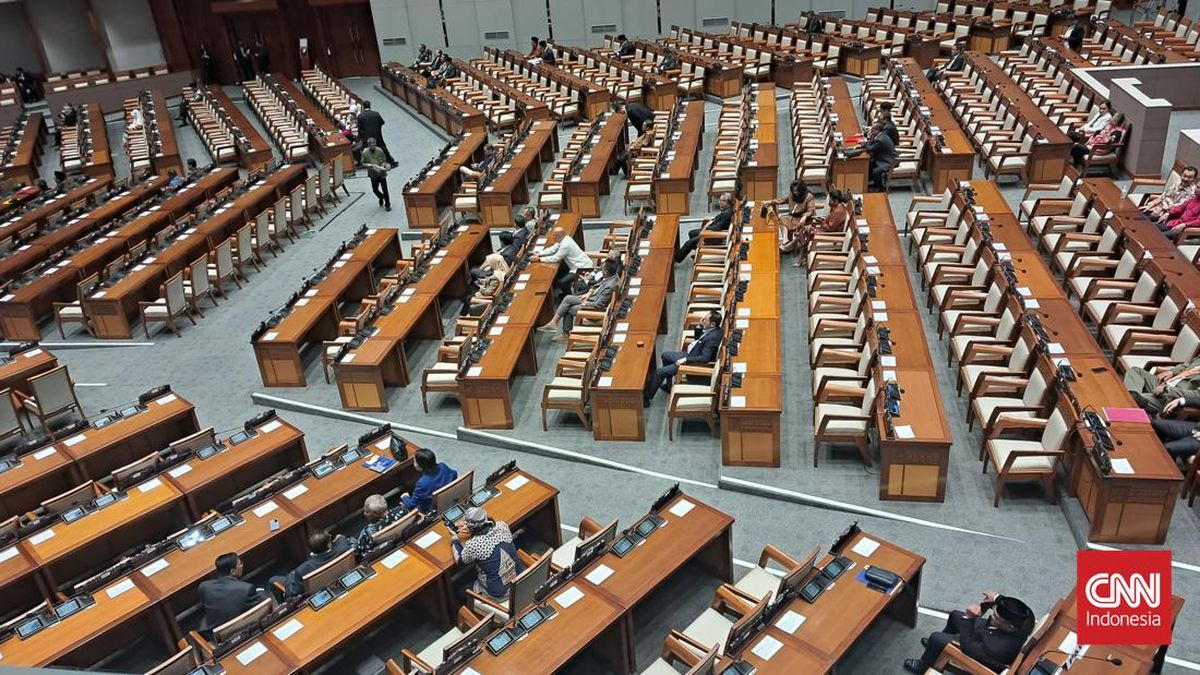
The central government has announced the implementation of a Work from Home (WFH) scheme for civil servants (ASN) every Friday. The policy, announced on Tuesday (31/3), has drawn questions from the people’s representatives. The main question is why Friday has been chosen as the WFH day for ASN. For context, the ASN WFH policy is being carried out to achieve national energy efficiency in the face of global conflict following the United States (US) collaborating with Israel to bombard Iran since late February. The rule for ASN WFH every Friday is regulated through a Circular from the Minister of State Apparatus Empowerment and Bureaucratic Reform and the Minister of Home Affairs. However, there are 11 ASN positions at the provincial level and 12 at the district/city level that are exempt from the WFH policy. A member of Commission II of the DPR from the PDI-P Faction, Deddy Yevry Sitorus, admitted to being puzzled by the government’s decision to choose Friday as the WFH day for ASN. Deddy assessed that designating Friday could make the policy, intended to suppress fuel oil (BBM) consumption, potentially ineffective. “Frankly, I’m confused if Friday is chosen for WFH, because there is potential that it will not be effective in suppressing BBM consumption,” said Deddy when contacted on Wednesday (1/4). However, he said he would see how the policy runs. According to Deddy, Commission II of the DPR will continue to monitor and not rule out conducting evaluations in the future. Especially if the escalation of conflict in West Asia due to the US-Israel war with Iran does not subside. According to Deddy, the designation of the WFH day should consider psychosocial calculations, economic projections, as well as patterns of public mobility and consumption. “Later, we can look at the BBM consumption graph, mobility data of residents/vehicles from distribution and intensity. Let’s see after two or three weeks before evaluating,” he said. Meanwhile, a member of Commission II of the DPR from the PKB Faction, Indrajaya, urged that the implementation of WFH for ASN be continuously supervised. According to Indra, the WFH policy must not be misused for other interests by ASN, including sightseeing. Indra stated that ASN working from home must always be responsive and easily contactable. The government must also ensure that electronic devices remain active. “This WFH policy must be supervised seriously. ASN must truly carry out their duties from home, not instead utilise the time for other activities outside of work,” said Indra. Another member of Commission II of the DPR from the PKB Faction, Muhammad Khozin, criticised the selection of Friday as the designated WFH day for ASN. Khozin assessed that choosing Friday is not ideal because it has the potential to turn into a long weekend or extended holiday for ASN at the end of the week. “In our view, this choice of day is not ideal because it is feared it will turn into a long weekend,” said Khozin when contacted. Nevertheless, he stated that the government has discretion and authority to determine the WFH day in the government administration system. However, he asked that the implementation of WFH every Friday be evaluated and supervised periodically, both by ministries, institutions, and regional governments. According to him, WFH must be able to patch or save BBM consumption in the internal government sector. “Ensure that the implementation of WFH on Fridays meets the target of reducing BBM consumption. In addition, ASN productivity must remain maintained in providing public services,” said Khozin. Beyond that, he added, he encourages the central and regional governments to utilise this momentum to seriously design public transportation in the regions. The implementation of WFH, he said, must also be a momentum for controlling air pollution. Therefore, he said, WFH is not merely a bureaucratic matter, but also a moment to improve public transportation and pollution control in the regions. Previously, the Government officially implemented the WFH system for ASN one day a week every Friday for energy efficiency in the face of global conflict. The government also limited the use of official vehicles and encouraged the use of public transport. Coordinating Minister for the Economy Airlangga Hartarto estimated that the WFH policy would save the State Revenue and Expenditure Budget (APBN) by up to Rp6.2 trillion. “The potential savings from this Work from Home policy directly to the APBN is Rp6.2 trillion, in the form of BBM compensation savings,” he said in an online press conference on Tuesday (31/3).