
PDIP Politician I Nyoman Parta: Passage of Indigenous Peoples Bill Fulfils the Republic's Promise
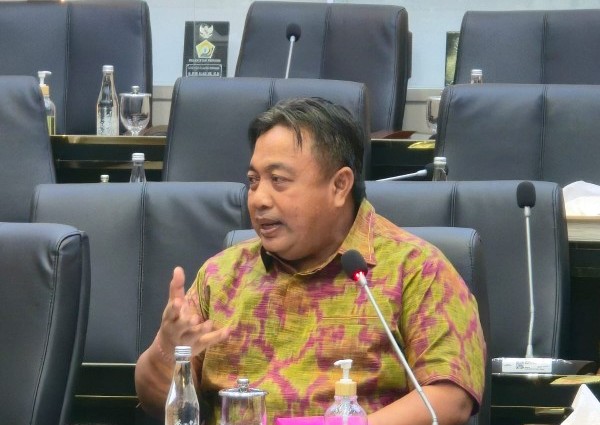
A member of DPR RI’s Commission III, I Nyoman Parta, has once again emphasised the urgency of passing the Indigenous Peoples Bill (RUU Masyarakat Adat) during a meeting with various indigenous community elements and civil society coalitions at the DPR RI.
The meeting was attended by representatives from the Indigenous Peoples Alliance of the Archipelago (AMAN), indigenous leaders from various regions in Indonesia, indigenous women representatives, indigenous youth, as well as civil society coalitions that have long monitored the bill’s discussion process.
In the forum, Parta stated that the discussion of the bill, which has been ongoing for more than 16 years, must not continue to drag on. According to him, the passage of the Indigenous Peoples Bill is a concrete form of fulfilling the constitutional mandate.
“This is not merely a legislative agenda. This is the fulfilment of the Republic’s promise that has been written in the 1945 Constitution for decades,” said Parta.
Parta stressed that the existence of indigenous peoples is an important foundation in maintaining Indonesia’s national identity and integrity. He reminded that before this nation was established, indigenous peoples had already lived and formed civilisations across the Archipelago.
According to him, indigenous peoples have been the ones who truly protect forests, water sources, and carry out tradition-based conservation practices.
“Those who protect the forests and water sources, who nurture customs and traditions, are the indigenous peoples. They are the guardians of our life’s balance,” he asserted.
Further, he explained that the living spaces of indigenous peoples are not only ecologically valuable but also the birthplace of culture—from arts, knowledge systems, to the ways in which the people of the Archipelago interact with nature.
In response to concerns that passing the Indigenous Peoples Bill would hinder investment and industry, Parta deemed it an excessive worry.
According to him, the absence of clear regulations so far has the potential to cause prolonged interest conflicts.
“The state must be present to regulate. Without regulation, clashes of interest will continue to occur. This bill actually provides legal certainty for all parties,” he said.
On that occasion, Parta also highlighted the impact of the slow discussion of the bill on the increasingly vulnerable and marginalised condition of indigenous peoples.
He stated that without strong legal protection, many indigenous communities face pressures on their living spaces, both from development expansion and land conflicts.
“The longer this bill is not passed, the more fragile the position of indigenous peoples,” said Parta.
The presence of AMAN, indigenous figures, indigenous women, indigenous youth, and civil society coalitions at the meeting demonstrates the strong public push for the bill to be passed soon.
Parta hopes this momentum can be utilised by the DPR RI to accelerate the legislative process, while ensuring that the substance of the law can fairly and sustainably address the needs of indigenous peoples.
“Hopefully this year we can witness the passage of the Indigenous Peoples Bill. This is our collective responsibility,” he concluded.