
PDIP: Pancasila Must Be the Nation's Compass Amid Global Crisis
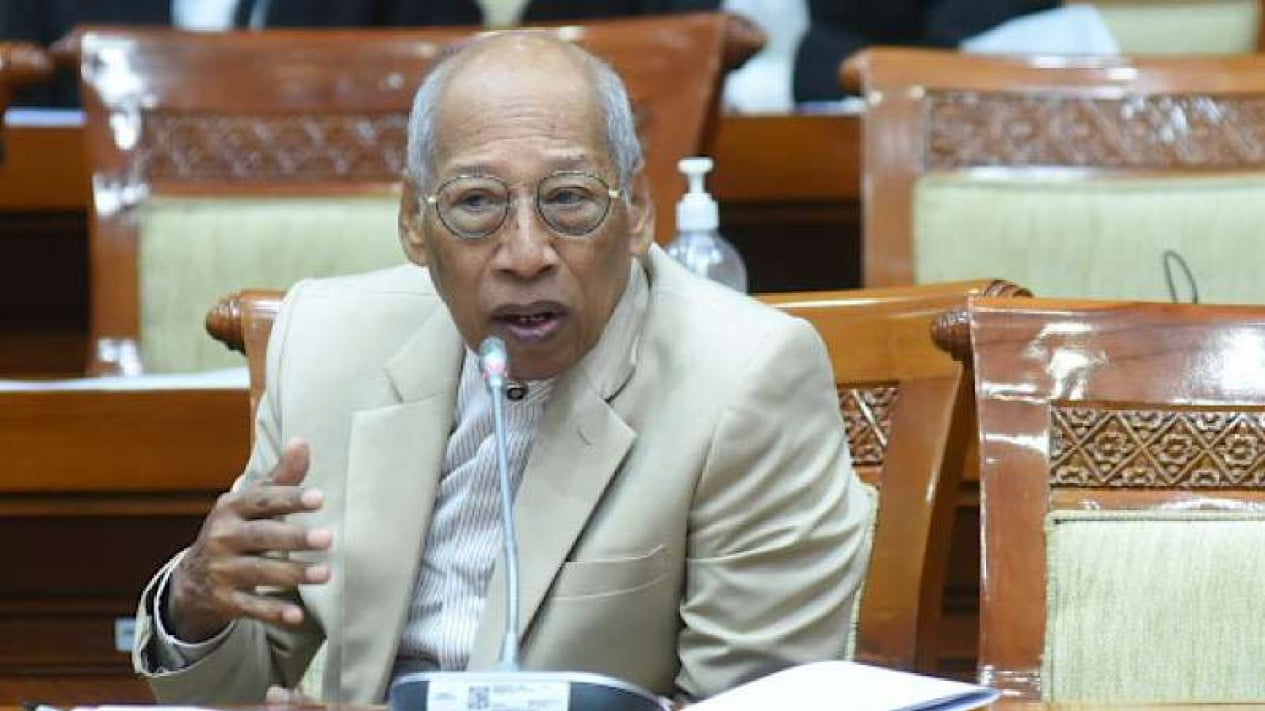
PDIP parliamentary group member I Wayan Sudirta has called on all national elements to use Pancasila’s Birth Day as a moment to strengthen unity and build national resilience amid geopolitical challenges and global economic pressures.
Reflecting on the upcoming Pancasila Birth Day on 1 June 2026, Wayan stressed that Pancasila should not be viewed merely as a historical legacy but as a practical guide for state governance and societal life.
“This year’s Pancasila Birth Day theme, ‘Pancasila as the Nation Unifier, Foundation of World Peace’, is a historical call to adopt Pancasila as a compass in confronting crises at both national and global levels,” Wayan stated on Sunday, 31 May 2026.
History notes, he added, that Indonesia’s independence was not built in a vacuum but forged in the crucible of BPUPKI deliberations from late May to early June 1945. He described the session not as a routine political forum, but as a high-level intellectual dialectic stage where nation-builders distilled ideas to formulate a Philosophische Grondslag (basic philosophy) or Weltanschauung (worldview) for the incredibly diverse archipelago nation.
“The birth of Pancasila was not the result of overnight contemplation but the culmination of debates among three national figures: Mohammad Yamin, Soepomo, and culminating in Ir. Soekarno’s (Bung Karno) monumental speech,” said the General Chairman of the Indonesian Christian University Doctoral Law Alumni Association (IKA Doktor Hukum UKI).
With intellectual sharpness, Wayan said Bung Karno successfully distilled national ideas into five fundamental principles that unite Indonesia’s diversity: Indonesian nationalism, internationalism or humanitarianism, consensus or democracy, social welfare, and Culturally-grounded Divinity.
“Pancasila did not emerge from the hegemony of a single ideology but from a noble consensus and historical dialectic, making it a permanent foundation binding Nusantara’s diversity from Sabang to Merauke,” explained the member of DPR Commission III.
Philosophically, Wayan stressed that Pancasila is not merely a compilation of standalone dogmas but an ontological unity with a hierarchical-pyramidal structure and mutually inclusive principles. The five principles form a cohesive value system that underpins policy-making and legislation.