
PDIP Legislator Disappointed with KAI, Highlights Suboptimal Layered Security
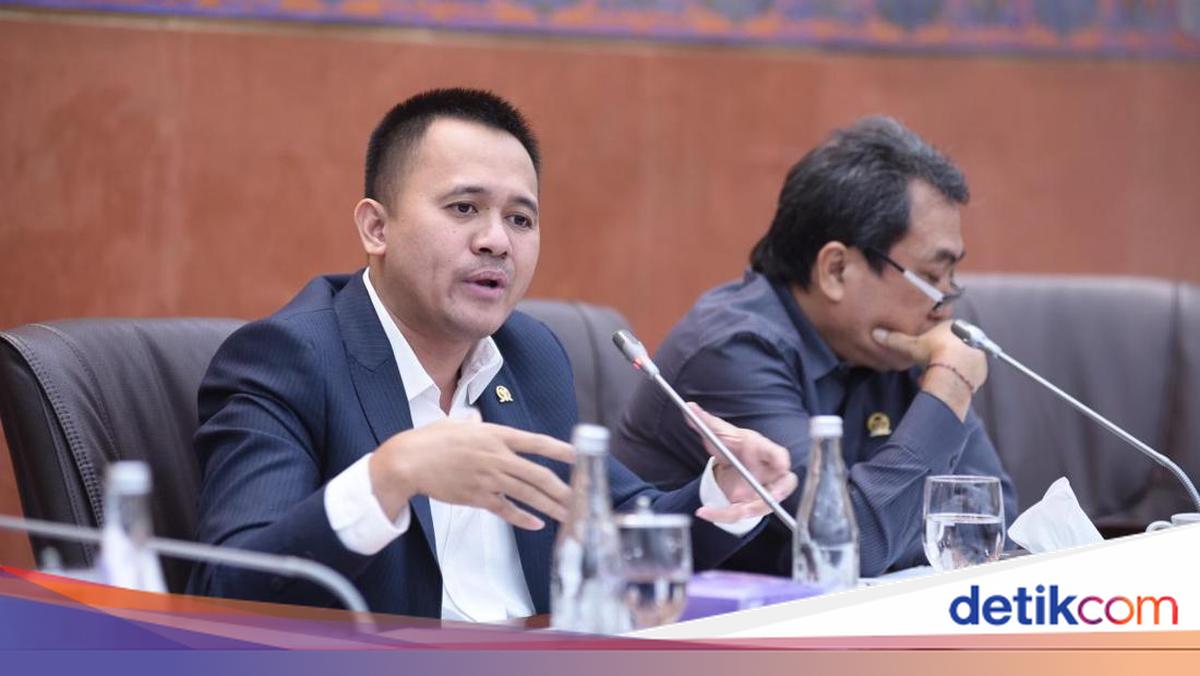
PDIP Deputy Chairman of Commission VI of the DPR, Mufti Anam, has highlighted the train collision involving the Argo Bromo Anggrek and a KRL at Bekasi Timur Station. Mufti Anam is urging a comprehensive investigation to uncover the causes and future safety measures for rail users.
“The collision incident in the Bekasi area shows that something is amiss in our railway safety governance. Transport that we have long prided ourselves on as the safest and most punctual mode is now revealing fundamental gaps that should not occur in this technological era,” Mufti told reporters on Wednesday (22/4/2026).
Mufti heard that the Argo Bromo train did not receive a signal regarding the KRL ahead, leading to the accident. He spotlighted the layered security system that has not yet been implemented in Indonesia.
“I received information that the long-distance train did not get a signal about the train ahead. If true, this is a system failure and possibly even human error,” Mufti stated.
“In many countries, systems like Automatic Train Protection (ATP) or European Train Control System (ETCS) are the minimum standard to prevent collisions, even if the driver makes a mistake. Why hasn’t a layered safety system like this been fully and optimally implemented in Indonesia?” he added.
Mufti said that the government has long provided various beneficial facilities to KAI. The legislator expressed disappointment with KAI for failing to protect people’s lives.
“KAI has enjoyed a very strong position, even tending towards monopolistic in the rail transport sector. The state provides various facilities: state capital injection (PMN), public service obligation (PSO) subsidies, strategic project assignments, to regulatory protections so that competitors are almost non-existent. We are disappointed that KAI, as one of the most privileged SOEs, has failed to protect people’s lives,” Mufti said.
Mufti stated that he has long reminded that investments are too focused on physical infrastructure, tracks, stations, to new trains. However, he continued, technology-based safety systems and risk management have not progressed in tandem.
“What is also very concerning is that all the victims of this accident are women. How is our safety design? Train carriage design standards must consider crash safety, not just capacity and comfort. Safety should not be half-hearted. It’s not enough to just protect from social crimes, but also from accident risks,” he revealed.
He urged a thorough investigation into the causes of the train accident at Bekasi Timur. Mufti requested that the director and high-ranking KAI officials resign if human error is proven.
“I urge immediate steps. First, conduct a comprehensive and independent investigative audit, not just an internal investigation. It must be transparently opened to the public on where the failure points are, whether in the signal system, SOPs, or human error,” Mufti said.
“If human error is proven, we demand the President Director and other top leaders to take responsibility and resign. An apology and evaluation are not enough,” he added.
Mufti proposed that KAI accelerate the implementation of automatic technology-based safety systems across all lines, especially busy lines like Jabodetabek. According to him, no train should run without digital protection.
“Third, total evaluation of operational management and safety culture within KAI. Do not let business orientation and punctuality override safety aspects. Fourth, redesign carriage composition based on risk, including evaluation and repositioning of women’s carriages to be safer,” Mufti said.
Mufti also highlighted another factor, a taxi stuck at a level crossing in the Bekasi Timur Station area. He demanded that all illegal rail crossings be permanently closed.
“In this all-technological era, I think it’s outrageous to still allow these illegal gates. All crossings must be mapped and secured, officially guarded or equipped with automatic gates. Illegal crossings must be immediately closed permanently or at least protected with digital systems like sensors and warning alarms,” he added.
Previously, the Argo Bromo Anggrek train collided with a stationary KRL at Bekasi Timur Station on Monday (27/4) night. The incident began with a taxi stuck blocking the KRL at a crossing not far from Bekasi Timur Station.
The taxi blocking the KRL caused the KRL at Bekasi Station to wait. The Argo Bromo Anggrek then arrived and collided from behind. The train accident resulted in 15 fatalities and dozens injured.