
PDIP East Java Halal Bihalal: Said Abdullah Warns of Dangers in the Post-Truth Era
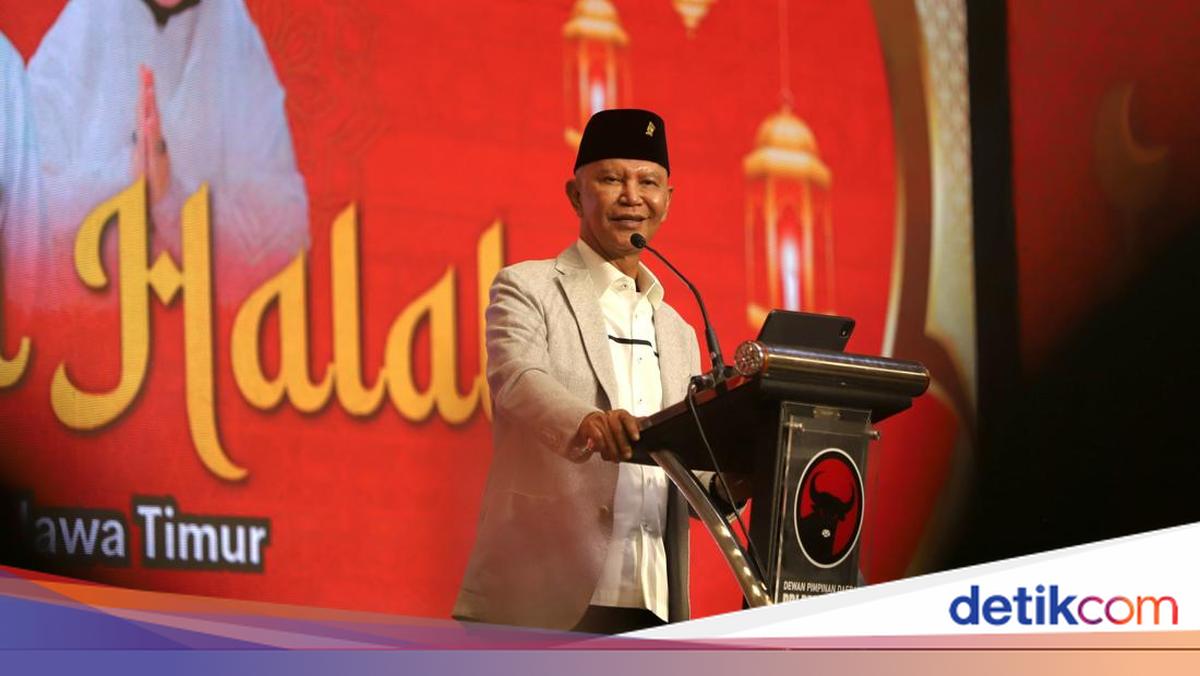
I will only convey two things, which I consider important messages from the social worship in the month of Syawal. First, about our identity in East Java, who we are, what our common problems are, and how our future struggles will unfold. Second, about the face of the world increasingly filled with falsehoods, whereas Syawal conveys messages of sincerity and honesty, and how we should respond,” said Said in a written statement on Sunday (12/4/2026).
Furthermore, Said emphasised that the people of East Java have strong socio-political roots in the relationship between santri and abangan. He described both as the basis of Ijo-Abang, representing the strength of Nahdlatul Ulama (NU) and PDI Perjuangan, which have taken root down to the village level.
Nevertheless, the social divisions once depicted by Clifford Geertz since the 1950s are now seen as increasingly merging. This is evident from the tendency of voters who identify with NU but channel their support to PDI Perjuangan. Therefore, Said affirmed that his party will not abandon NU, especially in East Java.
Said also highlighted the similarities in social conditions between the santri and abangan groups. Both are considered to face similar issues, from poverty, limited access to education, to difficulties in obtaining decent jobs. In his view, the differences between them are very thin compared to the similarities in fate they face.
In that context, he affirmed the division of roles between NU and PDI Perjuangan. NU plays a role in empowering the social ummah, while PDI Perjuangan carries out political functions through policies at the regional to central levels to improve public welfare.
Ideologically, Said assessed that NU and PDI Perjuangan share similar values, particularly in championing Islam Wasathiyah or moderate Islam. This value emphasises balance, justice, and tolerance, and rejects all forms of extremism.
Those principles, according to him, also serve as guidelines for PDI Perjuangan’s political steps, which prioritise friendly Islam and protect all groups of society, including minorities.
Said also opened opportunities for NU figures to contribute to PDI Perjuangan. The involvement of kiai and pesantren leaders is seen as part of political ijtihad as well as efforts at national-level dakwah.
In addition, Said recalled the history of the halal bihalal tradition initiated by KH Abdul Wahab Hasbullah together with Soekarno in 1948. That tradition emerged as an effort to ease political conflicts and strengthen national unity in the early days of independence.
According to him, halal bihalal is not merely a ceremonial tradition, but a means to strengthen silaturahmi, acknowledge mistakes, and foster honesty. These values are important amid a world condition deemed increasingly filled with falsehoods.
He also touched on the phenomenon of the post-truth era, where society finds it increasingly difficult to distinguish between truth and lies. According to Said, social media often becomes a space that reinforces falsehoods through various narratives that do not always reflect reality.
As a reflection, Said exemplified that the practice of falsification has occurred since the early days of Islam, but it could be recognised due to clear authority and quality. This differs from the current situation where falsehoods can easily spread and influence public perception.
In facing that situation, he invited the public to strengthen tabayun, maintain silaturahmi, and prioritise sound reason and openness of heart in responding to various information.
“Frequently engage in tabayun and silaturahmi, elevate sound reason, and always open the heart, holding firmly to the path approved by Allah SWT. All of this becomes a guide to navigating life’s path to find truth, not easily swayed by falsehoods,” said Said.
He added that these values must also be reflected in political practices that prioritise consistency, justice, as well as open and humble attitudes in building relationships with various parties.