
PDIP Demands Salary Cuts Begin with President and Vice President
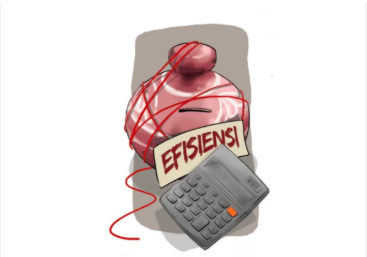
The Indonesian Democratic Party of Struggle (PDIP) has responded to discussions on salary cuts for state officials to achieve budget savings by emphasising the importance of setting an example from the highest levels of national leadership.
PDIP Central Board Chairman Andreas Hugo Pareira called for the policy to begin with President Prabowo Subianto and the Vice President before being applied to other officials.
According to Andreas, cost-saving measures must be initiated by leaders as a genuine commitment to the public. “If we are to cut costs and economise, then it must start from oneself first. Starting from the president, vice president, ministers, and state officials throughout the republic,” Andreas told reporters on Tuesday, 17 March.
He stressed that society needs concrete examples from leaders regarding efforts to improve state budget efficiency. “Set an example from the top that in this nation we must truly be more efficient and economical,” said the Deputy Chair of Commission XIII of the Indonesian Parliament.
Andreas also criticised the possibility that cost-saving measures would be imposed only on certain parties whilst the government was seen to still have inefficient budget allocations. “Do not order others to cut costs whilst the government itself continues to allocate budgets inefficiently, with waste occurring everywhere,” he asserted.
Furthermore, he urged the government to conduct a comprehensive evaluation of budget allocation across all ministries and institutions. “In technical terms, the budget needs to be reviewed again at each ministry and institution. There are allocations that are not pressing and not urgent that could be postponed,” Andreas explained.
The salary cut discussion was previously raised by President Prabowo Subianto as one option for savings amid pressure from the global crisis caused by conflicts in Eastern Europe and the Middle East.
Prabowo cited the example of Pakistan’s government, which has cut salaries for officials and members of parliament as a cost-saving measure amid the global crisis situation. He emphasised the importance of proactive measures to keep Indonesia economically secure.
“We cannot assume that whatever happens we are safe. We are grateful we are safe, but we must take cost-saving measures,” Prabowo said.
In his presentation, Prabowo explained that Pakistan has taken various drastic steps, ranging from implementing work-from-home to reducing working days. “They have implemented work from home for all offices, both government and private, with 50 percent working from home. Then they cut their working days to just four days,” he said.
Additionally, Pakistan has also cut the salaries of state officials to be allocated to vulnerable populations. “They have even reduced salaries for cabinet members and members of parliament, and these savings are collected to help the weakest groups,” he continued.
Beyond that, Pakistan’s government has also restricted fuel usage, halted non-priority spending, and reduced foreign visits. “They have halted all foreign visits, are not permitted to use government funds for events, and many other expenditures have been stopped,” Prabowo explained.
He stressed that these measures serve as an example that Indonesia could study when facing global pressures. “This is merely an example. I believe we should also strive for cost savings. I am confident that in 2-3 years we will be very strong, but we must still economise,” he concluded.