
PBN Officially Established in Yogyakarta, Ahsanul Haq Leads Consolidation of Global Bawean Diaspora Strength
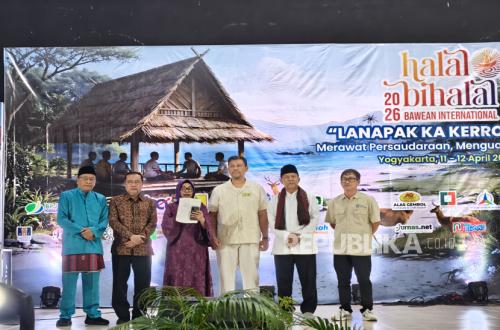
The wave of revival among the Bawean diaspora is increasingly taking shape. Through a spirit of unity and consensual deliberation, the Perkumpulan Bawean Nusantara (PBN) has been officially established as a strategic forum that not only weaves social bonds but also shapes the future of the Bawean community at national and international levels.
This association was born from the initiative of seven Bawean figures with a grand vision for the advancement of their homeland, namely M. Yahya Zaini, Mustafa Kamal, M. Faisol, Dr. Zainun Nasihah Ghufron, Ahsanul Haq, Bahtiar Efendi, and Akhmad Fatah Yasin (Afys). They united their ideas in a single forum that emphasises the importance of consolidating the strength of the Bawean diaspora, which has hitherto been scattered across various regions.
In the outcome of the consensual deliberation of the extended Bawean international family, Ahsanul Haq has been entrusted with the mandate as National Coordinator of PBN. This appointment is seen as a strategic step to strengthen the organisation’s direction, making it more structured, progressive, and impactful.
One of PBN’s initiators, Dr Zainun Nasihah Ghufron, emphasised that the presence of PBN is not merely a ceremonial organisation, but a collective struggle platform to elevate Bawean’s potential to a higher level.
“PBN was born from both anxiety and hope. We want Bawean not only to be known as an origin region, but also as a reckoned intellectual, economic, and cultural force,” she stated.
She added that thus far, the great potential of the Bawean community has not been managed optimally due to the lack of a forum capable of integrating various elements. Therefore, PBN emerges as a bridge connecting generations, across professions, and across countries.
According to her, PBN’s main focus encompasses strengthening in various strategic sectors, from education and economy to leadership. Additionally, the preservation of traditions, culture, and ancestral heritage is an important pillar that must not be overlooked amid the tide of modernisation.
“We must not advance economically while losing our cultural identity. PBN wants to ensure that both progress hand in hand,” she said.
Furthermore, the formation of PBN also serves as a strong signal that the Bawean diaspora is beginning to transform from a mere cultural community into a social force capable of making tangible contributions to regional and national development.
With networks spread across various countries, PBN has the potential to become a driving engine for global collaboration that can open opportunities for investment, knowledge exchange, and strengthening the capacity of Bawean human resources.
Looking ahead, PBN’s greatest challenge is not only maintaining internal solidarity but also proving that the organisation can deliver concrete programmes that address the needs of the Bawean community, both in their birthplace and in the diaspora.
If managed well, PBN will not only be a symbol of unity but also a locomotive of change that propels Bawean towards a more advanced, competitive future while remaining rooted in the noble values of ancestral heritage.