
Paying Vehicle Tax Without ID Card, Traffic Corps Ensures Verification Still Applies
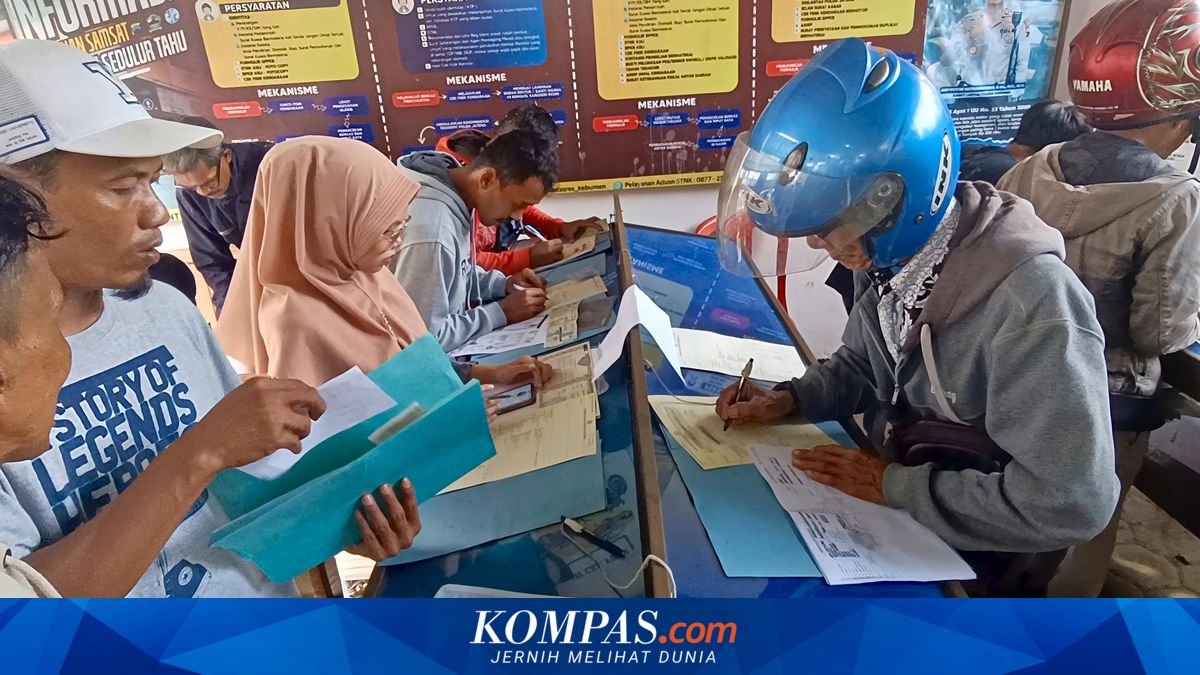
JAKARTA, KOMPAS.com – The policy on paying vehicle taxes without the original owner’s ID card has garnered widespread attention. On one hand, this regulation provides convenience for the public facing document issues. However, on the other hand, concerns have arisen regarding the potential misuse of vehicles due to weakened ownership traces. Nevertheless, the National Police Traffic Corps (Korlantas) emphasises that this policy does not eliminate the verification process. Officers still conduct checks to ensure the status of the vehicle brought by the taxpayer. This situation could impact the difficulty of tracing in cases of traffic violations or even criminal acts. Without accurate ownership data, law enforcement processes could become more complicated. Director of Registration and Identification (Dirregident) of Korlantas Polri, Brigadier General Pol Wibowo, stated that this convenience is not without limits. By regulation, administrative obligations are also not removed. In Police Regulation Number 7 of 2021 on Motor Vehicle Registration, the owner’s identity remains a primary requirement. “In the Police Regulation, Police Regulation 7 of 2021 on Motor Vehicle Registration and Identification, it is stated that in every motor vehicle registration process, the ID card must be attached,” said Wibowo to Kompas.com (14/4/2026). “So the narrative is not without ID card; we will ask about it. We still ask because the process is to ensure that the vehicle has not changed hands,” he added. To prevent potential misuse, Korlantas adds a layer of security in the form of a mandatory declaration form for taxpayers. This form is not merely a formality. There are several important points that must be filled out by the taxpayer as a form of accountability. “Which contains that the person is indeed the owner of vehicle number such and such; second, the person applies for blocking; third is the commitment of the person to re-register next year,” he said. This step is an effort to close gaps amid a more lenient policy. Because without additional controls, vehicles could remain administratively active even after changing hands.