
Payas Dirga and Loloan Weaving of Jembrana Officially Recognised as Indonesia's Intangible Cultural Heritage
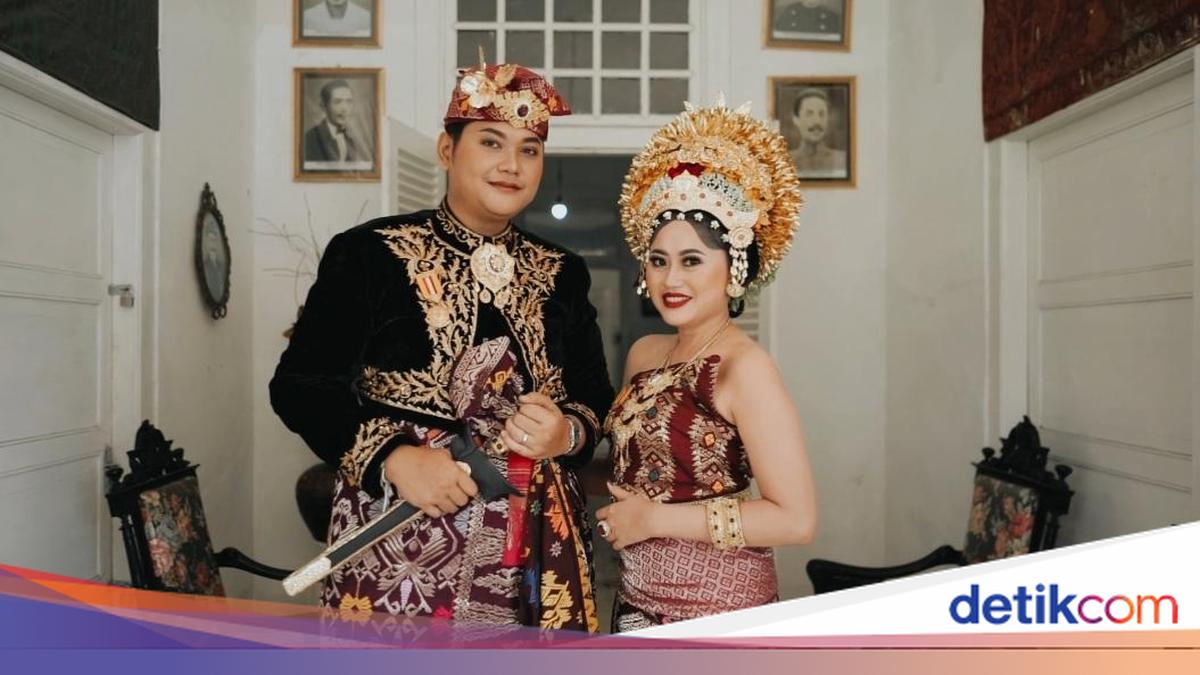
Two cultural works characteristic of the “Land of Makepung”, namely the payas dirga bridal costume and Loloan woven cloth, have been officially designated as Indonesia’s Intangible Cultural Heritage (WBTB) for 2025. A total of ten cultural treasures from Jembrana have been designated as WBTB.
The designation was approved by the Ministry of Culture (Kemendikbud) through an official certificate. The payas dirga is registered under number 034/WB/KB.00.01/2025, whilst the Loloan woven cloth bears the number 035/WB/KB.00.01/2025.
“Indeed there are two additional designations (WBTB). With the addition of these two works, the total now stands at ten cultural traditions from Jembrana that hold the status of nationally protected cultural heritage through 2025,” stated Anak Agung Komang Sapta Negara, Head of the Tourism and Culture Department (Disparbud) of Jembrana Regency, when confirmed on Monday (9/3/2025).
According to Sapta Negara, the payas dirga is far more than an ordinary bridal costume. This garment possesses significant historical value, originating from the grand wedding of the son of Jembrana’s seventh king in 1940. The costume represents a symbol of cultural harmonisation that blends Javanese, Chinese, Malay, and Bugis elements.
“Its uniqueness lies in the use of mendori flowers, which are now becoming increasingly rare, as well as the distinctive horn-shaped hairpiece accessory,” explained Sapta Negara.
Meanwhile, the Loloan woven cloth serves as a symbol of the Bugis-Malay ethnic identity in Negara District. This ikat weaving is governed by strict customary regulations, particularly the prohibition against using animal or human motifs. “Instead, craftspeople employ botanical and geometric patterns that symbolise the character of the Loloan community – which is assertive, courteous, and devout in religious practice,” added Sapta Negara.
“We continue to conduct an inventory of existing potential. Once information is entered into the Bali Cultural Inventory (Ceraken Kebudayaan Bali), we assess which works warrant submission. The process is quite rigorous because, beyond the physical work, competent sources of information must also be available,” said Sapta Negara.
Notably, the submission process has been conducted independently, without dedicated budgetary allocation. Jembrana’s Cultural Department has worked around budgetary constraints by collaborating with an external team from the Cultural Preservation Centre.
“We engaged an external team to assist in compiling academic documents and identifying expert sources, as our own capacity is also limited,” added Sapta Negara.
Through this designation, Sapta Negara hopes that public awareness regarding the preservation of cultural identity will increase, whilst simultaneously strengthening the appeal of culture-based tourism at the western end of Bali.
“The art forms that have already received WBTB status will continue to be showcased so that the public becomes aware of them, such as through city anniversary celebrations. During the ogoh-ogoh parade, we will also present art forms that have achieved WBTB status, such as bumbung gebyog, kendang mebarung, and jegog,” explained Sapta Negara.
Jembrana’s District Government has no intention of stopping here. Several local cultural potentials have been added to the WBTB nomination list for 2026, including jaje bendu, arja sewagati, arisan dedara, angklung reyong, and Loloan Malay language.
“We essentially submit two nominations each year. However, because the Minister has set targets for districts and cities across Indonesia, we have added more, with a minimum of five,” said Sapta Negara.
“We actually prepare these nominations one year in advance. For example, 2026 nominations were prepared in 2025. Our proposals include angklung reyong and Loloan Malay language. As five is the minimum, we have prepared these three. We are developing the academic documents,” added Sapta Negara.