
Patient safety: a foundational pillar for expanding JKN health services.
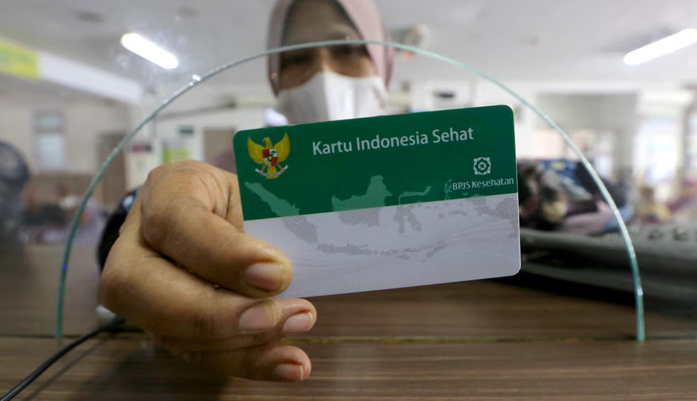
Deputy Health Minister Benjamin Paulus Octavianus emphasised that patient safety is one of the pillars that must be safeguarded in the administration of the National Health Insurance (JKN). ‘In the JKN system, we have a big responsibility to balance four things: access to services for the public, the quality of health services, the sustainability of financing, and patient safety,’ Benny said in a statement on Friday (22 May). He explained that the success of health service delivery should not be measured merely by the number of medical interventions, but by the appropriateness of the interventions. ‘The success of health service delivery is not merely to do more actions, but to provide the right actions to the right patients, at the right time,’ he asserted.
Benny underscored the Ministry of Health’s commitment to supporting BPJS Kesehatan to improve service quality and build an ecosystem that upholds anti-fraud measures.
At the same time, BPJS Kesehatan’s Chief Executive Officer Prihati Pujowaskito emphasised the agency’s commitment to widening access to health services as much as possible, while preventing financing irregularities. The National Awakening Day-118 momentum was chosen as a starting point to reinforce that commitment.
‘We take the spirit of National Awakening Day as a moment for BPJS Kesehatan together with the Ministry of Health and all stakeholders in health facilities to jointly pledge to uphold the integrity pact to open access to health services,’ Pujo said.
She explained that BPJS Kesehatan formally collaborates with 165 Primary Health Care Facilities (FKTP), 45 advanced services, and 43 hospitals across Indonesia. ‘All of this is to ensure health service delivery is of higher quality, expands access, and is free from financing irregularities or fraud. The people’s funds must be accounted for for services of quality,’ she concluded.
BPJS Kesehatan reminded prospective Hajj pilgrims to ensure their JKN enrollment remains active before departure. The City Government of Bontang assured that health services and JKN enrollment for residents would remain secure despite the redistribution policy for PBI participants from the East Kalimantan provincial government. Gus Ipul emphasised that the data-updating policy for PBI JKN subsidy recipients is intended to ensure state subsidies are targeted accurately. Rio also explained that the sudden deactivation of 11 million PBI JKN beneficiaries is a lesson not to be repeated. Health Minister Budi Gunadi Sadikin revealed that the wealthier segments of society are registered as recipients of the subsidy or PBI recipients of the JKN. The International Patient Safety Conference (IPSC) is the annual event organised by Apollo Hospitals, India, attended by experts from various countries. In healthcare, safety is a primary factor, perhaps more important than recovery.