
Passenger Traffic at Soekarno-Hatta Airport Reaches 1.9 Million to Date
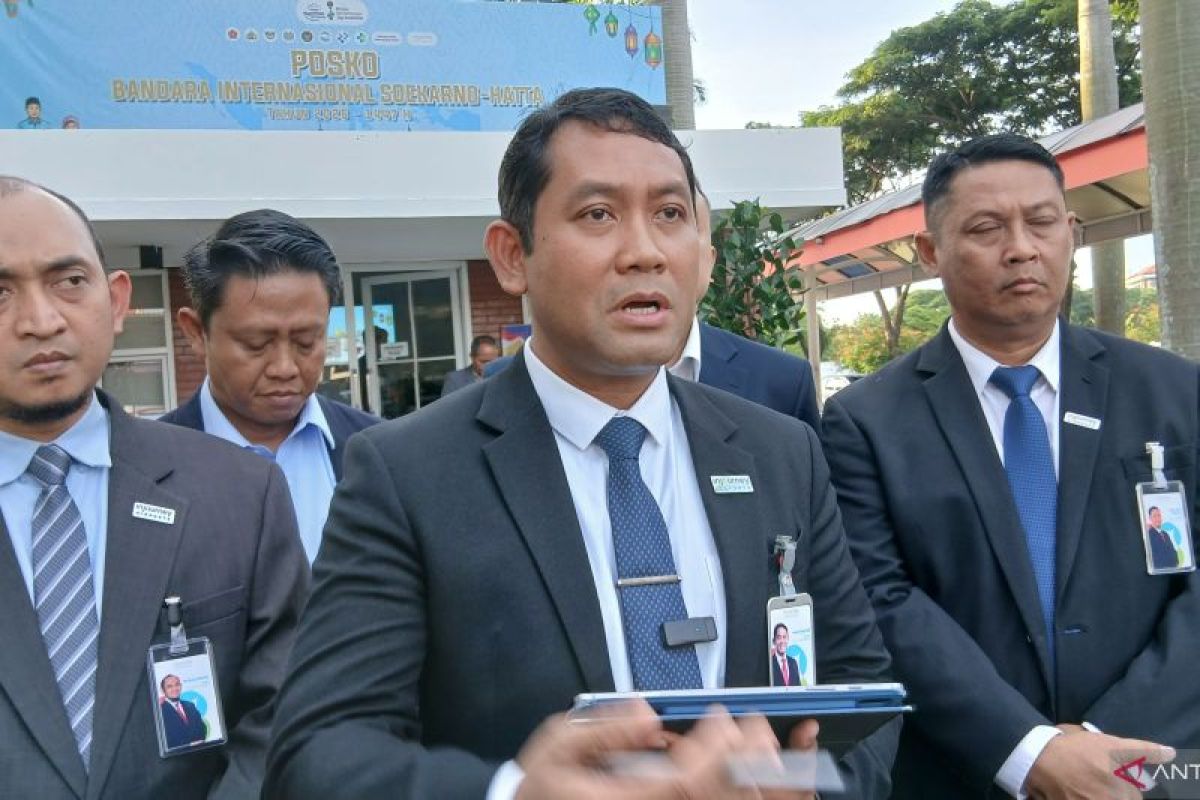
PT Angkasa Pura Indonesia (InJourney Airports) Soekarno-Hatta International Airport Branch in Tangerang, Banten, reports that passenger movement traffic from Saturday (14/3/2026) or H-7 to Tuesday today or H+3 of Eid al-Fitr 2026 has reached 1,983,067 people. “Based on our records from the initial mudik period from 14 to 24 March 2026, we have served 1,983,067 passengers,” said General Manager of Soekarno-Hatta International Airport Heru Karyadi to the media in Tangerang, Banten, on Tuesday. He stated that the 1.9 million passengers were served by 13,184 aircraft movements or a growth of 5.6 per cent compared to the same period in 2019 before COVID as a normal recovery period. “Up to today, we have served 13,184 flights, growing by 4.7 per cent compared to 2025 and 5.6 per cent compared to 2019,” he said. According to him, this growth is driven by an increase in passenger movement traffic that peaked since 14 March 2026 with a prediction of 177,000 people and actual realisation of 184,000 passengers. “And on 18 March (H-3) with a realisation reaching 190,000 passengers,” he added. He conveyed that the peak return flow at Soekarno-Hatta Airport will occur in two waves of passenger movements with an estimate of 198,387 passengers and 1,221 flights on Saturday (28/3/2026) upcoming. “Today we plan to serve 190,000 passengers, but the peak is still predicted for Saturday, 28 March,” he said. Meanwhile, the flight routes contributing to the increase in traffic growth during the Eid transport period are domestic destinations such as Denpasar, Kualanamu, Makassar, and Surabaya. Then, for international routes, the most popular destinations include Singapore and Kuala Lumpur. Furthermore, Heru added that despite the significant surge in traffic, airport operations continue to run smoothly through strengthened cross-agency coordination and optimisation of services throughout all terminal areas. To support smoothness, they are also preparing several modes of transportation such as shuttle buses and others operating 24 hours. Meanwhile, the Skytrain operates until 23:00 WIB, because it requires five hours for daily maintenance processes. “We never reduce personnel readiness. The number remains the same as during the mudik flow. However, our focus during this return flow is more on the arrival area, starting from the apron, arrival corridor, to transportation modes. If during the previous mudik flow the focus was on departure, starting from the parking area, check-in, to boarding lounge,” he said.