
Passenger Plane Carrying 229 People Plunges into Freefall: The Main Cause Identified
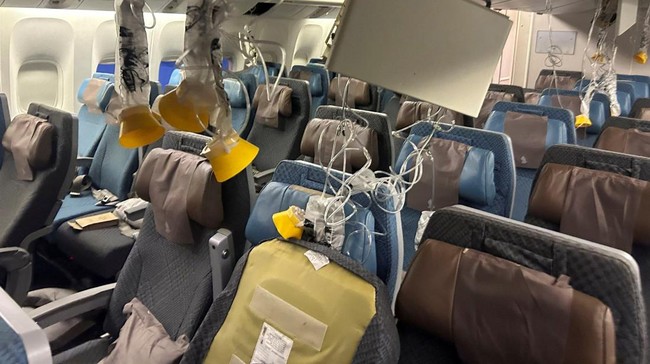
An in-depth investigation into the severe turbulence that struck Singapore Airlines flight SQ321 in 2024 has moved into a new phase. The Singapore Transport Safety Investigation Bureau (TSIB) has officially released its final report, revealing surprising findings about a potential failure in the aircraft’s weather radar system that left the pilots unaware of approaching bad weather along their flight path. Citing the official Channel NewsAsia (CNA) report on 19 May 2026, the comprehensive report notes that the extreme weather triggering fatal turbulence over Myanmar airspace was unlikely to have been captured or displayed by the aircraft’s weather radar. As a result, cabin crew continued normal duties and served breakfast before the aircraft suddenly lurched violently, ultimately killing one passenger and injuring dozens. The investigators regard the testimonies of the flight crew as credible and consistent with digital evidence found on the flight recorder. Based on cockpit voice recordings, there was no discussion of severe weather conditions in the moments before the turbulence, which demonstrates that the navigational displays were showing a clear, safe route away from storms.
What happened to SQ321?
At the time, the Boeing 777 was cruising at 37,000 feet near the southwestern Myanmar region on 21 May 2024 when extreme turbulence struck without warning. The rapid vertical accelerations hurled unbuckled passengers into the cabin ceiling. Of the 229 people on board, 79 passengers and crew sustained injuries, some with severe head and spinal injuries. The incident also claimed the life of a 73-year-old British man, prompting an emergency landing in Bangkok, Thailand.
Singapore Airlines has publicly apologised and paid financial compensation to the injured. The weather radar component of the ill-fated aircraft was subsequently removed and flown to the United States last year for a series of rigorous laboratory tests.
Possible Weather Radar Issue
The investigation identifies strong indicators of radar under-painting or no-painting, where the radar system detects bad weather much lower in intensity than it actually is or fails to detect it altogether. The finding is reinforced by maintenance records of SIA’s Boeing 777 fleet, which show dozens of similar instances across thousands of flights. “The investigative team believes that, given the maintenance records, flight crew observations of under-painting phenomena do indicate a problem with the weather radar system,” TSIB wrote in its official report.
However, the weather radar manufacturer unnamed in the report disputed the investigators’ conclusions, stating that their system functioned normally. Tests across various temperature and pressure simulations did not yield strong evidence that their radar failed to detect weather during the fatal flight.
Safety Recommendations
To prevent a recurrence, TSIB issued emergency recommendations to Boeing to promptly draft tactical guidelines for pilots to identify radar failure signs mid-flight. The International Civil Aviation Organization (ICAO) was urged to require older wide-body jets to be fitted with more advanced cockpit visual recording systems. In response to the findings, a Singapore Airlines spokesperson said the airline accepted the investigation results and is fully committed to raising operational safety standards. The airline also updated its turbulence-monitoring app on pilots’ tablet devices.
“Since the incident, we have proactively reviewed our turbulence management processes and enhanced them. We sincerely apologise to all passengers and crew aboard SQ321 for the traumatising experience they endured,” the spokesperson said on Tuesday.