
Parliamentary Member: Widening 2025 State Budget Deficit Reflects Structural Fiscal Pressure
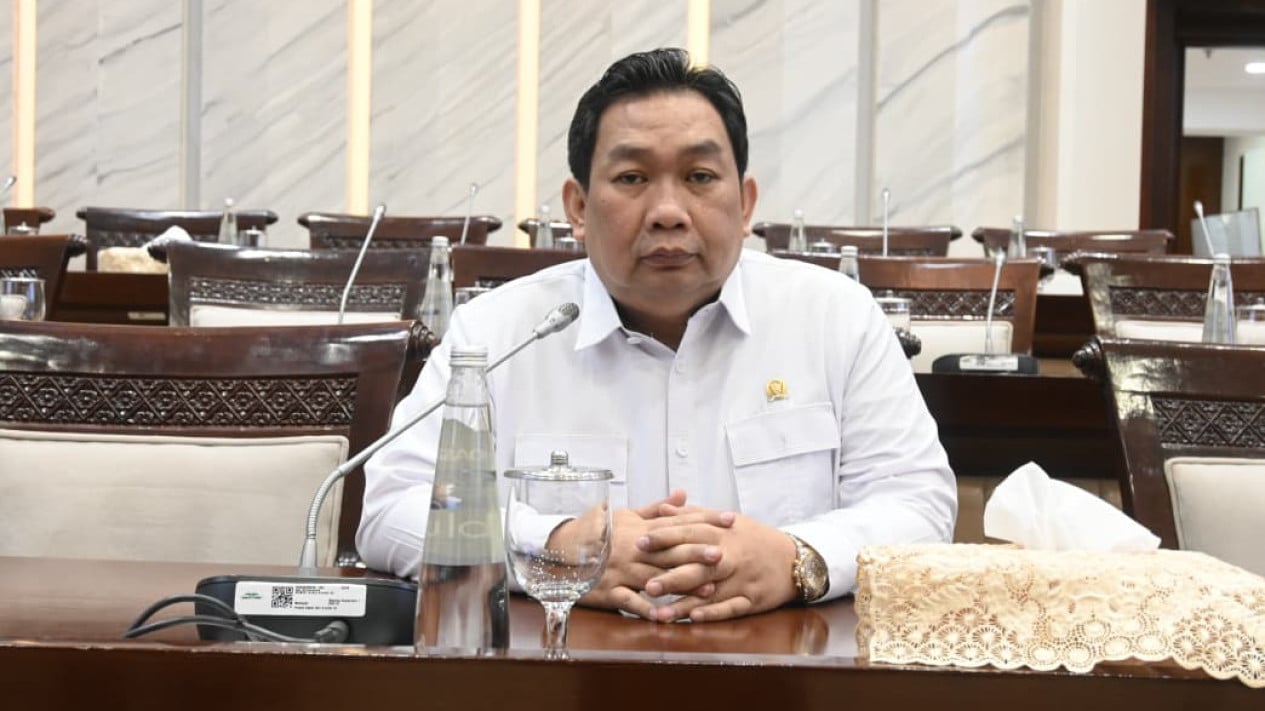
Jakarta – A member of Commission XI from the Golkar Party faction in the Indonesian House of Representatives, Eric Hermawan, has assessed that the 2025 state budget realisation, which shows a widening deficit, signals strong structural pressures in national fiscal management.
He highlighted state revenue realisation that reached only Rp2,756.3 trillion, or 91.7 per cent of the target of Rp3,005.1 trillion, whilst state spending remained high at Rp3,451.4 trillion. This condition pushed the deficit to widen to Rp695.1 trillion, or approximately 2.92 per cent of GDP, approaching the 3 per cent ceiling established by law.
He explained that the revenue shortfall, particularly from the taxation sector, became the dominant factor in fiscal imbalance. Tax revenue realisation reached only Rp2,217.9 trillion, or 89.0 per cent of the target, with a shortfall of approximately Rp273 trillion.
According to Hermawan, this weakening undermined the function of taxation as the backbone of state financing and increased dependence on debt.
Meanwhile, although Non-Tax State Revenue (PNBP) reached 104 per cent of the target, or Rp534.1 trillion, this surplus was relatively small and unable to cover the large gap in the taxation sector.
On the expenditure side, Hermawan highlighted the existence of allocation distortions indicating weak fiscal discipline. Ministry and agency spending surged to Rp1,500.4 trillion, or 129.3 per cent of the target, whilst non-ministry spending, which includes subsidies and social protection, was realised at only 71.5 per cent, or Rp1,102.0 trillion.
This imbalance, he argued, did not merely reflect budget control problems but also risked reducing the effectiveness of spending in driving inclusive economic growth.
Furthermore, Hermawan recalled that the deterioration of the primary balance from the target of Rp63.3 trillion to a deficit of Rp180.7 trillion represented a serious indicator of increasing fiscal pressure.
This condition showed that debt financing was not entirely used for productive spending but also to cover existing fiscal obligations.
On another front, budget financing also increased significantly to Rp744.0 trillion, or 120.8 per cent of the target, which had implications for increasing debt risk and financing costs in the future.
Therefore, Hermawan emphasised the urgency of credible fiscal consolidation in 2026. He noted that the government was targeting state revenue of Rp3,153.6 trillion, with a focus on increasing tax revenue to Rp2,693.7 trillion and reducing the deficit to 2.68 per cent of GDP.