
Parliamentary Education Commission Supports Ban on Instant AI in Schools to Prevent Student Dependency
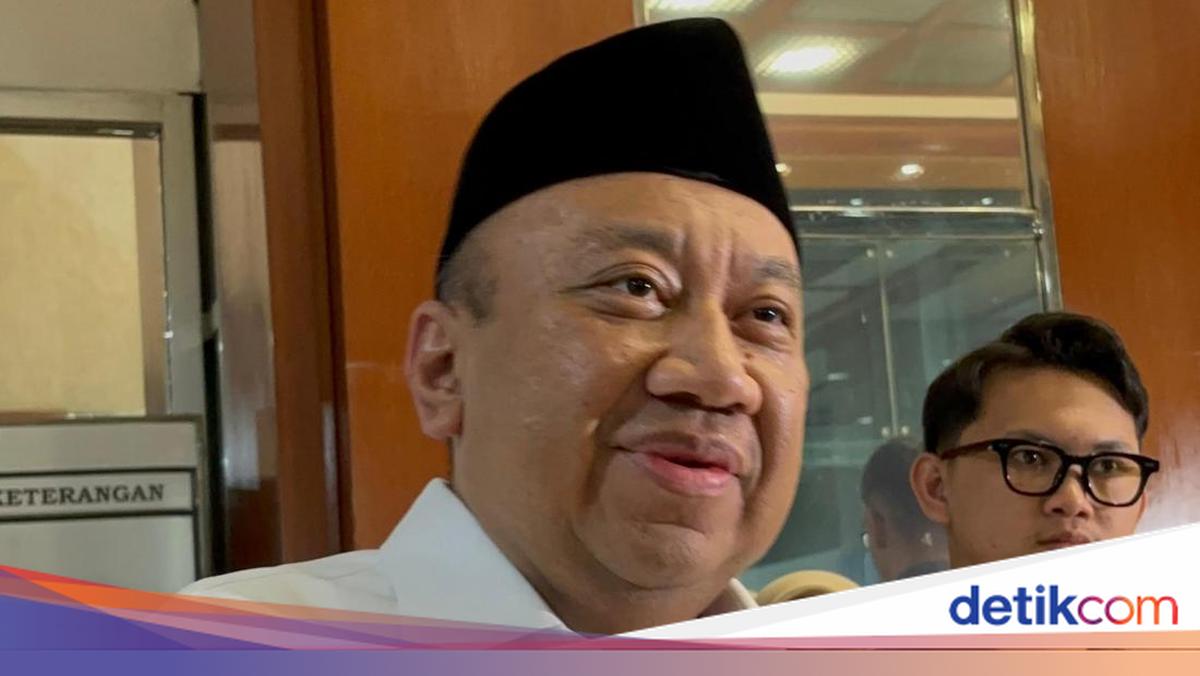
Vice-Chair of the House of Representatives Education Commission, Lalu Hadrian, has endorsed the government’s decision to ban students from primary through secondary school from using instant AI tools such as ChatGPT. Lalu believes that artificial intelligence and coding should be incorporated into the curriculum.
“Regarding the Joint Ministerial Decree issued by seven ministers prohibiting the use of instant AI such as ChatGPT for primary, junior secondary, and senior secondary students, we view this as an extremely prudent policy and we offer our support,” Lalu told reporters on Friday, 13 March 2026.
According to him, the primary objective of the policy is to prevent students from becoming dependent on technology that provides instant answers. He regards the policy as a wise step forward.
“At the basic education level, the principal focus should indeed be on developing students’ reasoning and logic, not making them dependent on technology that provides instant answers,” he said.
Lalu believes that technological exposure remains important to ensure Indonesia’s education curriculum remains relevant to contemporary developments. He welcomed the government’s plan to include artificial intelligence and coding in the curriculum.
“We also welcome the government’s plan to incorporate AI and coding into the curriculum. This is important to ensure our curriculum remains relevant to the times, yet within the framework of strong regulation,” he explained.
Lalu hopes the government will be consistent in implementing the policy. He argues that if AI usage is restricted to prevent students from becoming intellectually lazy, the government must simultaneously provide space for responsible technology learning.
“With this Joint Ministerial Decree, we hope the government will also be consistent. If on one hand there is a ban on AI usage so students do not become lazy thinkers, then on the other hand, the government must also work to ensure AI and coding become elective subjects in the curriculum, so students can learn the technology responsibly,” he added.
Furthermore, Lalu supports the government’s plan to develop a specialised AI platform that is safe for children to use. He said this aligns with the spirit of protecting students from negative content.
“In fact, we see positive steps have already begun, for example with the launch of the ‘Bijak Cerdas Berdigital’ (Digital Wisdom Smart) platform by the Coordinating Ministry for Human Development and Culture recently, which can be accessed free of charge by children, teachers, and parents. So we hope more comprehensive and serious platforms continue to be developed,” he said.
Earlier, Coordinating Minister for Human Development and Culture Pratikno explained the contents of the joint ministerial decree containing guidelines for the use of digital technology and artificial intelligence in formal, non-formal, and informal education pathways. Pratikno stated that one provision prohibits the use of instant AI tools such as ChatGPT for educational purposes from primary through senior secondary level.
“For example, basic and secondary education is not permitted to utilise instant AI, such as asking ChatGPT and so forth,” said Pratikno at the Coordinating Ministry’s office in Central Jakarta on Thursday, 12 March.
Despite this, Pratikno noted that AI will not be entirely banned at basic and secondary education levels. He said AI can still be used as an educational support tool.
“Using artificial intelligence in basic education, for instance, is designed for educational needs. So this is not a complete ban. Because we also need to utilise this technology to support education,” he said.