
Parliamentary Budget Committee cites MBG allocation in education budget as political decision
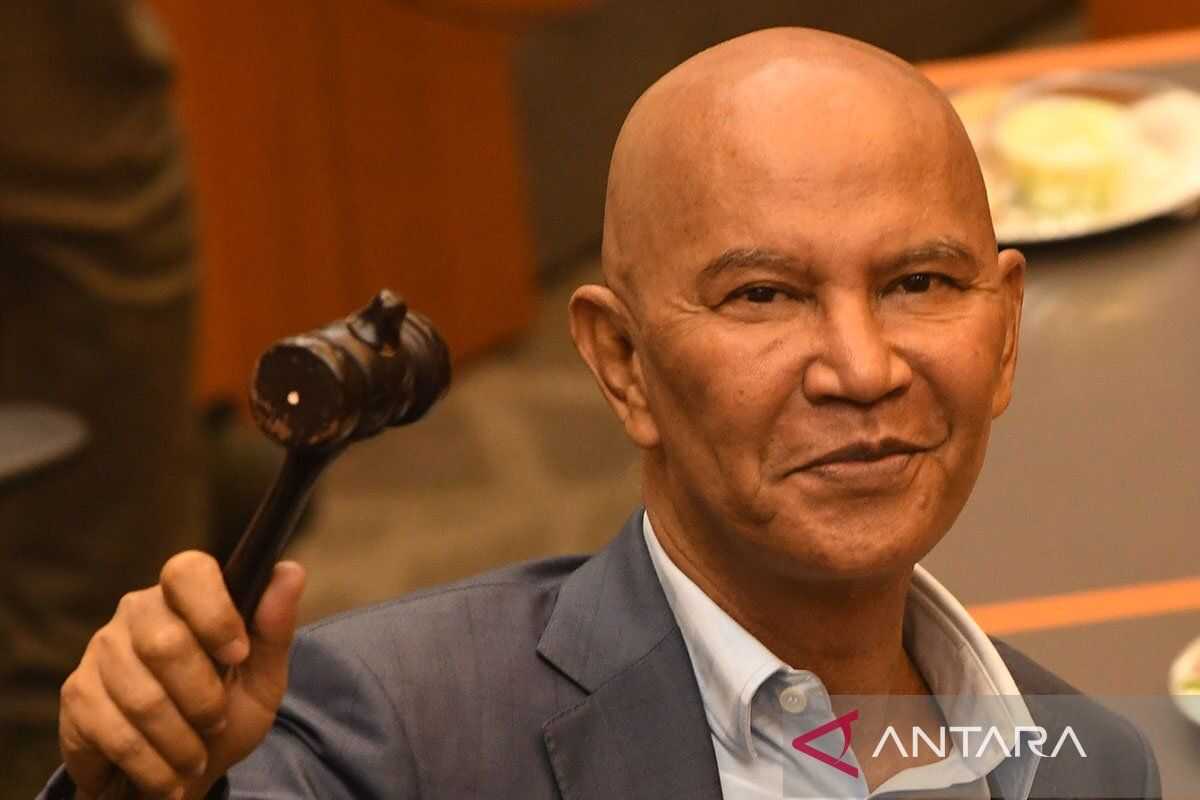
Jakarta — The Parliamentary Budget Committee (Banggar DPR) of the Republic of Indonesia has stated that the allocation of the Free Nutritious Meals (MBG) programme budget for 2025 and 2026, classified within the education budget line, constitutes a political decision between parliament and the government.
“Whether placing the MBG budget as part of the education budget can be interpreted as part of the education budget as intended by the constitution is a question. What is clear is that the government and parliament have decided it in law through the State Budget Law (APBN),” said Banggar DPR Chair Said Abdullah in a statement in Jakarta on Friday.
He noted that the State Budget and Revenue Law (APBN) is the sole law whose draft is proposed by the government to parliament. Consequently, parliament’s position on the proposed APBN (RAPBN) under discussion is limited to modifying, increasing, or reducing budget allocations for programmes and ministries or institutions jointly agreed upon by the government.
In accordance with the constitution, parliament has the authority to reject the entire RAPBN entirely or conversely approve it.
Since President Prabowo Subianto led the government and submitted the APBN for 2025 and 2026, Said explained that the education budget allocation complies with the constitutional mandate of 20 per cent of state expenditure.
The education budget allocation in the 2025 APBN is recorded at Rp724.2 trillion and in 2026 at Rp769 trillion. In these two budget years, the education budget allocation includes the MBG budget, with 2025 at Rp71 trillion and 2026 at Rp268 trillion.
In 2026, he stated that the National Nutrition Agency (BGN) received a budget allocation in accordance with the APBN law of Rp268 trillion, which aims to support the MBG programme by Rp255.5 trillion and Rp12.4 trillion for programme management support.
“Of the MBG programme budget of Rp255.5 trillion, Rp223.5 trillion is allocated for education functions,” he said.
Regarding the statement by the Minister of Primary and Secondary Education that his ministry’s budget allocation has increased, the Banggar DPR Chair did not deny that this is accurate.
However, he continued, the increase in allocation is distinct from the MBG budget. The increase is a consequence of the rise in state expenditure from 2025 to 2026, since state expenditure serves as the basis for the percentage calculation of the 20 per cent education allocation.
He noted that budget increases were not only received by the Ministry of Primary and Secondary Education, but also by the Ministry of Higher Education, Science and Technology; the Ministry of Religious Affairs; the Ministry of Social Affairs; and the Ministry of Public Works, in performing their education functions under the APBN.
The Ministry of Primary and Secondary Education’s budget increased by Rp21.5 trillion; the Ministry of Higher Education, Science and Technology by Rp3.3 trillion; the Ministry of Religious Affairs by Rp10.5 trillion; the Ministry of Social Affairs by Rp4 trillion; and the Ministry of Public Works by Rp1.7 trillion.
Nevertheless, Said expressed respect for civil society groups that have filed a lawsuit with the Constitutional Court regarding the MBG budget within the education budget allocation.
“Whether this basis is legally sound is a matter only the Constitutional Court can determine regarding whether this policy is correct or not,” he said.
However, with conviction and based on various constitutional assessments, he affirmed that parliament and the government have made this decision.