
Parliament Requests WFH Policy Not on Mondays and Fridays: Concern Over Extended Holidays
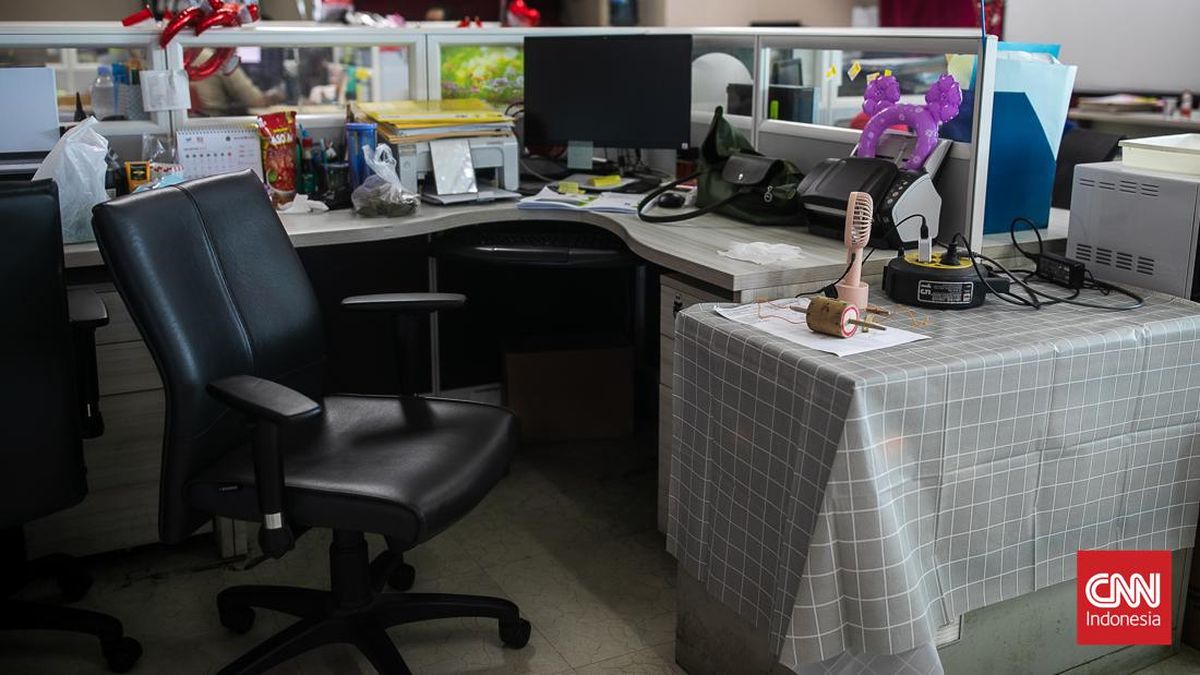
Commission II of the House of Representatives has requested that the Work From Home (WFH) policy to curb fuel oil (BBM) consumption should not be implemented on Mondays and Fridays.
Member of Commission II of the House of Representatives and Chairman of the PDIP Central Executive Board, Deddy Sitorus, stated that this is important to ensure that WFH implementation does not lead to extended holidays.
According to him, if that happens, it is not impossible that it would instead increase fuel consumption.
“The purpose of WFH is what? If it is to save scarce fuel, then it is indeed best not to include Fridays and Mondays,” he told reporters on Friday (27/3).
“This is to prevent WFH from being turned into a long weekend holiday, so that the original goal will not be achieved and could even potentially increase fuel consumption,” he added.
Therefore, Deddy assessed that the WFH policy is most suitable to be implemented from Tuesday to Thursday, depending on the needs of each agency.
On the other hand, he also emphasised that the WFH policy must be accompanied by standard operating procedures (SOP) and strict monitoring mechanisms to maintain the productivity of civil servants (ASN) and ensure key performance indicators (KPI) are met.
“Do all civil servants have computer devices, tablets, or communication tools that are continuously connected during working hours?” he said.
“This is important because without it, it would essentially be the same as a holiday since they cannot be monitored and do not do any work. Call it a holiday and not WFH,” he continued.
Not only that, according to him, there needs to be regulation on which work units can follow the WFH policy. He reminded that essential public service sectors must not implement WFH as it would cause a domino effect on the public and economic activities.
“How to regulate fields or units that can do WFH to ensure a sense of fairness? For this, I suggest that decisions on WFH shifts be left to each agency, regional heads, and institutional leaders,” he stated.
This WFH discourse coincides with the conflict between the US-Israel and Iran, resulting in the closure of the Strait of Hormuz, which has led to a rise in global oil prices.
The government is thus reviewing various options to save energy usage amid the conflict.
Several countries have already taken similar steps earlier. One of them is the Philippines, which has previously implemented a one-day-per-week WFH policy.