
Parliament Reminds that Energy Efficiency Measures Should Not Lead to Distance Learning in Schools
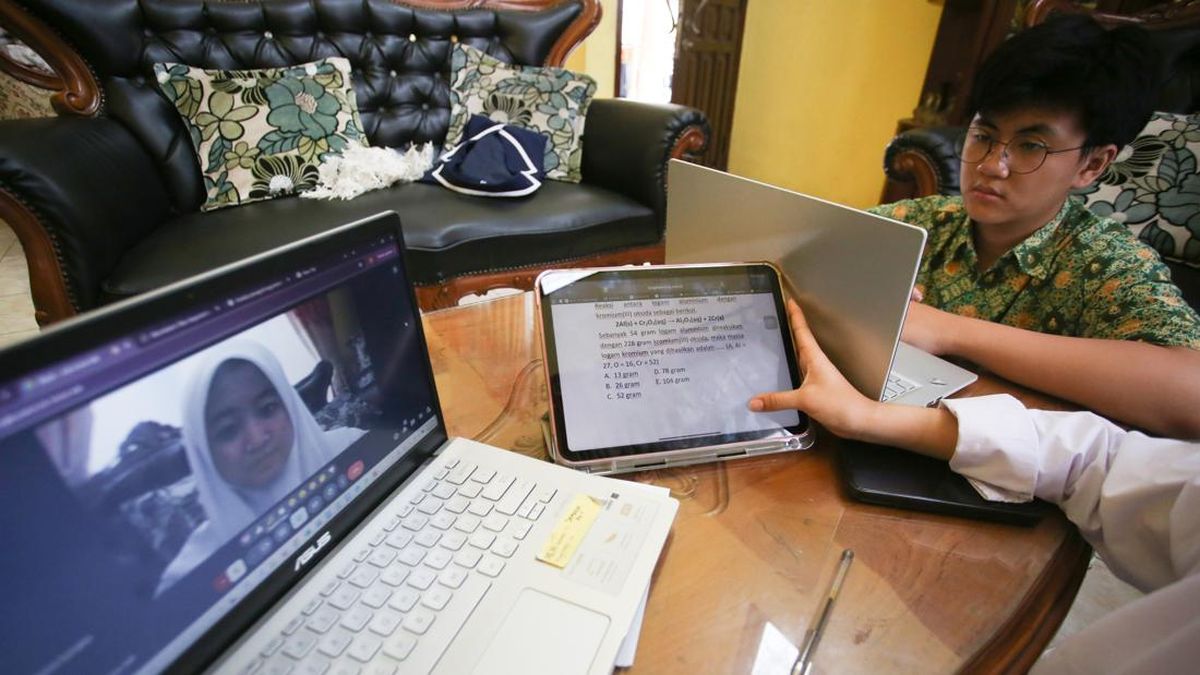
Commission X of the House of Representatives has reminded that energy efficiency measures, such as Work From Home (WFH) to curb fuel consumption during the Iran-US and Israel conflict, should not be applied to the education sector. Deputy Chairman of Commission X of the Indonesian House of Representatives, Lalu Hadrian Irfani, stated that energy efficiency amid global dynamics is indeed important. However, he considered it unwise to implement it in the field of education. Lalu emphasised that face-to-face learning is crucial for students to maintain educational quality and avoid the risk of learning loss from distance learning (PJJ). “We believe that face-to-face learning must remain the top priority,” he explained to reporters on Friday (27/3). He recalled that during the PJJ implementation in the Covid-19 pandemic era, the academic quality and character building of students through online learning were difficult to optimise. Moreover, Lalu noted that the current school zoning system is in place, and the majority of students have relatively short travel distances to school. Thus, the impact on energy consumption, particularly from transportation, is not significant. “Therefore, maintaining direct teaching and learning activities is a proportional step,” he clarified. He also supported the move by the Minister of Basic Education and Culture, Abdul Mu’ti, who ensured that teaching and learning activities would resume fully face-to-face in April 2026. According to him, the government’s flexible approach, where distance learning is applied on a limited basis and adjusted to the characteristics of the subject, is appropriate. “Practicum activities and learning that require direct interaction must certainly still be conducted face-to-face to maintain learning quality,” he stated. Therefore, he requested that in the future, there should be no more discussions on efficiency in the education sector in any form. “Energy efficiency policies remain important in responding to global dynamics. However, the decision to maintain face-to-face learning is a wise step, as it ensures that students’ right to learn and the quality of national education remain protected,” he said. This WFH discourse coincides with the conflict between the US-Israel and Iran, which has resulted in the closure of the Strait of Hormuz, impacting a rise in global oil prices. The government is reviewing various options to save energy usage amid the conflict. Several countries have already taken similar steps. One of them is the Philippines, which has previously implemented a one-day-per-week WFH policy.