
Parliament Member Reminds That Policy Must Consider Worker Welfare
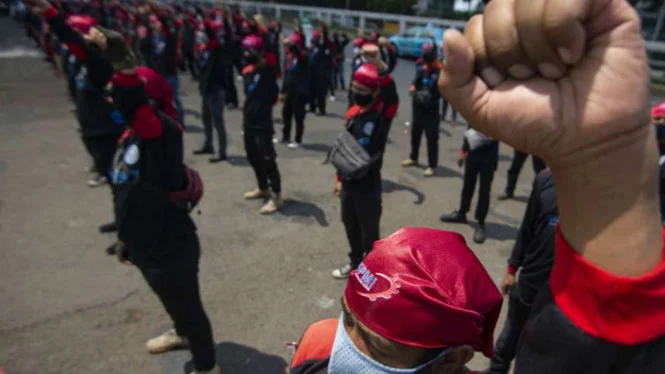
A member of the House of Representatives (DPR) Commission IX, Nurhadi, has voiced concerns regarding proposals to limit maximum tar and nicotine levels in cigarettes and electronic cigarettes. He argued that policy must be comprehensively reviewed with consideration for the continuity of employment in the tobacco product industry (IHT).
Nurhadi warned that overly strict restrictions on tar and nicotine levels risk triggering a domino effect on the domestic tobacco industry. He contended that drastic changes to production standards could directly impact the supply chain involving millions of workers and farmers.
“If tar and nicotine content standards are set too low and unrealistically, our farmers’ harvests will not be absorbed by industry,” Nurhadi stated in a written statement on Friday, 27 February 2026.
He explained that tightening tar and nicotine content could significantly alter the production patterns of the tobacco product industry. The most severe impact is expected in the hand-rolled kretek cigarette (SKT) sector, which has been traditionally labour-intensive with high employment absorption rates.
Nurhadi noted that the IHT sector employs approximately six million workers, ranging from factory labourers, distributors, to tobacco farmers. If new standards are implemented without considering industry conditions and domestic raw materials, the sector’s stability could be compromised.
“The IHT sector employs around six million workers. If existing standards are forcibly changed, the industry will be destabilised. This represents a threat to livelihoods for millions of people,” he stressed.
According to him, restrictions exceeding the natural capacity of domestic tobacco plants could also prompt producers to seek imported raw materials or switch to production technologies that reduce reliance on human labour. This could increase the risk of workforce reductions domestically.
Beyond employment concerns, Nurhadi also highlighted potential regulatory overlap if new policies are implemented. He noted that the National Standardisation Agency (BSN) through the Indonesian National Standard (SNI) already has provisions regarding tar and nicotine content limits in tobacco products.
“We already have the SNI instrument to maintain quality standards. The introduction of new regulations could potentially create regulatory duplication and legal uncertainty,” he said.