
Parliament deputy chair says women's access to political power still lags behind
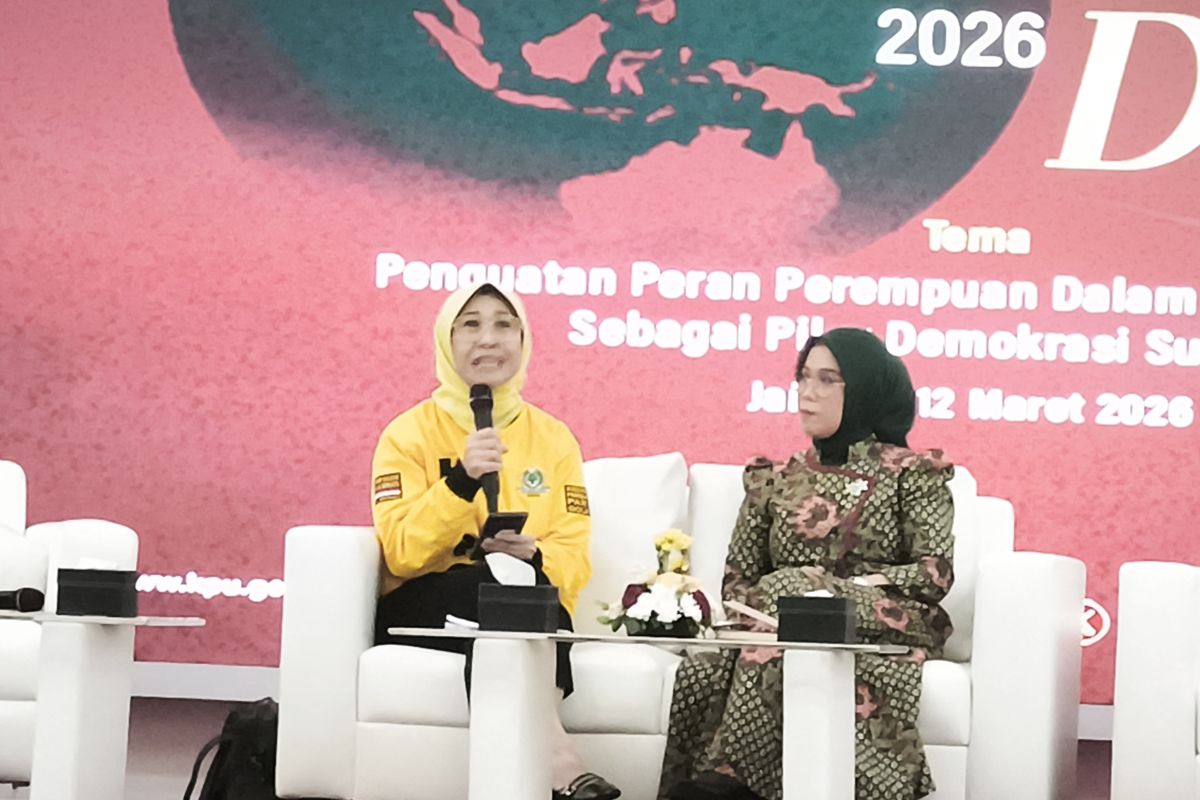
Jakarta — Deputy Chair of Commission X of the Indonesian Parliament (DPR RI) Hetifah Sjaifudian has assessed that the capacity of women in Indonesia continues to increase, yet access to political power remains lagging, requiring strengthened affirmative action policies and support for a more inclusive electoral system.
Hetifah stated that the increase in the gender development index seen in recent years has not been fully matched by an increase in women’s political participation.
“I was very interested to hear that our gender development index continues to improve. However, women’s political participation is not increasing at the same pace,” said Hetifah during a seminar on “Strengthening Women’s Role in the Electoral Process as a Pillar of Substantive Democracy” in Jakarta on Thursday.
According to her, this condition demonstrates that women’s capacity has actually advanced, but women’s access to political power remains behind.
“This means that women’s capacity has actually progressed, but access to power is still lagging,” she said.
She assessed that there remains significant opportunity for women to advance in politics, particularly in regions with better education levels. However, these opportunities have not been fully supported by systems capable of supporting women’s representation optimally.
Hetifah also appreciated several steps taken by election administrators to encourage women’s political participation.
Nevertheless, she assessed that efforts to increase women’s representation still require strengthened regulation, including through discussions of a revision to the electoral law that promotes more effective implementation of affirmative action policies.
In electoral political practice, according to Hetifah, female legislative candidates often face more complex obstacles than men, ranging from family factors to challenges during campaign periods.
She assessed that family support and social environment are important factors that can influence women’s courage to advance in political contests.
Additionally, the open electoral system currently in use also requires legislative candidates to engage in fierce competition to secure voter support.
For this reason, she assessed that education to the public, particularly female voters, needs to be strengthened so they are more active in supporting women’s representation in politics.
Hetifah stated that the role of political parties is also crucial in ensuring women have fair opportunities to compete in elections.
She highlighted the practice of placing female candidates in legislative candidate lists that often does not occupy strategic positions, thereby affecting their chances of being elected.
“If we want women to have greater opportunities to be elected, they must be placed in position one or two at most,” she said.
She emphasised the importance of cooperation between election administrators, political parties, and various other stakeholders to create a political system that is more inclusive for women.
Through such efforts, it is hoped that women will have more equal opportunities to participate in politics and contribute to the process of public decision-making.