
Parents Support Government Move to Restrict Social Media Access for Children from 28 March 2026
The government will restrict social media access for children under 16 years old beginning 28 March 2026. The restriction is governed by Communications and Digital Ministry Regulation Number 9 of 2026.
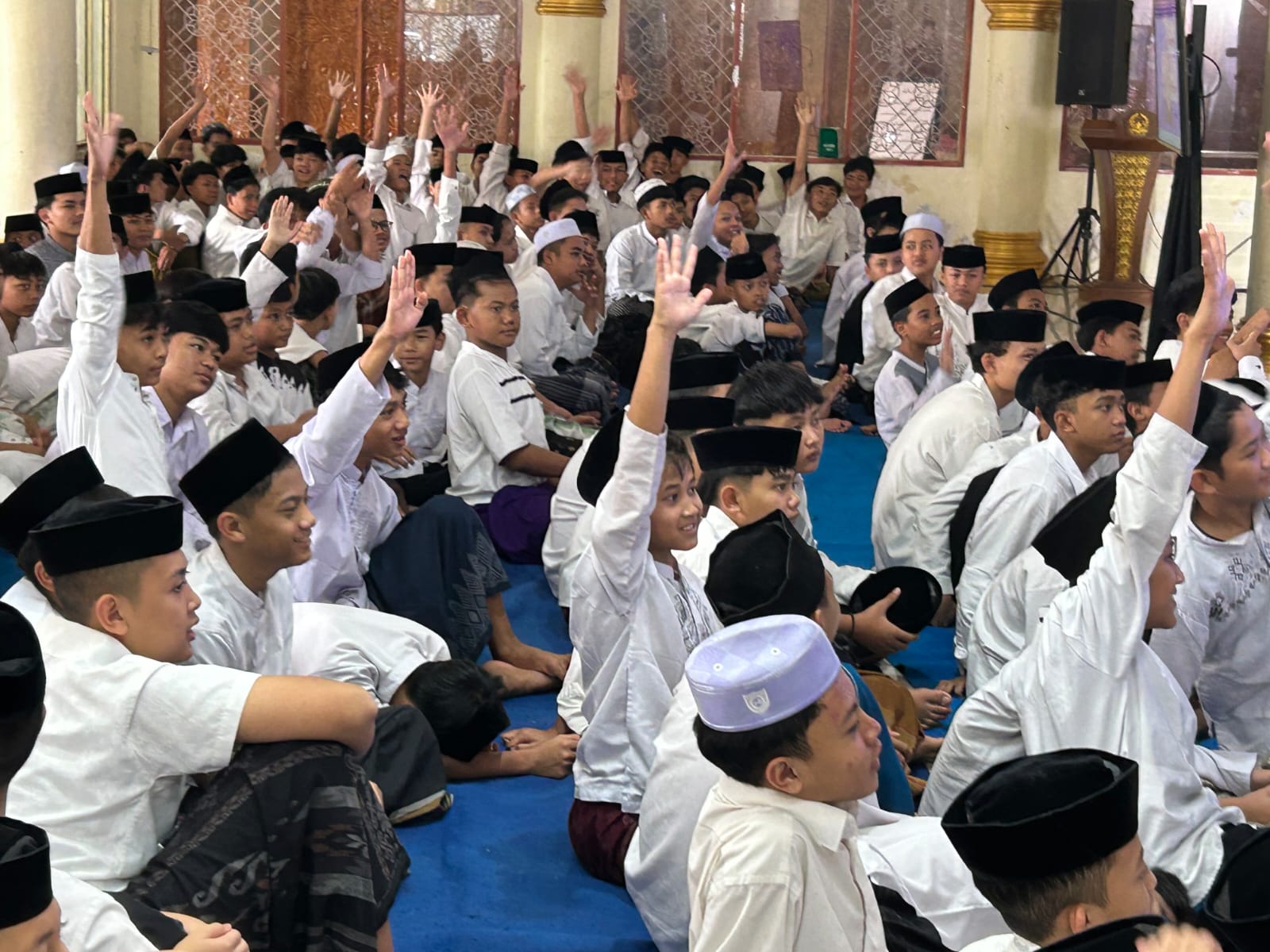
Acting Director of the Communications Directorate at the Ministry of Communications and Digital Affairs, Marroli J. Indarto, speaking at Pondok Pesantren Darul Falah Cihampelas on Friday (6 March), stated that when the regulation takes effect, children under 16 years old will no longer be able to have social media accounts on platforms including YouTube, TikTok, Facebook, Instagram, Threads, X, Bigo Live, and Roblox.
“This decision has been made because threats to children in digital spaces are increasingly real, including pornography, cyberbullying, online fraud, and digital addiction. Therefore, children need to be protected from these threats. The aim is to protect our younger generation from the risk of digital crime, such as cyberbullying,” he explained.
According to Marroli, the regulation can also reduce children’s exposure to digital advertising. The restriction of social media access for children may cause some initial discomfort when implemented. However, this policy needs to be adopted by the government as a responsibility for protecting children in digital spaces. In this way, parents will not have to face the challenges of the digital world alone.
Responding to the policy, Rizki Raditia, a junior secondary school student at Darul Falah, has no objection to no longer being able to have a social media account. The policy can prevent children from misusing social media, for example by spreading hoax information.
Rizki usually uses social media to fill time at home after returning from the Islamic boarding school. When he can no longer use social media, he plans to replace this activity by helping his parents at home.
Meanwhile, Saeful Rohman, Coordinator of the Parents’ Student Forum (Fortusis) in Bandung City, strongly supports the government policy to restrict social media for children under 16 years old. The phenomenon of children’s dependence on social media is already a cause for concern.
“Children are becoming less interactive in the real world. Their time is spent looking at the virtual world. This condition is feared to make children unprepared to face real challenges in the real world,” he stated.
For this reason, Saeful emphasises that children’s interaction in the real world needs to be increased compared to interaction on social media.
“We are concerned that our nation’s future leaders do not understand the real competition in the outside world. In the end, their competitiveness is lacking, and their mentality is fragile,” said Saeful.
According to Saeful, parents do have a role in controlling their children’s interaction on social media. However, parental authority is limited because children’s interaction on social media is determined by algorithms. Therefore, the government has already taken the right step by taking part in restricting children’s access to social media.
“This restriction will reduce children’s consumption of unsuitable content. The government’s involvement shows that control is not just from home, but the government is directly involved,” he emphasised.