
Paramadina Rector Criticises Public Universities for Accepting Large Numbers of Students: Damages Ecosystem
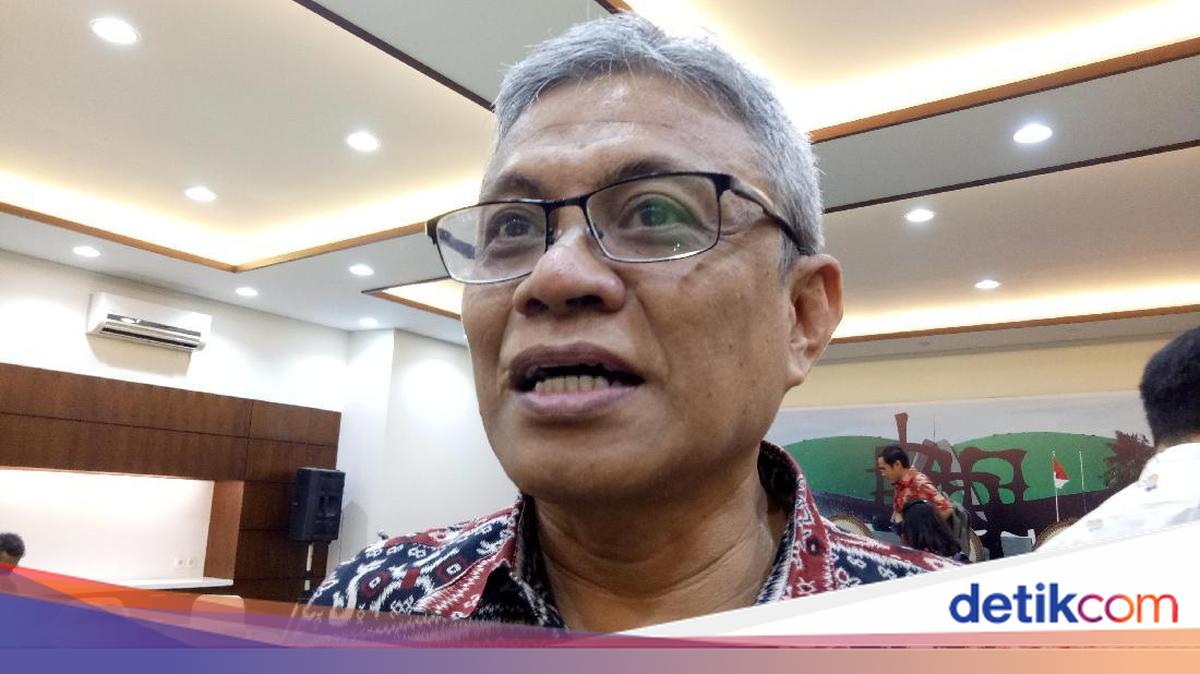
Rector of Paramadina University, Didik J Rachbini, believes that the fairness of the education ecosystem must be maintained between public universities (PTNs) and private universities (PTSs). Didik assesses that PTNs accepting large numbers of students beyond reasonable limits damage this ecosystem.
“The absence of the state’s role forces PTNs and PTSs into liberal competition. One kills the other (cut-throat competition). In one word: too much, if PTNs continue to push student admissions beyond reason in large numbers. Such student admission practices will damage the higher education ecosystem and sideline the role of society, in this case PTSs,” Didik stated in his comments on Tuesday (14/4/2026).
Didik believes that the Minister of Education, Higher Education, Research, and Technology (Mendiktisaintek) and the DPR must play a role in safeguarding that ecosystem. Without the state’s role, PTNs will act arbitrarily, damaging the role of PTSs—UII, NU, and Muhammadiyah—which have even been operating since before independence.
“The expansion of student numbers in PTNs without control has the potential to create structural imbalances against private universities (PTSs), pressuring the sustainability of PTSs and damaging society’s role. Limiting the number of PTN students is necessary to create fairness within the national higher education ecosystem. The role of the state and societal participation must remain existent within that ecosystem,” he said.
According to Didik, so far the Ministry of Education has distributed research funds more fairly to PTNs and PTSs. However, PTNs have long monopolised state education funds, so opportunities for fundraising should be handed over to PTSs.
So far, Didik said, PTNs as state institutions have collected funds from society outside the APBN mechanism. He believes this must be accountable, and the DPR should request the BPK to conduct a special investigative audit.
“It must be accountable, and the DPR should request the BPK to conduct a special investigative audit. If PTNs also collect funds from society, then funds from the APBN should be shared equally between PTNs and PTSs for all aspects, such as lecturer salaries, buildings, lectures, research, laboratories, and community service. Because if PTSs receive APBN funds, they must be open to audits by the government as they are public funds. So for the future good, there must be an investigative audit of PTNs that collect funds from society outside the APBN, namely from students,” Didik stated.
Didik mentioned that PTNs have enjoyed state budget benefits for over half a century and have historical structural advantages because they have long been operational. If they multiply state funds and societal funds by accepting students without limits in a brutal manner, then the role of society, community organisations like NU, Muhammadiyah, and others, will be displaced.
“The state is also obliged to protect and even encourage society’s role in education, especially higher education. This role is carried out by maintaining the sustainability of PTSs (which also serve the public). There are many roles of community organisations in higher education that still need to be developed and supported in their growth because they operate in many regions and reach the middle to lower classes. If PTNs continue to expand without limits, the role of PTSs will diminish and slowly disappear due to a lack of students,” he said.
Due to their historical journey, experience, and reputation, PTNs are said to be directed towards developing global-level education quality and research. The state is said to encourage PTNs to become research centres, centres of excellence, and strategic programmes that become government programmes. Not like now, which is assessed as developing itself as a teaching university with student numbers beyond limits.
Meanwhile, PTSs, Didik said, play a role in expanding higher education participation rates in regions. PTSs are subsequently flexible, innovative at the village and regional level, niche markets, and vocational in remote areas with state fund assistance. Thus, the higher education ecosystem is considered healthy because both do not compete for the same things due to differentiation and specialisation.
“Limiting PTN students is not to limit access, but to ensure fairness, quality, and sustainability of the entire higher education ecosystem, both PTNs and PTSs. The required policy is transparency and PTN quota limits, which provide space for society’s role, namely PTSs,” he added.