
Papua's Green Collaboration: Turning Waste into a Sustainable Future
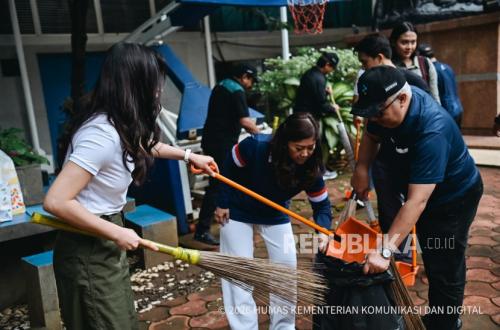
JAKARTA — The roar of aircraft taking off from Sentani International Airport mingles with the rumble of waste transport vehicles behind the terminal. At this facility, which serves thousands of passengers daily, some three tonnes of rubbish await processing.
Approximately 40 per cent of this is organic waste — food scraps, leaves, and kitchen refuse — which, if not promptly managed, produces foul odours and disrupts comfort. The airport, the aerial gateway to the Land of Cenderawasih, is undergoing improvements.
Harrys Hutahaean from the Health Department of Sentani International Airport explained that management has provided three temporary disposal sites and ten drop boxes at various points. Collected waste is sorted before being transported to temporary holding sites and then on to final disposal facilities. Waste with remaining economic value is encouraged to be recycled through partnerships with micro, small and medium enterprises (MSMEs) and waste banks. “We have also implemented a skylight system in the terminal building to maximise natural sunlight entry and reduce electricity consumption. This is not just about the environment but also operational efficiency,” he said.
The efforts at the international airport represent just one small snapshot of the larger challenge facing the Land of Cenderawasih. At the provincial level, the figures are staggering. Acting Head of the Papua Provincial Forestry and Environment Agency, Yaconias Maintindom, revealed that with a population of 1.07 million across nine regencies and cities in 2025, and assuming waste production of 0.4 kilogrammes per person per day, total waste accumulation in Papua Province reaches approximately 477 tonnes daily.
“Such a figure must be managed seriously by all regencies, cities, and layers of society,” Maintindom stressed. The Papua Provincial Government is drawing up a waste management roadmap that will contain data on waste volumes, reduction strategies, transportation, processing, and monitoring. “Every regency and city must accurately calculate their waste volumes. From that data, policies can be properly targeted.”
However, Maintindom acknowledged that the environmental sector still faces budgetary constraints. In some areas, allocations are extremely minimal. Nevertheless, he emphasised that limited funding must not serve as an excuse for inaction. “Major change can begin with simple steps at the household level: sorting waste from its source. When organic and non-organic waste is mixed, processing becomes difficult and inefficient.”
If organic waste is separated, it can be turned into fertiliser or animal feed. Plastics and other non-organic materials can be recycled into economically valuable goods. Therefore, according to Maintindom, the key to waste management lies in awareness and human resource capacity at the neighbourhood, community, and village levels.
The Papua Provincial Government also urged that village funds should not be focused solely on infrastructure but should also be allocated towards building environmental awareness. “A fine facility is worthless if the surrounding environment is poor. Everything must be handled in a balanced manner. We hope village heads will regard the waste issue as an important matter. If education reaches the grassroots level, change will come more swiftly,” he added.