
Panic Buying of Fuel Oil in Aceh Sounds Alarm for Government
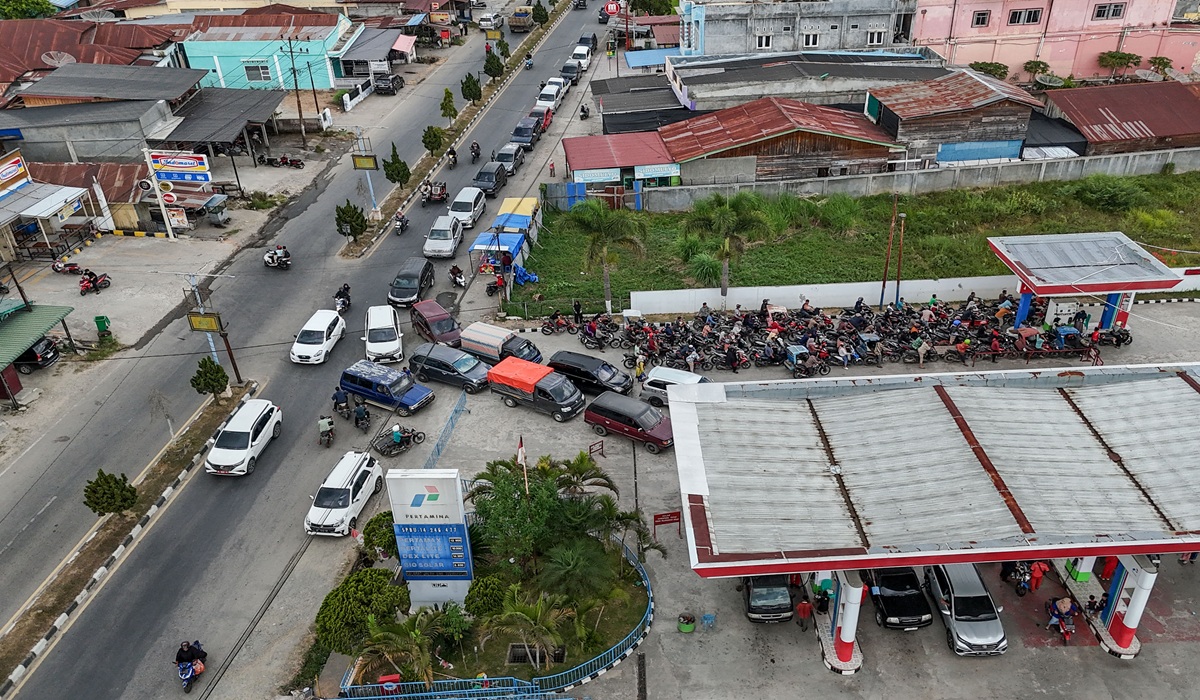
A wave of panic buying of fuel oil in several regions of Aceh, including Central Aceh and Banda Aceh, has drawn sharp scrutiny from the Indonesian parliament. Member of Commission XII from the PKS faction, Ateng Sutisna, argued that the incident is not merely a temporary distribution problem, but rather signals structural issues within the national energy security system.
According to Ateng, this phenomenon represents a real-world case study of failed public communications management in the energy sector. He stressed that public panic does not emerge spontaneously, but is triggered by information asymmetry and a loss of public confidence in state supply guarantees.
“This incident reveals another fact: the existence of a deficit in national fuel storage infrastructure and weaknesses in the mechanisms of logistics and our energy supply chain,” said Ateng in an official statement on Monday (9 March).
Although Pertamina’s distribution at the retail level is fairly robust, Ateng noted that the national fuel stock standard of only around 21 days indicates significant vulnerability at the macro level. For a nation with a population exceeding 280 million, a reserve capacity of less than one month is considered highly risky.
This gap becomes even more stark when compared with international standards. The International Energy Agency (IEA) sets a minimum standard for strategic reserves for oil-importing nations at 90 days of net daily import consumption. By comparison, Japan, which has a similar archipelagic geographical condition to Indonesia, has managed to secure strategic reserves of up to 254 days.
“This gap makes the position more vulnerable geopolitically and geoeconomically when faced with worst-case scenarios, such as disruptions to global supply chains or even blockades,” he explained.
For its part, Pertamina Patra Niaga stated that it has maintained normal operational stock at the level of 21–23 days, even reaching 35 days for certain types of fuel. Pertamina has also integrated Pertamina Digital Hub technology to monitor the movement of tanker ships and stock at petrol stations in real-time.
However, Ateng cautioned that this digital system still has weak points when confronted with force majeure conditions, such as natural disasters or maritime transport disruptions that could cripple distribution channels.
To strengthen energy sovereignty, Commission XII of the Indonesian parliament is pushing for more disciplined and measured national policies. Ateng emphasised three main targets: increasing national storage capacity, strengthening logistics resilience, and building better stock management.
“We need to push for national policies that ensure minimum BBM reserves within the country, such as the development of strategic storage per region, shared use of storage and transport infrastructure, real-time digitisation of supply chain monitoring, and synchronisation of refinery development with downstream logistics infrastructure, particularly for the 3T regions and disaster-prone areas,” he concluded.