
Panic Buying of Fuel Has Begun Worldwide, Here Is the Evidence
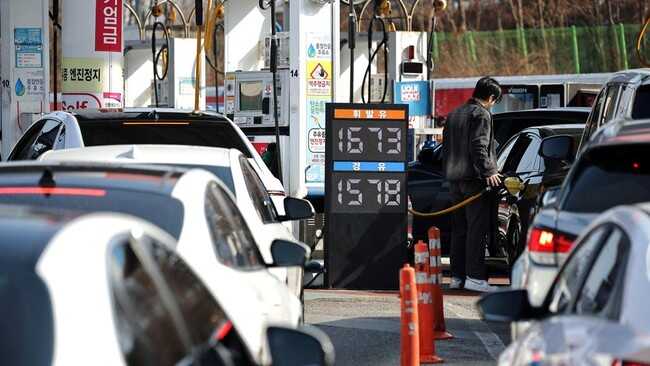
Signs of panic buying of fuel have begun to appear worldwide. This is due to concerns about the supply of oil from the Middle East following the US–Israel attacks on Iran and the closure of the Strait of Hormuz, a vital artery for around 20% of global oil, in retaliation by Tehran.
So where is this happening? Here’s CNBC Indonesia’s summary, Thursday 5 March 2026.
South Korea
Panic buying now appears tangible in South Korea. Queues of vehicles snaked along a number of fuel stations in Seoul on Wednesday, amid a spike in global oil prices and financial market volatility caused by the Middle East conflict.
Residents were seen choosing to fill their tanks fully as fears that petrol prices could keep rising. Petrol station operators reported longer queues than usual.
Although not officially labelled as panic buying, consumer behaviour shows rising anxiety about supply and energy prices. “I am filling up now because I fear it will be more expensive tomorrow,” a Seoul driver told local media.
Yonhap reports that these concerns align with heavy pressures hitting the South Korean economy, due to the US–Israel war with Iran.
On Wednesday, the Kospi index tumbled more than 12 per cent, even after market authorities activated a temporary trading halt mechanism (sidecar). Over the past two days, the main South Korean stock index had fallen almost 20%.
Volatility also occurred in the foreign exchange markets. The won fell to around 1,500 won per dollar, the highest in 17 years.
At the same time, petrol prices in South Korea rose above 1,800 won (about Rp21,000) per litre. This reinforced concerns about rising living costs.
Analysts warned South Korea faced the risk of an economic emergency if the conflict escalates. The main threat centres on the Strait of Hormuz, a vital energy supply route.
The situation worsened after Iran reportedly attacked and set on fire 10 oil tankers, triggering speculation that the US Navy would escort ships traversing the region. Currently, 26 South Korean tankers were reported to be berthed around the strait.
As the seventh-largest crude oil importer in the world, South Korea relies on imports for more than 90% of its energy needs. Around 70.7% of crude oil imports and 20.4% of LNG imports pass through the Strait of Hormuz.
Although the government has enough oil reserves to cover about six months, those supplies could be eroded if this main shipping lane is disrupted for an extended period.
Energy pressures and global uncertainty are starting to spill into the real economy. Logistics disruptions could restrain key exports such as cars, smartphones, and cosmetics, at a time the country hopes export-led growth will drive a rebound.
Australia
The same situation was reported in Australia. Quoting ABC, in Perth, Western Australia, thousands of drivers across towns queued along streets to refuel on Tuesday night.
Western Australian Premier Roger Cook sought to reassure residents that panic buying was unnecessary. He also issued a firm warning to fuel companies: “Do not raise prices simply because people are worried about their future,” he said.
Meanwhile, the state’s main motor industry body announced it would report major fuel retailers to the Australian Competition and Consumer Commission (ACCC) for “unfair conduct” after lifting prices only days after the conflict began in the Middle East.
In the last 24 hours, more than 210 service stations across Southeast Queensland raised their prices to 219.9 cents per litre. It was the highest in several weeks, including in Brisbane.
In Sydney, New South Wales, and Melbourne, Victoria, oil companies were accused of prices increasing beyond what was warranted. They were said to be taking unfair advantage of the “disaster” in the Middle East.
“Most Australian oil is sourced from Singapore rather than the Middle East, so even if market prices rise, there should be no supply issue,” said Rowan Lee, from the Australian Association of Oil and Household Gas Marketers.
“[Also,] your lead time to two weeks… it’s still too early to see how this will pan out,” he added.
Energy Minister Chris Bowen said Australia is prepared to face petrol supply volatility caused by the Middle East conflict. Bowen said he had spoken with the CEOs of Australian refineries and that Australia currently has fuel stocks that exceed the minimum obligation.
“Companies have told us they are confident they can secure oil supplies until May,” he said.
United Kingdom
Panic buying also occurred in the UK as concerns over petrol shortages grew following the escalation of the Middle East conflict. This occurred in London, Manchester, and Liverpool, where queues of over an hour to refuel were reported, according to Metro, as cited by NDTV.
Therefore, citing the Independent, drivers in the UK have been warned about panic buying of petrol in the middle of the Middle East conflict. Motorists were urged to avoid panic buying even though there are concerns prices at the pumps could rise.
“Prices at the pump are rising, wholesale costs have increased even before the weekend attacks on Iran,” an authority said.
“However, average pump prices today remain below early last year,” they added.
“Fuel trading has reported increased demand, which was anticipated, but drivers generally follow advice to stick to their usual refuelling routines like