
Pancasila Amid Global Geopolitical Changes
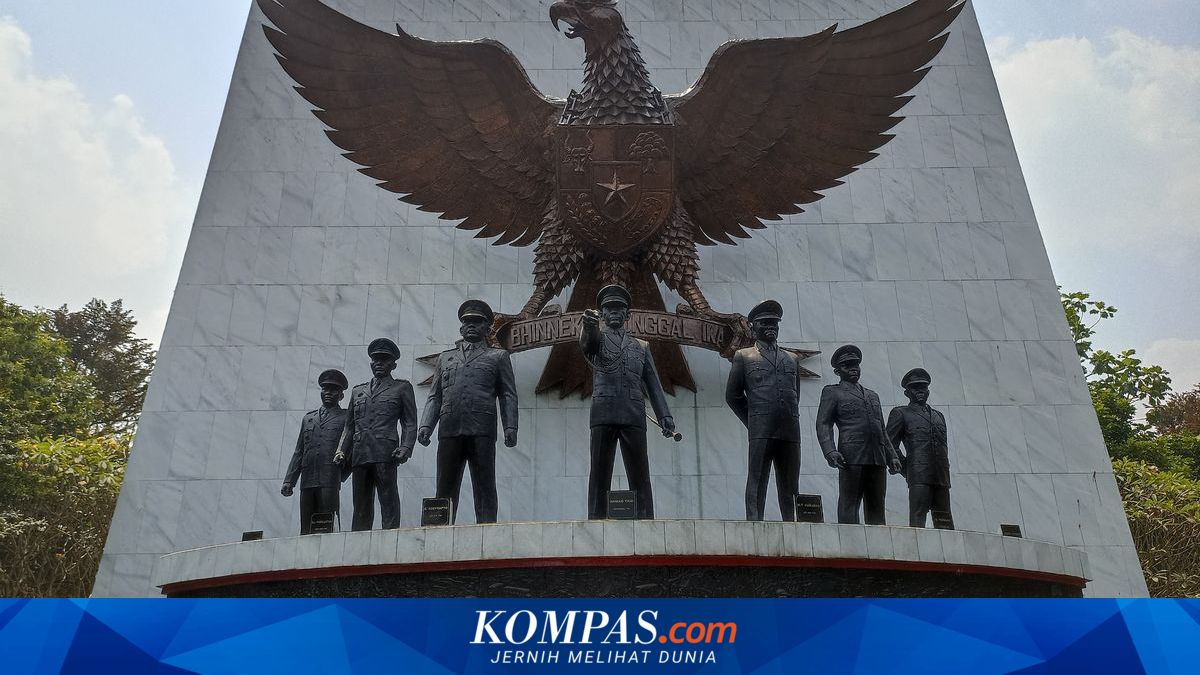
Through Presidential Decree No. 24 of 2016, the government designated 1 June as Pancasila’s Birth Day and a national holiday.
The designation refers to Sukarno’s speech at the meeting of the Investigating Committee for Preparatory Work for Independence (BPUPK) held from 29 May to 1 June 1945.
In his speech on the final day of the BPUPK session, 1 June 1945, Sukarno proposed five fundamental principles for the independent Indonesian state, named Pancasila.
The proposal was agreed upon by BPUPK participants, broadly divided into nationalist and religious groups, to adopt Pancasila as the state foundation acceptable to all elements of the nation.
Furthermore, Sukarno’s proposal was discussed by a small committee chaired by Sukarno, consisting of figures representing nationalist and religious groups, including Mohammad Hatta (Vice-Chairman), K.H. Wachid Hasyim, K.H. Kaharoezie Moezakkir, Agoes Salim, Abikoesno Tjokrosoejoso, Achmad Soebardjo, Alexander Andries Maramis, and Mohammad Yamin.
The result was the Pancasila formulation as stated in the Jakarta Charter of 22 June 1945.
This is where Pancasila’s uniqueness lies. It is, in fact, a mature political, social, and cultural compromise, not the product of a single group’s thinking.
It emerged from the realisation that Indonesia is a highly diverse nation.
Differences in ethnicity, religion, culture, language, and political views could not be unified by an ideology representing only part of society.
Throughout its history, consensus on Pancasila as the state foundation has not always been smooth.
Following independence, various attempts were made to replace Pancasila.
There were movements seeking to establish communism as the state foundation, and others aiming to turn Indonesia into a religious state.
The situation grew more complex as the world entered the Cold War era shortly after World War II.
The world split into two major blocs: the liberal bloc led by the United States and the communist bloc led by the Soviet Union.