
PAM Jaya's Water Purifier: A Solution for Safe and Environmentally Friendly Drinking Water
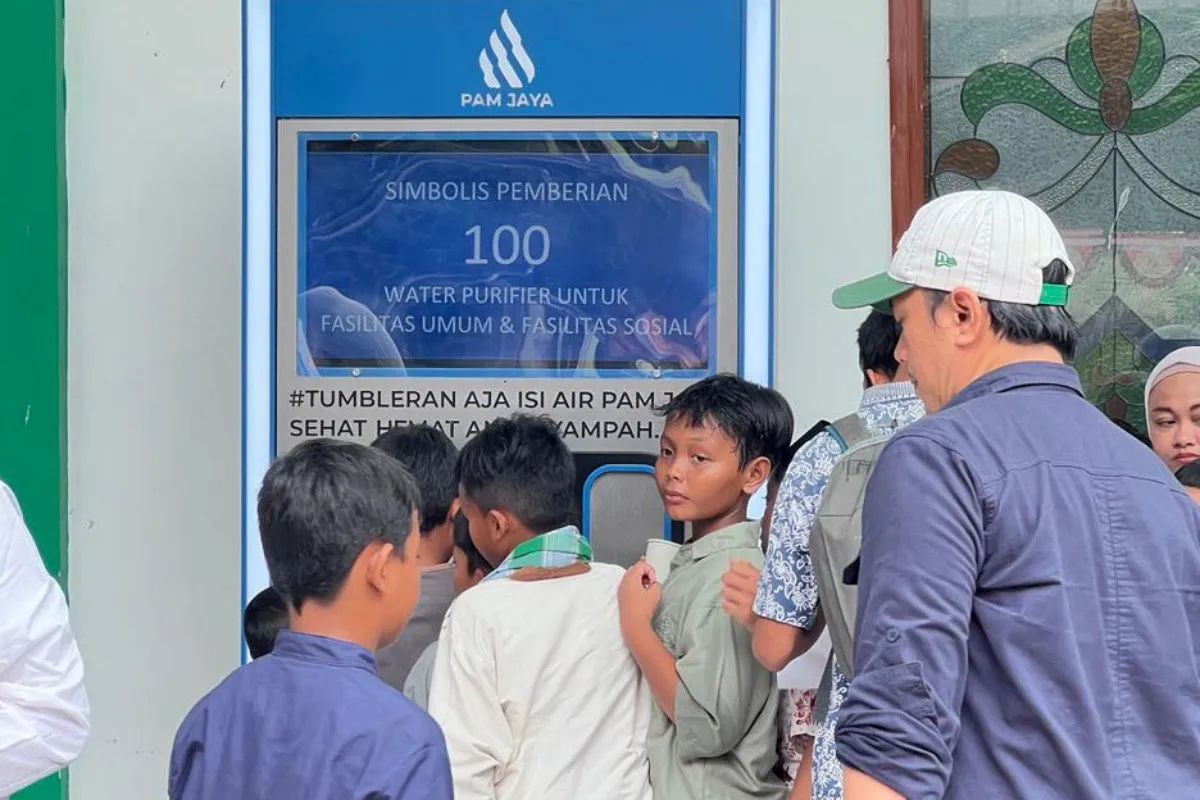
Jakarta (ANTARA) - The water purifier innovation developed by PT PAM Jaya is considered a strategic solution in providing safe, efficient, and environmentally friendly drinking water, thereby minimising plastic waste.
“Safe drinking water is a basic need that cannot be compromised as it directly relates to public health and quality of life,” said Sugiyanto, Chairman of the Coalition of People’s Observers for the New Jakarta (KATAR), in Jakarta on Thursday.
According to him, the need for safe drinking water in urban areas like Jakarta continues to increase along with population growth, climate change, and the limitations of quality raw water sources.
In this context, technological innovations such as water purifiers become an important solution to ensure the availability of hygienic and ready-to-drink water at any time.
He stated that water purifier technology operates through a multi-layer filtration system, starting from activated carbon, ultrafiltration, to reverse osmosis, which can remove bacteria, viruses, harmful particles, and heavy metal content.
“With this technology, the public can obtain safe drinking water directly from available water sources at home,” Sugiyanto said.
According to him, drinking water quality standards have been strictly regulated through Ministry of Health Regulation Number 2 of 2023 and Government Regulation Number 122 of 2015 on the Drinking Water Supply System, which requires water to meet physical, chemical, and microbiological parameters.
Therefore, the use of water purifiers at the household level becomes a rational solution, especially during the transition to direct tap drinking water services.
In addition to health aspects, Sugiyanto also highlighted the importance of this innovation in supporting environmental conservation. Dependence on packaged drinking water is considered to have contributed significantly to plastic waste generation.
“The use of water purifiers can reduce the consumption of packaged drinking water, thus helping to curb the production of single-use plastic waste,” he said.
He reminded that reducing plastic waste has become a national agenda regulated in Law Number 18 of 2008 on Waste Management and Presidential Regulation Number 97 of 2017.
In addition, paper-based eco-friendly packaging innovations are considered an important alternative in supporting sustainable consumption systems. Such packaging is easier to decompose and recyclable compared to plastic.
Jakarta’s current raw water needs are still dominated by the Jatiluhur Reservoir at around 92 percent, while the rest comes from rivers and other sources. To achieve the target of 100 percent clean water service coverage by 2029, a water supply of around 32,950 litres per second is needed.
Since taking over water management in 2023, PAM Jaya’s service coverage has increased from 59.53 percent to around 80.24 percent by 2026. The number of customers has also risen from 948,594 to around 1.17 million house connections.
On the infrastructure side, the length of the pipe network has increased from 12,195 kilometres to 16,234 kilometres over the last three years. Meanwhile, the non-revenue water loss rate is targeted to decrease from 46.2 percent to 30 percent by 2029.
To support the sustainability of water supply, he assessed the need for developing alternative raw water sources, such as seawater desalination, wastewater treatment, to strategic projects like underground tunnel construction and the giant sea wall.
“All these innovations show that the future of drinking water provision will be integrated between technology, policy, and environmental awareness,” he said.