
PAM Jaya to Install Air-to-Water Technology in Sudirman–Thamrin Area
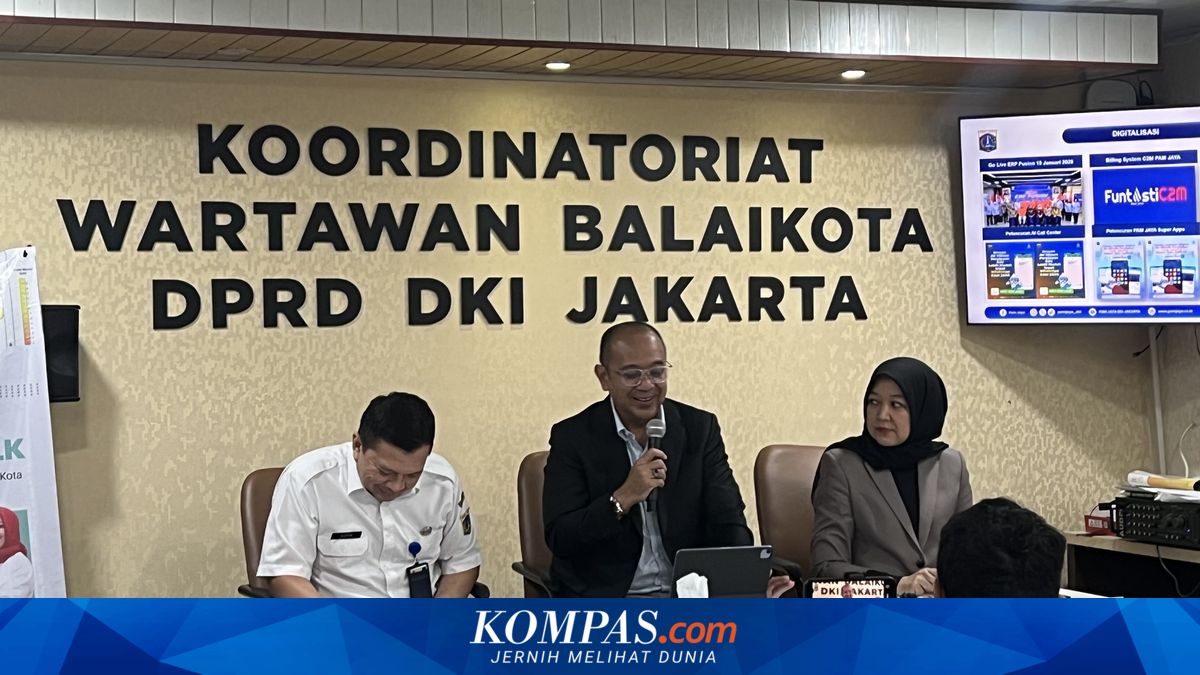
JAKARTA — PT PAM Jaya (a state-owned regional company) plans to install technology that can convert air into drinking water in the Sudirman–Thamrin area of Central Jakarta.
PAM Jaya Chief Executive Arief Nasrudin stated that the technology works by capturing atmospheric moisture content and then processing it into potable water.
“We will have equipment called atmospheric water trapping. So it’s water atmosphere trapping—it has no water source but can create water,” Arief said during a media discussion at the Jakarta City Hall Press Room on Wednesday, 11 March 2026.
This type of technology, he noted, is already in use in several regions facing water source limitations, including parts of Africa.
Currently, PAM Jaya has ordered the technology equipment, and within the coming months the device can be introduced to the public.
Members of the public will then be able to consume the water directly without requiring further processing.
Furthermore, PAM Jaya is also expanding piped water service coverage across Jakarta. By 2025, clean water service coverage in Jakarta has reached approximately 80 per cent.
“Our service coverage is now nearly 82 per cent. We have more than 1.17 million customer connections and our pipe network continues to grow,” Arief said.
The length of the water pipe network managed by PAM Jaya currently reaches approximately 12,800 kilometres and will continue to expand over the coming years.
Arief believes accelerating clean water services is important because Jakarta, as a global city, should not still face problems with limited piped water access.
He mentioned that several areas in North Jakarta have already experienced land subsidence due to massive groundwater extraction.
“If water from PAM is already available, groundwater should no longer be used,” he said.
Arief added that such policy also needs to be supported by enforcement of regulations so that tall buildings and office buildings that have already received piped water supplies no longer rely on groundwater extraction.