
PAM Jaya Targets 100% Clean Water Access in Jakarta by 2029
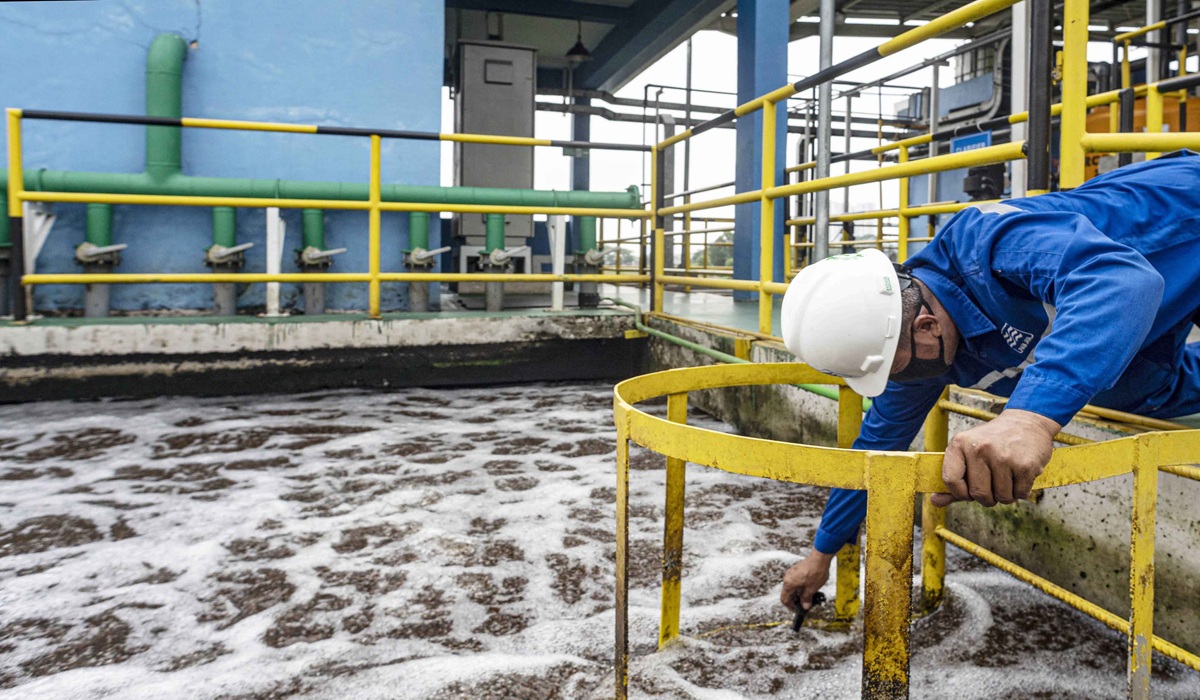
PAM Jaya is committed to accelerating the expansion of clean water services to fully cover the entire DKI Jakarta area by 2029. This step is taken as a strategic response to environmental challenges as well as fulfilling the basic needs of the capital’s residents.
PAM Jaya’s Director of Strategy and Business, Anugrah Esa, stated that accelerating piped water services is key to maintaining Jakarta’s sustainability.
The main target is to ensure that no residents face difficulties accessing potable water within the next five years.
“Accelerating piped water services is a strategic step to address environmental challenges and the needs of Jakarta’s society,” said Anugrah Esa in Jakarta on Wednesday (18/3).
This massive effort does not only focus on public services. Anugrah added that this step aligns with the global Sustainable Development Goals (SDGs), particularly on clean water and sanitation access.
In addition, expanding the pipe network has a crucial ecological mission: reducing residents’ dependence on groundwater.
As is known, excessive groundwater exploitation has so far been the main factor causing land subsidence in Jakarta, which is increasingly concerning.
To realise this ambitious target, PAM Jaya has prepared several strategic roadmaps, including:
Interestingly, PAM Jaya is also introducing an innovation in the form of water purifier technology.
Anugrah explained that by regulation, water processed by PAM Jaya’s installations already meets the Ministry of Health’s drinking water standards. However, the age of the old pipes often reduces water quality when it reaches customers’ taps.
“This water purifier serves as an intermediate solution, and with this device, piped water can be drunk directly without needing to buy bottled water, making it more economical and environmentally friendly,” he clarified.
Through the integration of infrastructure and technological innovation, PAM Jaya is optimistic that the 100% clean water access target can be achieved on time, or even faster than the initial plan.
“This step is expected not only to improve the quality of life for the community but also to maintain environmental sustainability in Jakarta,” Anugrah concluded.