
PalmCo trials superior African pollinator insects to boost palm oil productivity
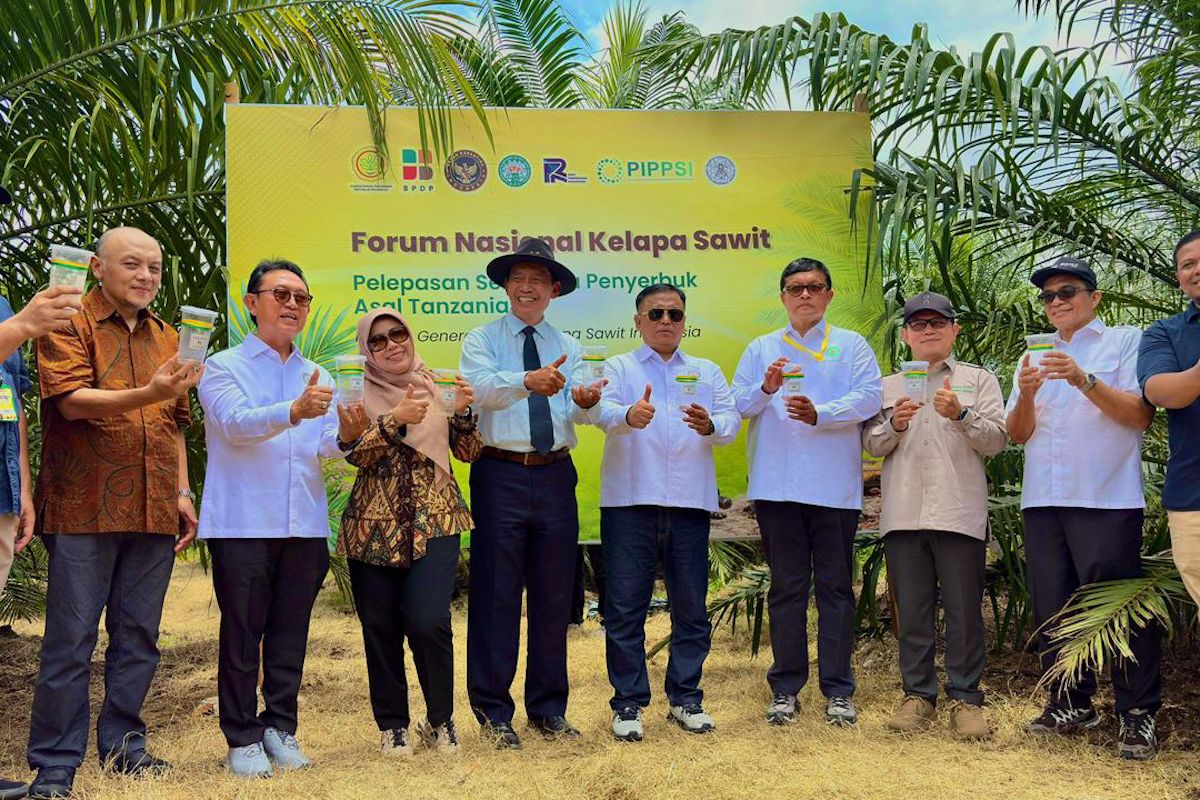
Jakarta (ANTARA) - The PTPN III (Persero) Plantation Holding, through its subholding PTPN IV PalmCo, is trialling superior pollinator insects from Tanzania, East Africa, to increase national palm oil productivity.
“Efforts to boost national palm oil productivity continue through research-based approaches. One of them is being pursued by PalmCo, which has begun trialling the use of superior pollinator insects from Tanzania,” said PTPN IV PalmCo President Director Jatmiko K. Santosa in a statement in Jakarta on Friday.
He explained that the programme is being implemented at the Kebun Marihat estate in Simalungun Regency, North Sumatra, as a pilot location.
The initiative is expected to address classic challenges in palm cultivation, particularly regarding fruit set quality, which has often been suboptimal.
He stated that efficiency is a demand amid increasingly tight global palm oil industry competition. According to him, an innovation-based approach is essential to reduce dependence on conventional methods.
“Field conditions show that natural pollination does not always run optimally. Weather factors and limitations in the local pollinator insect population often impact production results,” Jatmiko said.
He noted that previously, the company had relied on manual or assisted pollination to maintain productivity. However, that method is considered inefficient due to its high costs and significant labour requirements.
By introducing the African pollinator insects, PTPN IV PalmCo aims to return the pollination process to a natural mechanism. This step is expected to enhance efficiency while maintaining sustainable production stability.
“This programme does not stop at the trial stage. We are positioning it as a pilot project that will serve as a reference for broader implementation across various palm oil plantation areas in Indonesia,” he said.
Jatmiko emphasised that the programme’s success will form the basis for developing new operational standards, including to support smallholder estate productivity.
“This initiative is not just a local project, but a model that is expected to be replicated nationally,” he said.
The programme also involves various stakeholders, including the Ministry of Agriculture, the Palm Oil Plantation Fund Management Agency (BPDPKS), the Indonesian Quarantine Agency, as well as research institutions and palm oil industry associations.
Through this collaboration, Jatmiko said, the developed innovation is expected not only to increase production but also to strengthen the sustainability aspects of the national palm oil industry amid global market dynamics.
Separately, PTPN IV SEVP Operation Rediman Silalahi explained that pollination quality greatly influences the structure of palm fruit bunches.
Imperfect pollination can cause the “hollow fruit” phenomenon, where some fruits do not develop optimally.
“If fertilisation does not occur properly, the fruit bunches become not fully filled. This directly impacts the decline in production tonnage per hectare,” Rediman said.
According to him, the presence of the Tanzanian insect species is projected to significantly increase pollination success rates. With a more stable pollinator population, fruit formation is expected to occur more evenly.
In addition to boosting production, this step is also seen as potentially reducing operational costs in the long term, particularly those previously allocated for manual pollination.