
PalmCo Shifts Focus to Downstream Products to Boost the Economy
PT Perkebunan Nusantara (PTPN) IV PalmCo, a sub-holding of PTPN III (Persero), is shifting its business focus from mere production and export of crude palm oil (CPO) to developing high-value downstream products to accelerate economic growth.
PTPN IV PalmCo’s President Director, Jatmiko K. Santosa, stated that the company is now concentrating on developing downstream products, including processing fresh fruit bunches (TBS) into advanced products like Bio Propylene Glycol (BioPG), which can significantly increase economic value.
“The value added from this downstream processing can increase up to dozens of times. This is our main driving force,” Jatmiko said in a statement in Jakarta on Wednesday.
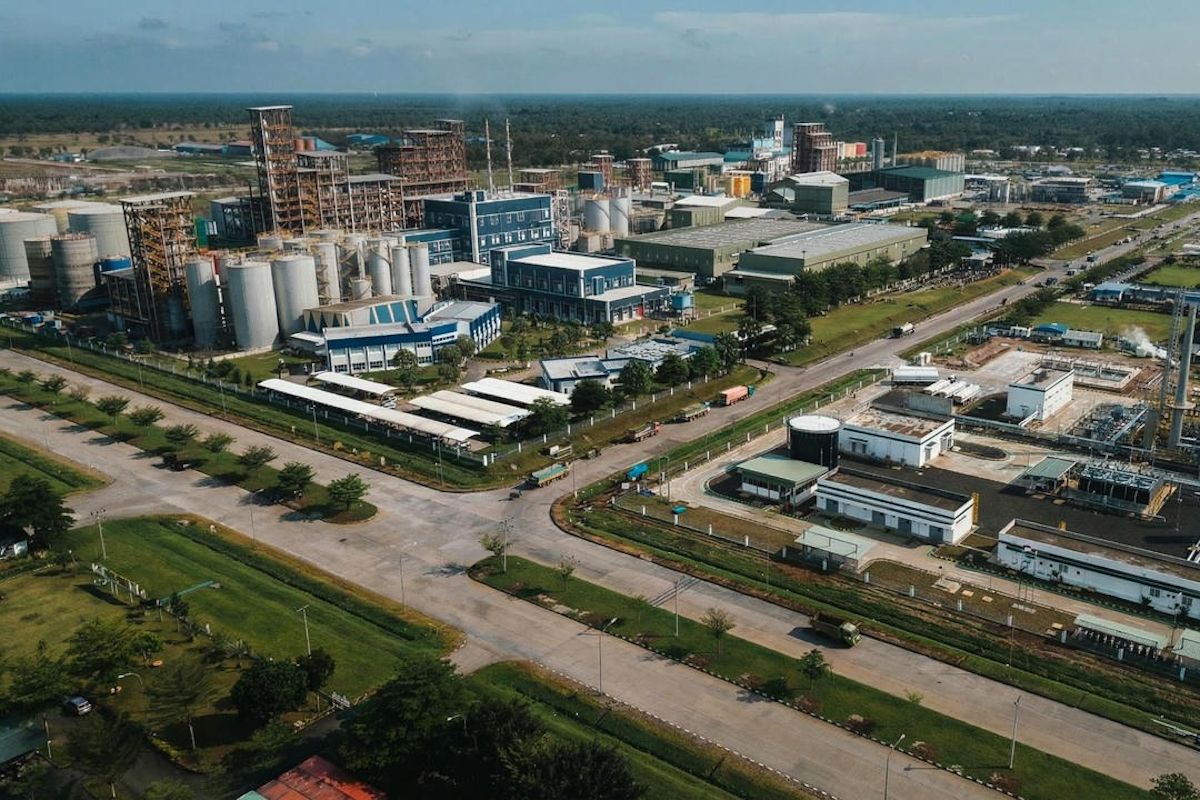
He conveyed that the company is currently preparing to start construction (groundbreaking) of an integrated palm oil processing facility in the Sei Mangkei Special Economic Zone (KEK) in North Sumatra.
“This programme is part of a broader downstream ecosystem, not only in the palm oil sector but also across sectors as directed by Danantara,” Jatmiko said.
Nevertheless, he emphasised that the groundbreaking timing is still awaiting a decision from shareholders, and the activity could take place soon after the Eid al-Fitr period.
“Our readiness is already mature. We just need the shareholders’ decision, and we estimate it can be done post-Eid,” he said.
The facility will encompass a margarine and shortening factory with a capacity of around 40,000 tonnes per year, as well as a Cocoa Butter Equivalent (CBE) and Cocoa Butter Substitute (CBS) factory with a capacity of around 34,000 tonnes per year.
In addition, PalmCo will develop other advanced processing facilities to strengthen Indonesia’s position in the global supply chain for palm-based products.
The construction of a biodiesel factory with a capacity of around 450,000 tonnes per year will also be part of subsequent developments, particularly to support national energy resilience.
During the construction phase to full operations, PalmCo estimates that a total of around 2,900 workers will be absorbed.
“This is not just an industrial project, but also an effort to stimulate the regional economy and create more equitable growth,” Jatmiko stated.
Besides direct employment absorption, the presence of this industrial zone is also expected to trigger multiplier effects for other economic sectors, such as logistics and small and medium enterprises around the area.
PalmCo projects that by 2030, the facility will be able to process up to 2.7 million tonnes of fresh fruit bunches (TBS) per year, equivalent to around 567,000 tonnes of CPO.
“With this downstream processing, we want to ensure that farmers’ produce is absorbed sustainably. This is important for maintaining the stability of the national palm oil ecosystem,” he said.
PalmCo is optimistic that with integration from upstream to downstream and support from national policies, this project will become a key milestone in driving the transformation of Indonesia’s palm oil industry towards high-value-added products.