
Palm Oil Industry Faces Stagnation Amid Rising Domestic Demand
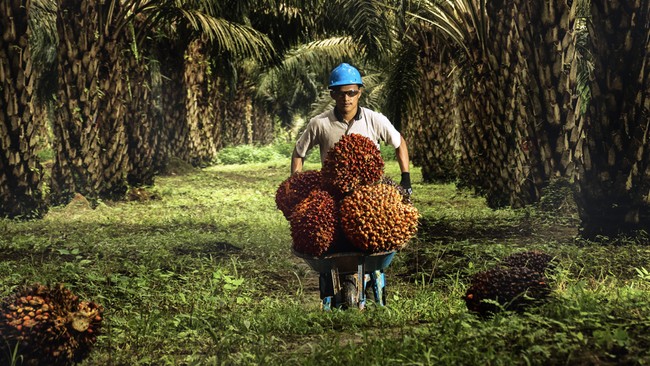
Jakarta — The Indonesian Palm Oil Producers Association (Gapki) has warned that the national palm oil industry faces serious challenges, with crude palm oil production remaining largely stagnant over the past five years whilst domestic consumption continues to rise sharply.
Gapki Secretary General Hadi Sugeng Wahyudiono stated that national palm oil production has shown no significant growth in the past five years. “The fact is, our industry’s production over the past five years has been relatively flat. This indicates that our industry requires treatment. One factor is the slowdown in replanting, which we acknowledge. As a result, our production is not moving,” Sugeng said at a Gapki press conference and iftar gathering in Jakarta on Thursday, 12 March 2026.
Gapki data shows total national palm oil production between 2021–2025 ranged between approximately 51 million and 56 million tonnes. In 2025, production reached approximately 56.5 million tonnes, up 7.2 per cent compared with 2024, though the five-year trend remains relatively flat.
By contrast, domestic palm oil consumption continues to increase. Gapki data indicates domestic consumption rose from approximately 18.4 million tonnes in 2021 to approximately 24.7 million tonnes in 2025, growing at roughly 3.8 per cent annually in 2025.
Sugeng characterised this situation as a challenge for the national palm oil industry as the need for raw materials continues to grow. “On one hand, there are many demands requiring crude palm oil supply. This is a shared responsibility for us,” he said.
He described the rise in domestic consumption as both an opportunity and a threat to the national palm oil industry. “It is an opportunity if we can supply the raw materials, but a threat if our production remains as it is,” he added.
Gapki Chairman Eddy Martono attributed the production stagnation partly to the slow pace of smallholder palm plantation rejuvenation programmes (PSR). “In 2025, our production still increased. We achieved a 7 per cent increase. We are grateful for this, which resulted from corporate replanting that has already yielded results,” Eddy said.
However, he noted that rejuvenation efforts in smallholder plantations are progressing very slowly. “On the other hand, we have observed that replanting in smallholder farms is moving very slowly. This needs to become our shared responsibility and also that of the government — what are the obstacles to replanting?” he said.
Eddy argued that national palm oil production could be significantly higher if replanting programmes were implemented according to plan. He reported to Agriculture Minister Amran Sulaiman that, with current total production at 56 million tonnes, output should actually be much higher if smallholder replanting programmes proceed as planned. “The gap is substantial. We can say it is not progressing well. This is our shared responsibility,” he concluded.